
Alexey Fadeev: «New Arctic Shelf Borders Must Be Fairly Approved in Favor of Russia»
The UN Commission’s recognition of Russia’s claims to the Arctic shelf is an important step in strengthening the Russian Federation’s geographic sovereignty in the Arctic.
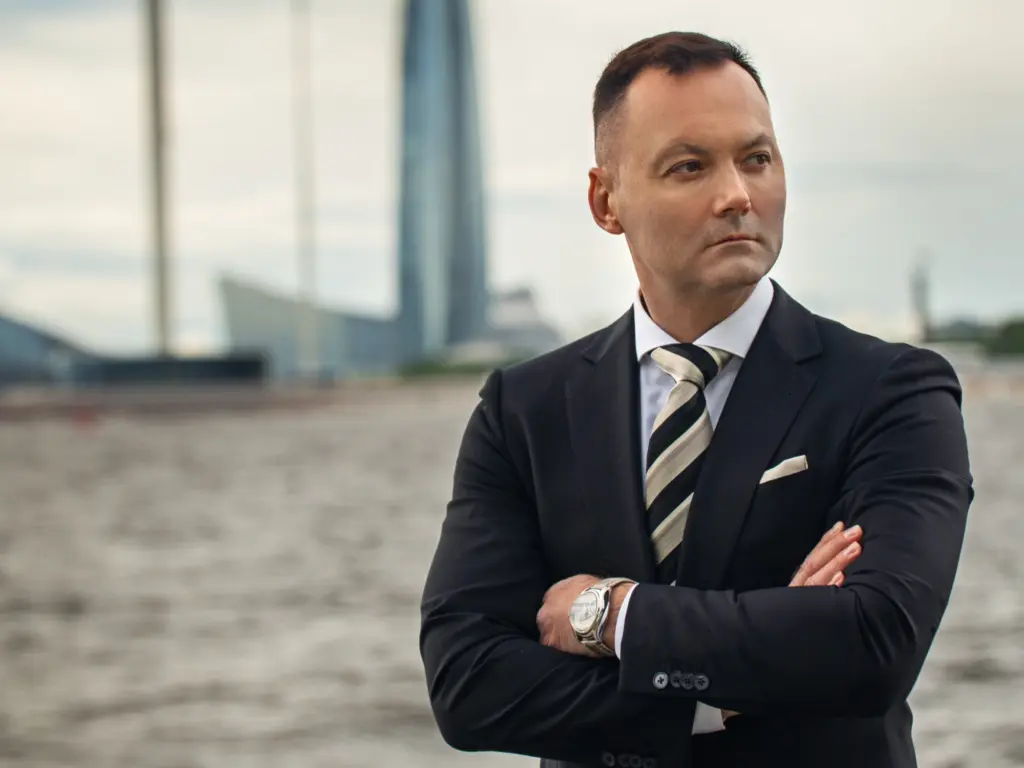
The UN Commission on the Limits of the Continental Shelf has recognized Russia’s claims to 1.7 million square kilometers of seabed in the Arctic as justified. The UN recommendations on the greater part of Russia’s submission confirm that the geological data meet the criteria for the continental shelf. Alexey Fadeev, an expert of the Project Office for Arctic Development (POAR), Doctor of Economic Sciences, Chairman of the Expert Council on the Development of the Russian Arctic Zone (RAOZ) under the Committee for External Relations of St. Petersburg, and Professor at the Graduate School of Industrial Management of Peter the Great St. Petersburg Polytechnic University, explains what this means and what Russia’s next steps should be.
The year 2026 has become a turning point in defending the legitimate rights of the Russian Federation to the Arctic shelf: the UN Commission on the Limits of the Continental Shelf adopted a recommendatory decision partially satisfying Russia’s claims. This concerns the extension of part of the seabed (shelf) within the conditional triangle of «Murmansk – North Pole – Chukotka.» It should be recalled that the shelf is the leveled underwater margin of a continent, characterized by a unified geological structure. In other words, the shelf is the underwater part of a state, provided geological unity is maintained.
Russia has long and consistently defended its rights to the extension of the Arctic shelf up to the North Pole, having conducted a number of geological expeditions. This work has been underway since 2001, when Russia first submitted an application to the UN for recognition of the underwater margin of the continent as an extension of the state. Specialized organizations established back in Soviet times are working in this area—for example, JSC «Marine Geological Exploration Expedition,» which made a significant contribution to refining the geological structure of the Arctic and Antarctica, which in turn laid the groundwork for the subsequent discovery of unique hydrocarbon deposits.
In 2007, the renowned Arctic explorer Artur Chilingarov planted the Russian flag on the Arctic shelf, descending in a bathyscaphe to a depth of more than 4 km during the high-latitude expedition «Arktika–2007.» This event marked the completion of large-scale studies of the Arctic shelf, confirming the validity of Russia’s claims to the Arctic shelf extending to the North Pole. This refers to the confirmation of the geological unity of the Lomonosov and Mendeleev ridges with the East Siberian Platform—an area of 1.2 million square kilometers of seabed, which exceeds, for example, the combined area of France, Belgium, the United Kingdom, and Germany.
The hydrocarbon potential of the Russian part of the Arctic shelf is truly impressive. Its estimated potential currently stands at 100 billion tons of oil equivalent, which is comparable to Russia’s oil production in tons over 200 years. To date, Russia possesses 52% of the world’s Arctic shelf territory, making it the undisputed leader among countries with access to the Arctic Ocean. It is evident that further recognition and consolidation of Russia’s rights to the underwater margin of the continent extending to the North Pole will multiply this figure. According to the unanimous opinion of experts, it is the Arctic shelf that serves as a guarantor of energy security for many countries around the world, despite the active development of alternative energy sources.
Russia still has a great deal of work ahead to give «legal life» to the recommendatory decision received.
First, this involves issuing an order from the authorized body that must officially take into account the UN Commission’s recommendations. Second, it is necessary to prepare and approve new nautical charts indicating the coordinates of the limits and subsequently submit them to the UN Secretary-General. In addition, negotiations must be held with coastal states whose interests and claims may overlap with those of the Russian Federation. In other words, a great deal of diplomatic work lies ahead, which in the current macroeconomic conditions appears truly challenging, considering the position of our «Arctic colleagues» toward our country.
It is enough to recall the situation with the effective exclusion of our country from the work of the Arctic Council, which in itself looks absurd: a state possessing the largest territory in the Arctic in the world was simply excluded from the collegial body responsible for the sustainable development of this unique macro-region—from emergency prevention and response to biodiversity conservation and information and educational work.
However, our country has a number of competitive advantages that strengthen Russia’s negotiating position on claims to the Arctic shelf. This refers, first and foremost, to an evidence-based geological foundation obtained through numerous geological exploration expeditions, which, in addition to the legal aspects of delimiting shelf boundaries between states, have made a huge contribution to understanding the geological structures of the Arctic seabed, which has been studied to date to less than 10%.
Finally, Russia is the only country in the world that conducts commercial oil production in icy conditions on the Arctic shelf from ice-resistant platforms, followed by its transportation (along with liquefied natural gas) along the Northern Sea Route. Only Russia possesses a unique nuclear icebreaker fleet, and the ice-class vessel group under the Russian flag exceeds 40 units. We consistently defend our leadership in the Arctic, proving it through the implementation of the most complex energy and technological projects under unprecedented sanctions pressure. We have already proven that work in the Arctic can be not only efficient but also safe. Despite all the difficulties, the new borders of the Arctic shelf must be fairly approved in favor of Russia in the near future.
The Project Office for Arctic Development and the editorial board of GoArctic.ru do not necessarily share the opinions expressed by experts.
For media representatives: we welcome the republication of comments provided that an active link to the original source is given and the columnist’s status as an expert of the Project Office for Arctic Development is indicated.
Оthers Our comments
Maksim Dankin: The Future of the Arctic is Being Decided in Greenland
January 22, 2026 The Greenland case transcends a local storyline and becomes a focal point where key questions about the Arctic’s future converge. US President Donald Trump has repeatedly and in various contexts stated his intention to establish control over Greenland. Why the US wants to take the island, and how this situation could benefit...
read more
Andrei Trenin: «India Discovers Russian Rare Earth Metals»
For India, entering Russia is a continuation of its consistent policy of diversifying REE supplies and reducing dependence on China The authorities of Yakutia expect to make progress soon on developing the Tomtor rare earth metals (REM) deposit, possibly in cooperation with diamond miner ALROSA, the region’s head Aisen Nikolayev said at a meeting with...
read more