
Maksim Dankin: Monetizing Carbon Regulation
The Arctic Carbon Registry could become Russia’s response to the risks of multibillion-euro losses resulting from the introduction of the European Carbon Border Adjustment Mechanism (CBAM)
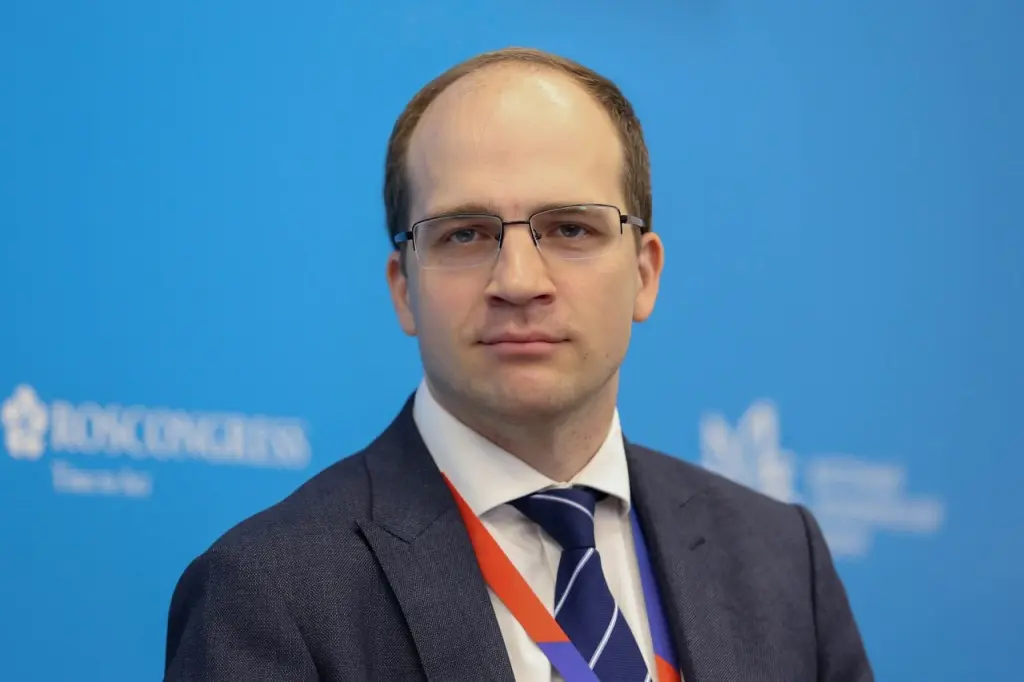
The online publication Expert – North-West has published a column by Maksim Dankin, Director General of the Project Office for Arctic Development. In the article, the head of the POAD Expert Center analyzes the risks and potential financial losses for the Russian economy arising from the introduction of the European carbon tax, CBAM, and argues for the need to create an Arctic Carbon Registry and develop carbon markets in Russia as a countermeasure. With the permission of the editorial board, we are republishing the article for our readers.
In 2026, the European Carbon Border Adjustment Mechanism, or CBAM, enters its payment phase. In essence, it is a duty on the carbon footprint of goods imported into the European Union. According to estimates by the Center for Macroeconomic Research of the Financial Research Institute under the Ministry of Finance of the Russian Federation, Russia’s direct losses from CBAM could amount to about 0.17% of GDP, or roughly €3.4 billion per year. Under more pessimistic scenarios, losses could reach up to 0.5% of GDP. Experts believe that the creation of an independent Arctic Carbon Registry could be one response to these risks.
Scaling up experience
A similar logic underlies the CORSIA system, the Carbon Offsetting and Reduction Scheme for International Aviation, which requires air carriers to offset the carbon footprint of international flights. On paper, the issue is climate; in practice, it is the redistribution of competitive advantages and export revenues.
Any Russian counterparty working with the EU, or planning to do so, is forced either to accept these rules or move to another market. Yet even there it is likely to face the consequences of European regulation. For example, by selling domestic raw materials to a Chinese manufacturer, a Russian company may bear part of that manufacturer’s costs for paying European “carbon duties,” since the European Union is China’s second most important trading partner, and there is a high probability that the product will ultimately be shipped to Europe.
But that is not all. There is no reason to believe that these restrictive regimes will be softened or abolished. Rather, the opposite is likely: following the European example, more and more countries around the world will introduce various carbon regulation instruments while monetizing them at the same time.
Carbon markets
Carbon markets are one of the important tools of this kind. Ideally, their purpose is to make pollution expensive and emissions reduction profitable. Markets may be mandatory or voluntary. In the first case, the state limits the total volume of emissions and distributes quotas among companies, measured in conditional carbon units, each equal to one tonne of carbon dioxide emissions. A company that exceeds its quota is forced to buy the missing units from another company that, for whatever reason, has not used up its own allowance. In the second case, voluntary markets, companies buy units on their own initiative, for example to support a positive reputation. In this way, environmental friendliness gains a buyer, business gains a reason to implement “green” solutions, and the country gains a new economic niche.
The size of this niche is growing year by year. At the end of 2023, the global market for carbon units was valued at $949 billion. The lion’s share, 87%, belongs to the European Union, which is far ahead of others in terms of the value of quotas sold on its market.
The Chinese market is growing rapidly. It emerged in 2021 and is now the largest in the world in terms of the volume of emissions it regulates. Today it covers around 60% of China’s national emissions, or more than 5 billion tonnes of carbon dioxide per year. In monetary terms, it is significantly “poorer” than the European market because of lower quota prices, but its figures are also impressive: in 2025, carbon unit turnover was estimated at 14.6 billion yuan, or 157 billion rubles.
Our CIS neighbors are also actively joining the agenda. Since 2023, Kazakhstan has been building its own carbon unit system in line with Western standards. According to the Kazakhstan Institute for Strategic Studies, the current carbon trading system covers more than 200 companies and about 50% of the country’s emissions. This year, companies from Kazakhstan were listed on an international carbon unit trading platform. Since February of this year, Kyrgyzstan has also been creating a national system for the inventory, monitoring, and circulation of carbon units.
As we can see, climate regulation is turning into an independent sphere of the economy, with its own prices, rules, and beneficiaries.
A carbon quota circulation system
Russia does not yet have a mandatory market. Since 2022, the Russian Carbon Unit Registry has been operating in the country. It is an information system in which climate projects are registered, carbon units are recorded, and transactions involving them are tracked. In the same year, Russia’s first climate experiment, the Sakhalin experiment, was launched on Sakhalin. Within its framework, a domestic system for the circulation of carbon quotas is being tested, and the possibilities and limitations of introducing such quotas are being studied.
At the end of 2025, the number of regions implementing climate experiment projects was expanded to include Yakutia, Tatarstan, Komi, the Irkutsk and Arkhangelsk regions, and Stavropol Territory.
The different specific weight of climate units
Without diminishing the significance of the results obtained during the experiment, I would like to point out an important objective problem connected with the creation of a domestic carbon unit market.
At present, the model adopted globally and being tested in Russia contains a certain methodological unfairness. A carbon unit generated by planting a forest in the temperate zone and a unit generated by a climate project in the Arctic have the same conditional value. Meanwhile, a project in high latitudes, which has a direct impact on the global “climate kitchen,” produces a much greater effect than an “ordinary” project. At the same time, it is incomparably more complex: ecosystems are more vulnerable, their recovery rate is lower, infrastructure is more expensive and more exposed to external impacts, and the result requires stricter scientific verification. In addition, the budget of a climate project in Arctic latitudes is many times higher than that of comparable projects in any other territories. Economically, this means that Arctic carbon is systematically undervalued.
The Arctic is warming two to three times faster than the planet on average. Deep processes taking place beyond the Arctic Circle affect the entire world in one way or another: the state of high latitudes influences monsoon cycles in Asia, the level and circulation of the World Ocean, and the stability of permafrost, beneath which enormous volumes of organic carbon are stored. Today, the Arctic is one of the key regulators of the global climate and, at the same time, a territory that is the first, and most painfully, to feel the consequences of climate change. The paradox is that in the global “climate economy” that has taken shape over recent decades, this dual contribution of the Arctic — both as a regulator and as an affected party — is barely rewarded at all.
Our response: the Arctic Carbon Registry
All of this points to the need to introduce a differentiated approach to climate units generated by projects in different geographic locations. First and foremost, units “produced” north of the Arctic Circle require revaluation.
The creation of a separate Arctic Carbon Registry could put such a differentiated approach into practice. Such a registry would include only projects implemented in the Arctic, and the requirements for them would be deliberately stricter, up to compliance with the most rigorous international standards, including CORSIA requirements. And since technogenic impact on Arctic nature is objectively more traumatic, while its restoration costs more than in other territories, the units in the registry should have higher quality and higher value.
The launch of the registry would help Russia solve several tasks at once:
1. Accumulate additional funds for restoring Arctic ecosystems that have been exposed to various impacts for decades. To do this, it is necessary to establish at the regulatory level that part of the proceeds from the sale of Arctic carbon units remains for the development of the Arctic Zone itself. It would be advisable to invest part of these funds in projects of the Indigenous small-numbered peoples of the North, thereby not only ensuring historical justice but also increasing the attractiveness of the registry idea for other countries.
2. Create a structure that could potentially be scaled to the entire Arctic. Yes, at present, our neighbors in the high latitudes are unlikely to be ready to recognize Russian initiatives. However, over time the situation may change, and the need to maintain trade and economic relations may force other Arctic states to listen to our position and accept our approach to Arctic carbon units.
3. Ensure Russia’s leadership in the Arctic green agenda, which is organically linked to the previous point. Let us accept as a fact that Russia controls the largest part of the world’s Arctic and possesses exclusive competencies in studying and developing it. This is sufficient reason not to follow standards written by others, but to form our own and offer them to partners. Acceptance of the Russian concept of Arctic carbon units and their registry can, and should, be made a necessary condition for entering Russian projects implemented beyond the Arctic Circle or for using Northern Sea Route corridors. Those who already cooperate with us in the macroregion or enter the Arctic through Russia, primarily BRICS countries, will hardly be able to reject our reasonable proposals. And as individual countries begin joining the system we are building, the room for choice available to others will narrow.
None of these tasks will be solved quickly or painlessly. Creating the registry requires a carefully calibrated methodology and scientific support, while its international recognition requires long and difficult diplomatic work under conditions that are far from comfortable. But there is effectively no alternative. Russia has followed rules written by others for too long. The introduction of the Arctic Carbon Registry is an opportunity to start setting the rules ourselves, and to do so in a sphere where domestic expertise is stronger than any foreign expertise. It is also a way to ensure that the climate agenda, which today restricts Russia’s economic development, becomes one of its effective drivers.
Ecology: from law to economics
For several decades now, environmental protection has been a matter of international regulation. Humanity has consistently been building a system aimed at reducing environmental damage caused by anthropogenic activity. The framework of this system is formed by large-scale international documents, the most significant of which are the Kyoto Protocol and the Paris Agreement. National environmental standards are also constantly being introduced.
Having become a major regulatory factor, ecology has inevitably become an economic one as well. Both greenhouse gas emissions and their reduction have acquired a measurable price, thereby turning into a commodity. However, wherever commodity-money relations appear, monetary temptations also arise — temptations that even entire states and associations of states sometimes cannot resist. We can see that systems formally designed to perform environmental protection functions are increasingly being used as instruments of competition rather than environmental protection.
Оthers Our comments
Ilia Vorobev – What Actually Makes the Northern Sea Route Competitive
A shorter route does not guarantee economic benefits or a lower climate impact; the Northern Sea Route becomes competitive when it offers carriers a predictable alternative to traditional corridors On August 22, 2026, the container vessel PanStar Acro departed Busan for Europe via the Northern Sea Route. This is South Korea’s first commercial voyage to...
read more
Trans-Arctic Transport Corridor May Offer Alternative to European Waterways?
Trans-Arctic Transport Corridor is to facilitate the supply of Russian products to countries in the Global South. This initiative aims to identify and cultivate novel market opportunities for Russia, particularly in light of existing international sanctions.
read more