
Interview – Alexey Fadeev
«The EU’s decision to completely ban the purchase and import of Russian gas is a challenge not only for Russia, but for Europe itself»
For now, supplies of Yamal gas allow European countries to avoid significant financial losses from purchasing expensive American LNG at spot prices
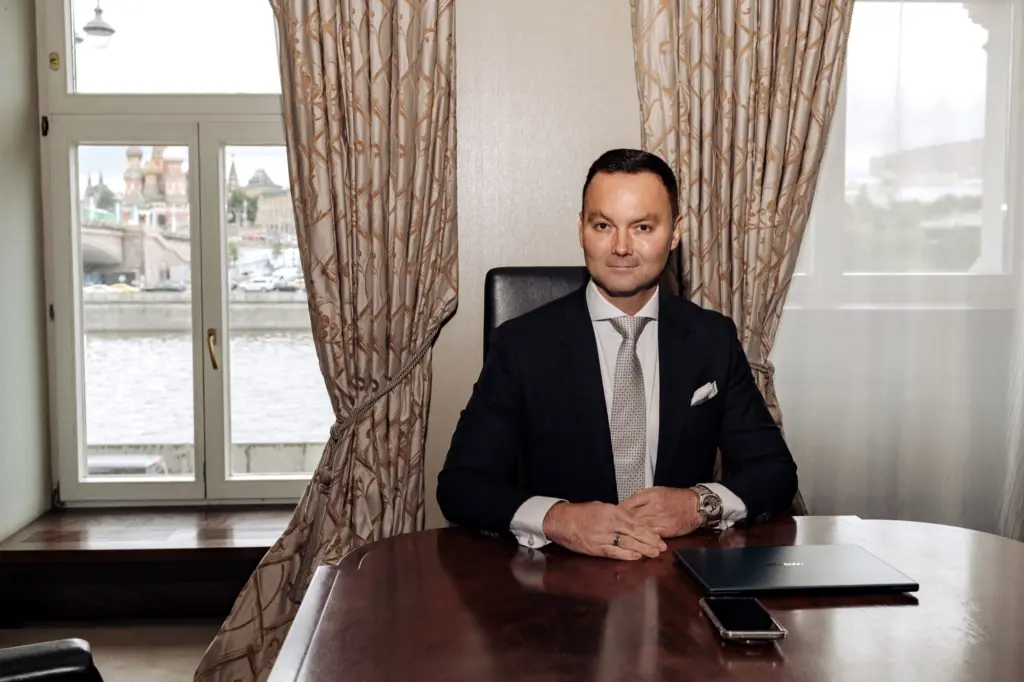
According to unofficial but corroborated data from various sources, about 98% of all exports from the Yamal LNG project in the first months of 2026 were directed to EU ports. Back in April 2026, the EU ban on new short-term contracts came into force, but it failed to curb volumes from Yamal, since the bulk of supplies are covered by existing long-term agreements. At the same time, starting January 1, 2027, a full EU ban on Russian LNG will take effect. We asked POSOR expert Alexey Fadeev, Doctor of Economics, Chairman of the Expert Council on the Development of the Russian Arctic Zone (RAZ) under the Committee for External Relations of St. Petersburg, and Professor at the Graduate School of Industrial Management of Peter the Great St. Petersburg Polytechnic University, to comment on the current situation.
– European companies claim they are bound by long-term contracts under Take-or-Pay terms until 2035–2040. What are the real legal and financial consequences for companies if they unilaterally terminate these contracts, citing force majeure or EU sanctions?
– First of all, it should be said that the «Take-or-Pay» condition is the foundation of project financing. For the Yamal LNG project, for instance, it is essentially a commercial guarantee for the operation of a large-scale plant that has received tens of billions in investment. This condition implies that the liquefied natural gas will be purchased regardless of whether the buyer currently needs that gas or not.
Unilateral non-fulfillment of this agreement constitutes a breach of obligations under the previously concluded contract, which entails arbitration proceedings (typically in London or Stockholm). It can be assumed that Western counterparts in court will cite force majeure circumstances in the form of EU sanctions restrictions on the purchase of Russian gas to avoid legal consequences. However, it is important to remember that the formally formulated EU sanctions do not prohibit the purchase of Russian gas if it is purchased for domestic consumption. That is, this is a deliberate political decision, rather than a force majeure circumstance.
Thus, failure to fulfill the «Take-or-Pay» obligation may result in the need to pay the net present value (NPV) for all unpurchased gas volumes until the contract expires. Such an amount could run into billions of euros. It is for this reason that Western counterparts are currently operating under the motto: «We accept deliveries as long as the law allows it.»
But it is also important to understand the political bias of Western courts and their current Russophobic stance, so one cannot rule out a situation that could create a precedent in international law if such a case were to be heard in a manner convenient for EU companies.
– What share of the 97% of Yamal LNG is actually consumed domestically within France, Spain, and Belgium, and what share is resold by traders to other EU countries via the pipeline system?
– Indeed, up to 97% of Russian gas from Yamal projects is purchased by European Union countries. The main gas hubs for receiving and further distributing gas in Europe are Zeebrugge (Belgium), Montoir (France), and Bilbao (Spain).
Speaking of the port of Zeebrugge, located on the North Sea coast, it can be called the gas gateway for Germany, since most of the gas transshipped at the Belgian port is not consumed within Belgium itself, but is redirected via the pipeline system to Germany and the Netherlands.
Spain, which due to its geographical location is isolated from the European gas distribution system, consumes most of the Russian LNG for its own energy needs (up to 70%).
France both consumes Russian gas for its own needs and serves as a transit country for Italy and other EU countries, primarily in Central Europe.
Thus, it can be estimated that between 40% and 60% of Russian gas arriving at French and Belgian ports is subsequently resold to other European countries via pipeline systems.
– Is Yamal gas supplied to the EU at a discount relative to the TTF index, or are European utilities overpaying due to shortages caused by problems in the Middle East? [The TTF (Title Transfer Facility) exchange index is the main European benchmark for wholesale natural gas prices; quotes are set on the Dutch ICE Endex exchange in euros per megawatt-hour – ed.]
– The pricing formula in the Yamal LNG project contracts is a legacy of established practice: a significant share of the long-term contracts (referring to TotalEnergies or Naturgy) is primarily tied to the price of oil (Brent crude) with a time lag of several months, rather than to the TTF exchange index.
This pricing peculiarity meant that in 2022–2023, the cost of purchased Yamal gas was several times (2–3 times) lower than the price of gas on the TTF exchange. Currently, this difference has narrowed significantly, but nevertheless, Yamal gas is still purchased considerably cheaper relative to existing spot prices.
The situation in the Middle East has not yet affected the EU budget related to the purchase of Yamal gas. Rather, the opposite can be said: Yamal gas supplies are currently allowing European countries to avoid significant financial losses from purchasing expensive American LNG at spot prices.
– On January 1, 2027, a full EU ban comes into effect. Will Yamal LNG be technically capable of redirecting all 10 million tons to China and India, given that in winter passage through the Northern Sea Route is impossible without icebreakers, and the fleet of Arc7-class gas carriers is limited?
– The EU’s decision to completely ban the purchase and import of Russian gas is a challenge not only for Russia, but for Europe itself.
Speaking about the sufficiency of the fleet, it is worth recalling that the export of LNG via the Northern Sea Route requires the use of ultra-modern Arc7-class icebreakers, which are currently being built at domestic shipyards. Obviously, in winter, under difficult navigation conditions, the existing number of Arc7-class tankers may prove insufficient to transport 10 million tons to India and China.
However, a way out of this situation is possible with the proper organization of Arctic logistics: for example, Arc7-class icebreakers could be used on the short logistical leg «Sabetta – Murmansk,» where LNG could be reloaded onto conventional LNG tankers for delivery to destination points via traditional routes – around Africa or through the Suez Canal.
Yes, this would lead to higher logistics costs, as well as insurance costs, but it would not have a critical impact on the projects being implemented and certainly would not halt their operations.
Given the active construction of the icebreaker fleet in Russia, this increase in costs will be temporary. Russia is currently actively modernizing port infrastructure along the Northern Sea Route, including the port of Murmansk, and is simultaneously creating its own insurance institutions, which would eliminate dependence on unfriendly countries in this area as well.
Оthers Our comments
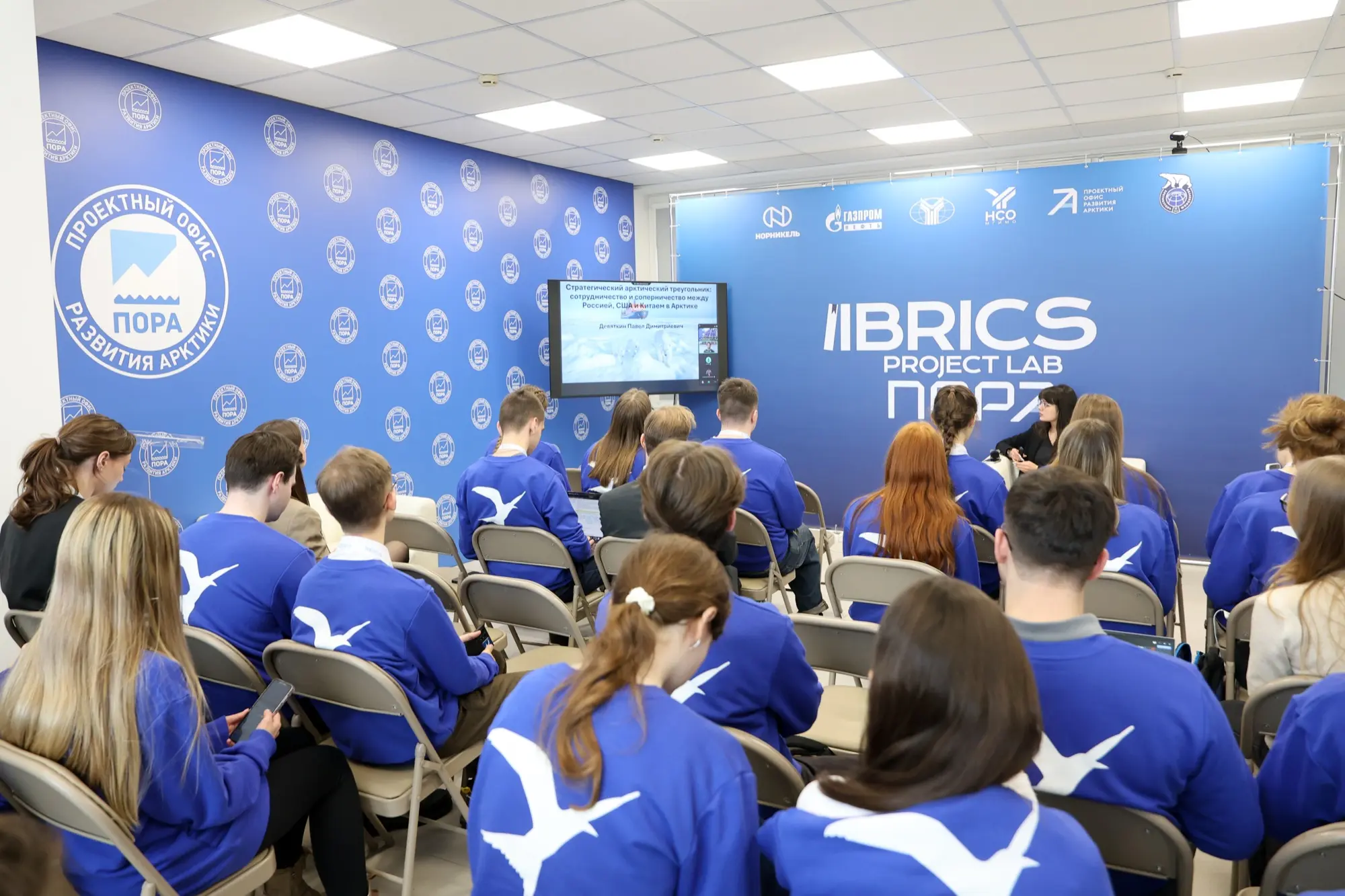
Pavel Devyatkin Analyzes Historical Dynamics of the Russia-USA-China Triangle
Issues of mutual trust within the Russia–USA–China triangle were raised in a lecture by Pavel Devyatkin, Senior Fellow at The Arctic Institute (USA), Non-resident Fellow at the Quincy Institute (USA), and Visiting Lecturer at HSE University. Since the 1970s, the ideologues and practitioners of American «realpolitik» have pondered the nature of the relationship between Russia...
read more
How Yakutia Can Achieve Carbon Neutrality
The Sakhalin experiment proved the effectiveness of certain approaches. Now, its results need to be adapted for a vast region, comparable in area to India or Europe, with its unique ecosystems and economic structure. February 24, 2026 Russia has mandated that six of its regions, encompassing territories of Arkhangelsk region, Yakutia, and Komi, to achieve...
read more