
Alexey Tsykarev: Combating Desertification Has a Bearing on the Survival of Arctic Indigenous Peoples
Arctic reindeer herders must not be left voiceless in the global fight against desertification
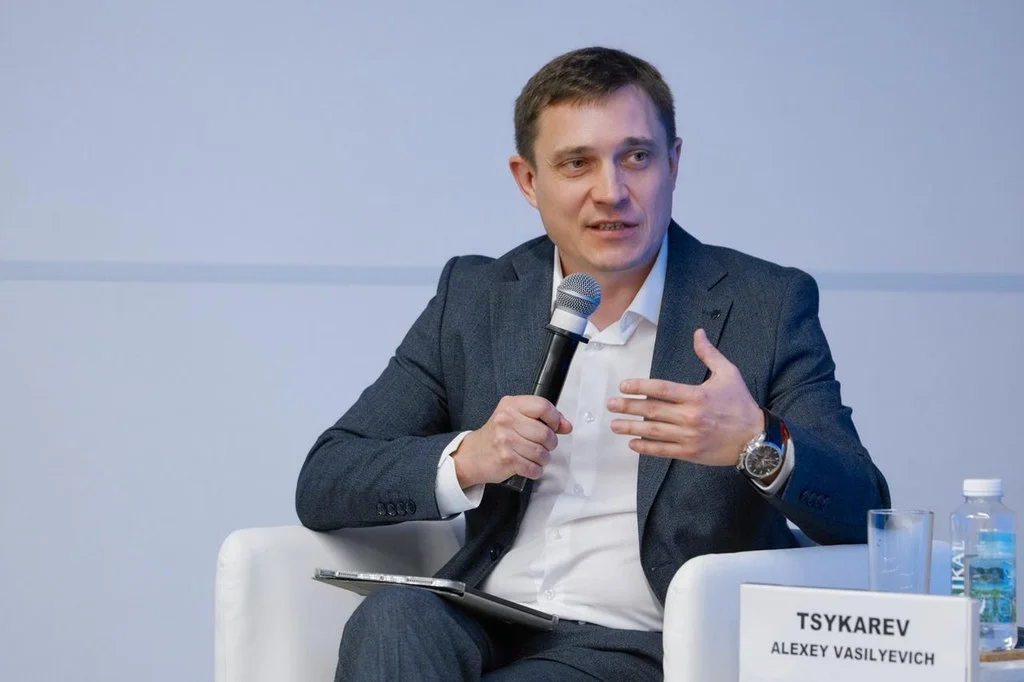
The UN Convention to Combat Desertification (UNCCD) has long been perceived exclusively as a document concerning land degradation in the arid regions of Africa or Central Asia. It is participants from these macro-regions who predominate at the 17th Conference of the Parties to the Convention in Ulaanbaatar, the capital of Mongolia. However, today, in the context of climate change, the agenda of the Convention to Combat Desertification is increasingly relevant to other regions of the world as well, including the Arctic tundra, believes Alexey Tsykarev, a member of the Steering Committee of the Kali Foundation, advisor to the president of the Association of Indigenous Peoples of the North, Siberia and the Far East of the Russian Federation, and chairman of the Center for Indigenous Peoples Support and Public Diplomacy «Young Karelia.»
Back in 2022, at the 15th Conference of the Parties to the UNCCD in Abidjan, Russian Special Presidential Representative for Climate and Water Resources Ruslan Edelgeriev put forward an initiative to expand the treaty’s scope to boreal and Arctic regions.
In their joint 2025 study on the implementation of the Rio de Janeiro environmental conventions, organizations of Russia’s indigenous small-numbered peoples clearly stated: desertification in the Arctic manifests itself in the form of permafrost thawing, which leads to soil erosion, waterlogging of territories, and the release of greenhouse gases. Land degradation, in the view of Russia’s indigenous small-numbered peoples, is «a global challenge that can take various forms in different ecosystems, from the arid plains of Africa to the expanses of the tundra, and requires comprehensive adaptation measures.»
The Arctic as a Zone of «Cold Desertification»
The traditional way of life of Russia’s indigenous small-numbered peoples is inextricably linked to access to lands and biodiversity. This is not merely a resource; it is the foundation of identity, culture, and livelihood. Article 69 of the Russian Constitution and international norms guarantee the protection of the indigenous peoples’ ancestral habitat, yet contemporary climate change is eroding these guarantees.
In the Arctic and adjacent regions, desertification manifests in specific forms: permafrost thawing, coastal erosion, changes in river hydrological regimes, and, as a consequence, the loss of reindeer pastures. For example, in the Yamalo-Nenets Autonomous Okrug, which is home to the world’s largest domestic reindeer herd, nomadic reindeer herders face pasture icing and a shrinking lichen forage base due to industrial development and climate shifts. Indigenous peoples note that where soil has been disturbed or temperature regimes have changed, ecosystem recovery takes decades, and the carrying capacity of the land for reindeer declines. Of particular concern are forest fires, which in recent years have been engulfing increasingly large areas in Siberia and the Far East, destroying the forage base for taiga reindeer herding.
The Voice of the Land: From Riyadh to Ulaanbaatar
At the 16th Conference of the Parties to the UNCCD in Riyadh in 2024, a historic breakthrough occurred: a decision was made to establish a permanent Platform for Indigenous Peoples. This is recognition of the fact that without the participation of the custodians of traditional knowledge, it is impossible to combat land degradation. Indigenous peoples possess unique adaptation practices that must be integrated into national strategies.
It was expected that the 17th Conference in Ulaanbaatar in August 2026 would approve the terms of reference for this platform, enshrining the right of indigenous peoples to full participation in negotiations. However, the process has encountered political obstacles: the United States blocked agenda items related to the participation of civil society and indigenous peoples, creating serious risks for the implementation of the decisions adopted in Riyadh.
Russia presented a national pavilion at the UNCCD for the first time, where the contribution of indigenous peoples to land restoration will be highlighted. Integrating this contribution into national strategic planning documents is a matter for the future. Unlike the preparation of the biodiversity strategy through 2036, a similar process regarding combating desertification did not involve indigenous small-numbered peoples. Their organizations decided to gradually build their capacity and influence within the environmental conventions.
The Ulaanbaatar Declaration: The Voice of the World’s Pastoralists
The 17th Conference of the Parties to the UNCCD in Ulaanbaatar was also marked by the World Gathering of Pastoralist Peoples. The outcome of the meeting was the adoption of the Ulaanbaatar Declaration — a «Global Call to Action by Pastoralists and Indigenous Pastoralist Peoples.» Among the authors of the document, pastoralist organizations from Africa and the Saami of the Nordic countries predominated. The document proclaims pastoralists as custodians of knowledge and holders of collective rights.
For Arctic reindeer herders, the Declaration contains fundamentally important provisions. First, the authors of the document insist that mobility and nomadic pastoralism are not a relic of the past or a problem, but a systemic strategy for adapting to climate change and for sustainable natural resource management in unpredictable environments. This directly resonates with the realities of Russian reindeer herders, whose annual migration routes cover many hundreds of kilometers.
Second, the Declaration demands recognition of pastoralists’ right to free movement of people and livestock. For reindeer herders of the Nenets Autonomous Okrug, who traditionally drive their herds to winter pastures in the Komi Republic and use pastures in neighboring regions in summer, this principle is already being implemented.
Third, the Declaration affirms that pastoral peoples’ access to pasture lands constitutes the foundation for preserving their own culture. Of particular relevance to the Arctic are the provisions on land degradation in Arctic regions and on recognizing pastoral systems as an effective form of biodiversity conservation.
At the same time, it must be noted with regret that the reindeer herders of the Russian Arctic were not invited to participate in the drafting of the Ulaanbaatar Declaration and were unable to directly represent their interests in this document. Their voice — the voice of many thousands of nomadic reindeer herders with the world’s largest domestic reindeer herd — went unheard during the formulation of global appeals. This is an example of how geopolitical disagreements between countries and the ambitions of certain indigenous organizations in the foreign Arctic effectively exclude key communities from decision-making.
What Is on the Agenda?
At the same time, on the eve of the summit in Ulaanbaatar, Russian organizations of indigenous small-numbered peoples, with the support of the government of the Krasnoyarsk Territory, held an international forum where they reaffirmed that traditional knowledge must be taken into account in decision-making under all three Rio Conventions. Without this, it is difficult to envision the sustainable development of Arctic territories. The forum in Krasnoyarsk brought together participants from all regions where Russia’s indigenous small-numbered peoples live and from 14 foreign countries. This event demonstrated a fundamentally new approach, in which Russia’s indigenous peoples are shaping an international platform and the agenda for globally significant discussions.
The Project Office for Arctic Development does not always share the opinions expressed by experts.
For media representatives: we welcome republication of comments provided that an active link to the original source and the columnist’s status as an expert of the Arctic Development Project Office are indicated.
Оthers Our comments
Vyacheslav Maracha: The Transit Potential of the Transarctic Transport Corridor Must Become the Main Growth Driver
The TTC – from a potential alternative to the Suez Canal route to a strategic necessity for global logistics The thesis that the Transarctic Transport Corridor (TTC) could become an alternative to the Suez Canal route for some Asian countries by reducing distance and shipping costs between Asia and Europe is commented on by Vyacheslav...
read more
Sergey Nikonorov: Arctic cities are becoming drivers of a new economy
The Arctic could become a powerful macro-region with a sustainable economy and high quality of life, provided that its resource orientation is balanced with investments in human capital, technology, and ecology The Arctic is an outpost, a space where the technologies of the future are born. It is here, in the polar cities, that solutions...
read more