
Irina Strelnikova: The XVIII BRICS Summit and the Development of Cooperation in the Arctic
The bet is on the gradual accumulation of institutional mass, and the Arctic remains in the strategic focus of the association’s member countries
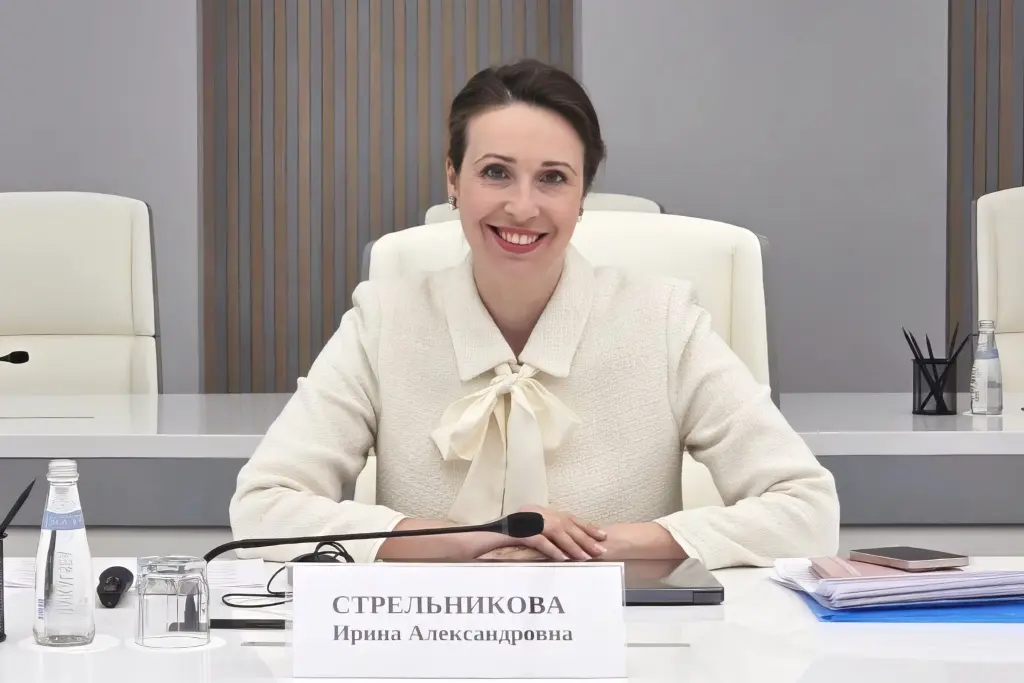
On 12–13 September 2026, the XVIII BRICS Summit was held in New Delhi (India), timed to coincide with the 20th anniversary of the association, when in September 2006 the foreign ministers of Russia, Brazil, India and China first met on the margins of the UN General Assembly. The Arctic and general results of the summit are commented on by PORА expert Irina Strelnikova, Director of the Centre for Interdisciplinary Arctic Studies at HSE University, Associate Professor of the Department of Foreign Regional Studies at HSE University, and Senior Research Fellow at the Institute of China and Contemporary Asia of the Russian Academy of Sciences.
Delegations from all the association’s states gathered in New Delhi, with eight heads of state representing their countries. The President of the UAE sent his eldest son instead of the relevant minister, which underscores the high significance of this summit for the Middle Eastern monarchy. At the summit, the leaders met for the first time after the sharp escalation of the situation in the Middle East, which revealed contradictions within the association. Iran and the UAE found themselves on opposite sides of the conflict. In addition, bilateral contradictions remain between India and China. Egypt and Ethiopia disagree on issues of water resource use. All of this serves as a test of BRICS’ strength as an association. However, the current BRICS summit showed that the member states have far more common ground for interaction than disagreements. All participants are united by the desire to restructure the global economic system and create a multipolar world.
The Arctic Agenda
Within the framework of the current BRICS summit, the association deliberately avoided breakthrough decisions and focused on a strategy of gradual accumulation of institutional mass. For this reason, given the emphasis in the current BRICS summit agenda on addressing global issues, the Arctic was not given heightened attention in the summit’s final Declaration. However, the importance of cooperation in the field of science and technology development, energy projects and sustainable supply chains runs as a red thread through the text of the adopted document.
Moreover, on the margins of the summit, the state corporation Rosatom, represented by Director Alexey Likhachev, confirmed the plans already announced in June within the framework of SPIEF-2026 to develop logistics along the NSR within BRICS: «We have ideas to introduce another topic, so to speak, within the framework of ‘BRICS interaction’ – that is logistics. Logistics specifically in terms of using the Northern Sea Route. I would simply like to recall one of the statements, one of the theses of Vladimir Vladimirovich Putin in his keynote report at the Eastern Economic Forum in Vladivostok, when he set us the task of turning the Northern Sea Route into an Arctic transport corridor — with such a large southern branch precisely here, to the markets of East and Southeast Asia,» Likhachev commented.
It is noteworthy that while the consolidation of Western Arctic states, for example, takes place within the framework of the development of the European Union’s Arctic polar cluster and the Atlantic Alliance for Ocean Research and Innovation, not to mention the development of the Arctic direction within NATO and EU defence initiatives in the Arctic, Russia pursues its constructive policy in order to ensure its national interests in a region of strategic importance to it, relying on cooperation with partners from BRICS countries.
The Arctic theme within BRICS received official consolidation on the agenda in 2015. A key stage in this process was the adoption of the Memorandum of Cooperation in the field of science, technology and innovation. In it, polar and marine research were included in the list of priority areas. Since then, the Arctic has increasingly become for the association a space where scientific ambitions, energy needs and logistics tasks of global scale intersect. Despite the fact that the transition to active multilateral cooperation is still constrained by a number of systemic factors and at present bilateral interaction dominates in BRICS, the number of multilateral initiatives is gradually increasing, facilitated by the specially created BRICS Working Group on Ocean and Polar Zone Research and Technology, whose latest meeting was held on the eve of the BRICS summit.
The Course of the Summit and Its Main Results
The main event of the summit was the unanimous adoption of the New Delhi Declaration, which was an achievement, since the Indian side managed to find a compromise in the context of contradictions between Iran and the UAE against the backdrop of the Middle East conflict. The document sets out coordinated positions of the states regarding the geopolitical situation, current threats, areas for further cooperation, and certain conflicts. The BRICS countries continue to emphasise the importance of efforts to prevent conflicts, including by addressing their root causes, confirm their commitment to the peaceful settlement of disputes, support a multilateral approach that takes into account the various points of view and positions of countries, and confirm their intention to develop cross-border payments and stimulate settlements in national currencies.
It appears that the BRICS summit in New Delhi ended in success. Despite conflicts and contradictions between individual countries, BRICS demonstrated unity. At the same time, Vladimir Putin emphasised that the creation of a more just world order, as before, faces resistance from states that are accustomed to «dividing the world into a blooming garden and wild jungles.» Nevertheless, the path to changing the rules of the game on the international arena has no alternative. And the main task of BRICS is to carry out these geopolitical changes through concrete projects that will bring direct benefit to its participants.
In the context of the transformation of global governance, BRICS has the potential to become a unique platform for multilateral cooperation, uniting states that either already possess significant polar experience or plan to engage in this activity in the near future. Pooling efforts will make it possible to conduct dialogue both on issues of the economic development of the region, primarily in the sphere of hydrocarbon extraction, which is critically important for the developing economies of the bloc, and the development of the Northern Sea Route as an alternative global artery, and, in parallel, to initiate scientific breakthroughs in the field of protecting fragile ecosystems and combating climate change. Comprehensive cooperation based on the technological capabilities and research experience of the BRICS countries will make it possible to most effectively build a system of international interaction in the new geopolitical realities.
At the same time, it is important to emphasise that BRICS does not replace the institutions and cooperation regimes that have developed at the regional level; instead, BRICS supplements them when countries and the region itself have concrete interests and needs in joint scientific research, technology exchange, development of transport infrastructure, exchange of experience in the field of climate change and ecosystem protection, and directs political support to the resolution of regional issues of global significance.
The Project Office for Arctic Development and the editorial board of GoArctic.ru do not necessarily share the opinions expressed by experts.
For media representatives: we welcome the republication of comments provided that an active link to the original source is given and the columnist’s status as an expert of the Project Office for Arctic Development is indicated.
Оthers Our comments

Sergey Nikonorov: Arctic cities are becoming drivers of a new economy
The Arctic could become a powerful macro-region with a sustainable economy and high quality of life, provided that its resource orientation is balanced with investments in human capital, technology, and ecology The Arctic is an outpost, a space where the technologies of the future are born. It is here, in the polar cities, that solutions...
read more
Maksim Dankin Supposes the Rise of Two Dominant Powers in the Arctic
February 5, 2026 Why is the world now seriously looking at the North, how has Greenland become a point where the interests of the USA, Europe, Russia, and China converge, and why is melting ice changing not just the map but the very logic of world politics? In early February, Maksim Dankin, General Director of...
read more