
Yulia Alferova. The Creative Arctic: How to Turn the Uniqueness of a Territory into an Economic Resource
Which areas of the Creative Economy Development Strategy require special attention in the Arctic regions, and why a universal model for the entire Arctic does not exist
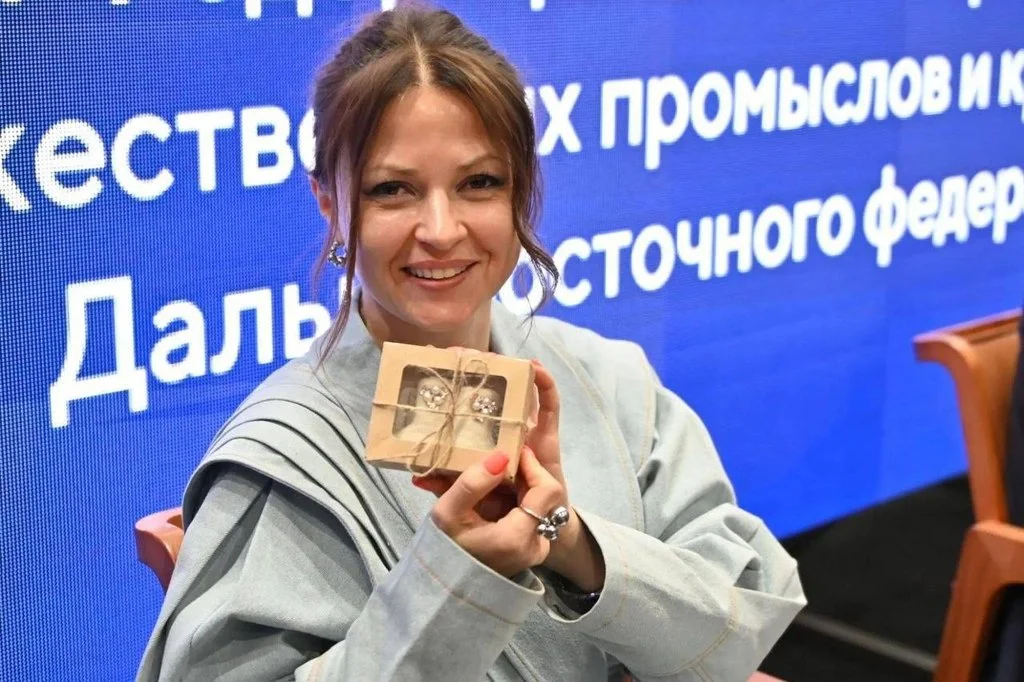
Russia’s current Creative Economy Development Strategy through 2036 sets a framework for the regions: by 2030, the contribution of creative industries to the country’s economy must grow to 6% of GDP, and by 2036, to 7.7%. At the same time, the strategy itself proceeds from the premise that inertial development is insufficient to achieve these indicators. Yulia Alferova, an expert at PORА and General Director of the ANO «National Agency for Entrepreneurship Development and Socio-Economic Development,» a member of the State Council Commission of the Russian Federation on the track «Effective and Competitive Economy,» and a member of the Expert Council on the Development of Creative Industries under the State Duma Committee on Economic Policy, reflects on the Arctic aspects of this problem.
In the Arctic, it is important to capitalize on uniqueness without destroying it. Creative industries here existed long before the term itself appeared, so the task is to see the growth points that have already taken shape and ensure their smart economic intensification. The new strategy makes it possible to move from supporting individual projects to managing the creative economy of the Arctic: first typologize what exists, determine the specialization and institutional maturity of territories, choose an intensification model, rally government, business, science, and communities around it, and only then connect instruments in a targeted way.
Since 2020, working in the Expert Council of the Project Office for Arctic Development, visiting Arctic regions, participating in relevant forums and expert work, and once traveling along the Northern Sea Route from Kamchatka to St. Petersburg, I gradually assembled this picture for myself. And today I would single out several areas that deserve special attention when implementing the Strategy in the Arctic.
Diagnostics of what already exists. Gather creative industries and local phenomena by territory and across 16 sectors, determine established specializations, and answer the main question: what do we alone have that cannot be reproduced outside the Arctic?
Arctic authenticity. The cultural code, historical memory, indigenous peoples’ knowledge, the natural environment, and ways of life can become an economic resource while preserving origin, continuity, and the product’s connection to the territory. Uelen, the Arctic fashion of Yamal, Nenets craft, the gastronomy of Naryan-Mar, and Yakut cinema already provide material for such typologization.
From individual cases to models of economic intensification. The Arctic is too diverse for a single universal model. Several standard solutions are needed for different cities and settlements, along with their targeted, almost «jewel-like» implementation using existing support measures. Such trajectories can already be traced in certain territories—for example, in Naryan-Mar, where in recent years the craft, design, gastronomic, and event components of the creative economy have been consistently developed.
The Arctic as a territory of knowledge production. Arctic research, scientific data, new technologies, design for extreme environments, digital products, and intellectual property also shape a new economy. Here it is especially important to learn how to capitalize on the knowledge that exists precisely because the Arctic exists, and to create conditions for turning it into technologies, products, and entrepreneurial projects.
New development tools. The «Arctic Hectare» can become a spatial foundation for gastronomic, tourism, craft, event, and other creative projects, while endowment funds can become a source of long-term capital allowing territories, universities, and cultural institutions to develop such projects beyond the horizon of a single grant cycle.
«The Creative Arctic» as a macro-regional brand. Approaches to the Arctic brand have been formed repeatedly, but the new Strategy provides a reason to look at it once again, now through the lens of economics: a common umbrella image can unite different territorial specializations while preserving their authenticity. Because the Arctic is many different Arctics.
Institutional maturity. There is a need for a regulatory, legal, and organizational landscape in which creative industries become a full-fledged object of regional economic policy—with clear actors, responsibility, infrastructure, funding, a support system, and measurable effects. And the level of such institutionalization in the Arctic regions must also be diagnosed today.
Creative managerial mobilization. The interdisciplinarity of creative industries requires a region’s ability to rally around a single task the economic, cultural, educational, investment, tourism, property, and municipal blocks, development institutions, universities, business, and communities. In practice, the relevant ministry often has to overcome indifference or resistance from other participants in the system. Therefore, the quality of interagency interaction becomes one of the conditions for implementing the Strategy itself.
Human capital, self-realization, and social optimism. For the Arctic, the effect of creative industries cannot be measured only by their contribution to GRP, the number of companies, or jobs. The opportunity to create one’s own business, realize one’s talent, and develop professionally while remaining in one’s own territory creates another important effect—social optimism, a person’s sense that it is possible to build one’s own future here. Therefore, when assessing the creative economy of the Arctic, I would also take into account local factors of quality of life and happiness, which can differ significantly from one territory to another.
The Project Office for Arctic Development and the editorial board of GoArctic.ru do not necessarily share the opinions expressed by experts.
For media representatives: we welcome the republication of comments provided that an active link to the original source is given and the columnist’s status as an expert of the Project Office for Arctic Development is indicated.
Оthers Our comments
Andrey Krivorotov – On Sweden’s New Arctic Strategy
The Swedish government perceives Russia’s activities in the Arctic as a direct threat and monitors China’s activities with wariness June 4, 2026 On June 1, 2026, the Swedish government submitted to the Riksdag (parliament) an official communication entitled «Sweden’s Strategy for a Peaceful, Secure and Sustainable Arctic.» That same day, the strategy was publicly presented...
read more
Milena Milic: Carbon Units as a Resource – What Will Climate Policy Change for the Arctic
Time to move from emission accounting to real financing of energy efficiency, permafrost monitoring, and port logistics The Arctic does not need abstract climate tools, but working mechanisms that simultaneously reduce risks to nature and infrastructure, support investment, and create measurable value for local communities and businesses. The conversation about the development of Russia’s carbon...
read more