
Andrey Krivorotov – on the limited results of the European Arctic Summit
The event turned into yet another “meeting of the willing”, who are united above all by a sharply critical attitude toward Russia
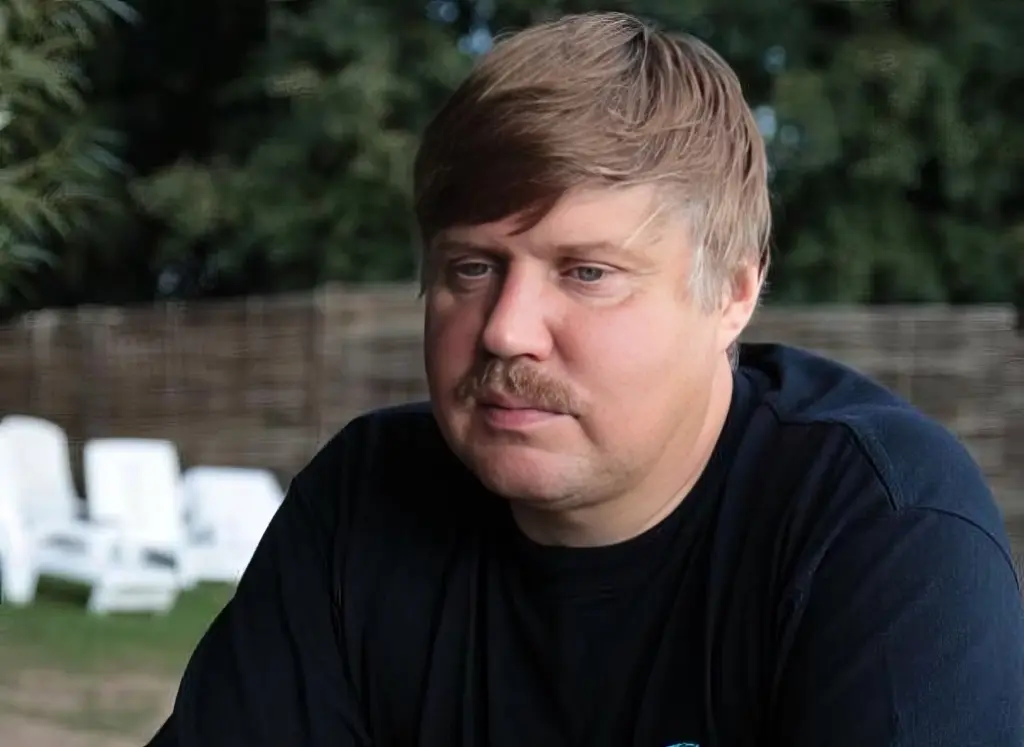
In the capital of the Finnish Arctic, the city of Rovaniemi, the European Arctic Summit took place on September 13–14, concluding with the adoption of a joint statement. The course and results of the event are commented on by an expert of PORА, head of the department at the Odintsovo branch of MGIMO, and leading research fellow at the Institute of China and Contemporary Asia of the Russian Academy of Sciences, Andrey Krivorotov.
Strictly speaking, the convening of the summit precisely now is quite explicable in light of the completion of the European Commission’s previously announced collection of proposals for updating the EU Arctic strategy. At the same time, Brussels emphasized from the very beginning that this was not about adopting a new edition, but about certain adjustments to the existing strategy set out in the Joint Statement of the four highest bodies of the European Union dated October 13, 2021. At the press conference following the summit, Finnish Prime Minister Petteri Orpo noted that the summit was intended to take the first step—to help realize the current situation in the Arctic. The actual changes to the text of the strategy will be introduced already at the second step.
The need to comprehend the situation and the EU’s place in it is indeed evident. The organization needs to seek a certain identity of its own in the rapidly changing Arctic. So, in essence, the meeting in Rovaniemi should be regarded as an attempt to form the notorious “strategic autonomy of Europe” in the northern direction. The discussions that took place once again demonstrated the difficulties that arise in this connection.
On the one hand, the European Union (this was repeatedly stated again in the margins of the summit and in the final document) remains committed to a line of harsh confrontation in the Arctic with Russia and the blocking of China. It is telling that, in addition to the heads of the European Commission and its foreign policy bloc, the summit was attended not by the heads of state and government of all EU members, but only by those of 12 Northern European and Baltic countries, France, the Netherlands, Greece, and Romania. Among them are many of the most anti-Russian-minded countries, sometimes located far from the Arctic Circle. At the same time, the Arctic states Norway and Iceland, which are most closely linked to the EU economically and politically, were not invited. Such a composition of delegates immediately promised an ideologized anti-Russian tone to the detriment of substantive discussion of the actual problems of the Arctic—especially given that the discussions were deliberately interim in nature, without adopting strategic decisions.
On the other hand, Europeans can no longer unconditionally rely, as before, on America’s help. It is not for nothing that in the context of the summit, including at the final press conference, the topic of Greenland was often heard as the most painful issue in relations with the United States—and at the same time, as everyone noticed, it was not mentioned at all in the final statement.\
Danish Prime Minister Mette Frederiksen said at the press conference that a joint Danish-American expert group on the affairs of the island had begun its work. Judging by the first results of its work, the prime minister is “quite optimistic” and hopes for the resolution of all disputed issues. In reality, however, given the obvious inequality of the parties and Denmark’s need for a close military-political alliance with the United States, which M. Frederiksen herself acknowledged, the activity of such a bilateral group could easily turn into de facto negotiations on expanding the American presence in Greenland and their involvement in governing the island.
Overall, three quarters of the volume of the final statement turned out to be devoted to issues of military security, with a call for the European Union to strengthen its presence in the Arctic, primarily in terms of monitoring the situation and increasing (combat) readiness. The development of infrastructure in the region is also considered from this angle.
The remaining important issues are given at best one paragraph each. The participants in the meeting confirmed, in particular, their fidelity to their line on the Arctic’s transition to clean energy sources, although they no longer demand the speedy curtailment of oil and gas extraction in the region. Moreover, the statement directly says: “Sustainably and responsibly extracted Arctic resources can strengthen the security of supply of critical materials,” with special attention to rare earth metals.
Assessing the event as a whole, it should be noted that it did not constitute a full-scale summit, but turned into yet another “meeting of the willing,” who are united above all by a sharply critical attitude toward Russia. The results are rather modest, and given such a limited mandate and composition of participants, one could not have expected more. But the general line emerged quite clearly. Europeans see their special role in the Arctic primarily in maintaining high tension and building up their own military-technical potential in the region. At the same time, attempts are noticeable to consider the Arctic in connection with confrontation with Russia in the Baltic and Black Sea regions. Taken together, this almost excludes practical cooperation between our country and the European Union for the foreseeable future.
The Project Office for Arctic Development and the editorial board of GoArctic.ru do not necessarily share the opinions expressed by experts.
For media representatives: we welcome the republication of comments provided that an active link to the original source is given and the columnist’s status as an expert of the Project Office for Arctic Development is indicated.
Оthers Our comments
Polar Happiness: Why Contented Northerners Are Leaving the Arctic
March 6, 2026 The leading Russian business newspaper Vedomosti has published a new column by Maksim Dankin, Director General of the PORA Expert Center. A large-scale sociological study in the Arctic has recently concluded, surveying more than 13,000 people across all 10 regions of the Arctic Zone of the Russian Federation. The results are paradoxical:...
read more
Irina Strelnikova – The Arctic as a Factor of Strength and a Strategic Region in Sweden’s New Arctic Strategy
The document identifies Russia as the most serious threat to Sweden’s national security emanating from the Arctic region; China is described as a state with clear ambitions to become a great power in the polar regions On June 1, 2026, Swedish Minister for Foreign Affairs Maria Malmer Stenergard presented the country’s new Arctic strategy. The...
read more