
Alexey Tsykarev: Russia can offer BRICS expertise in institutional support for indigenous small-numbered peoples
At the same time, BRICS itself can compete with Western institutions in the field of standards on indigenous peoples’ rights
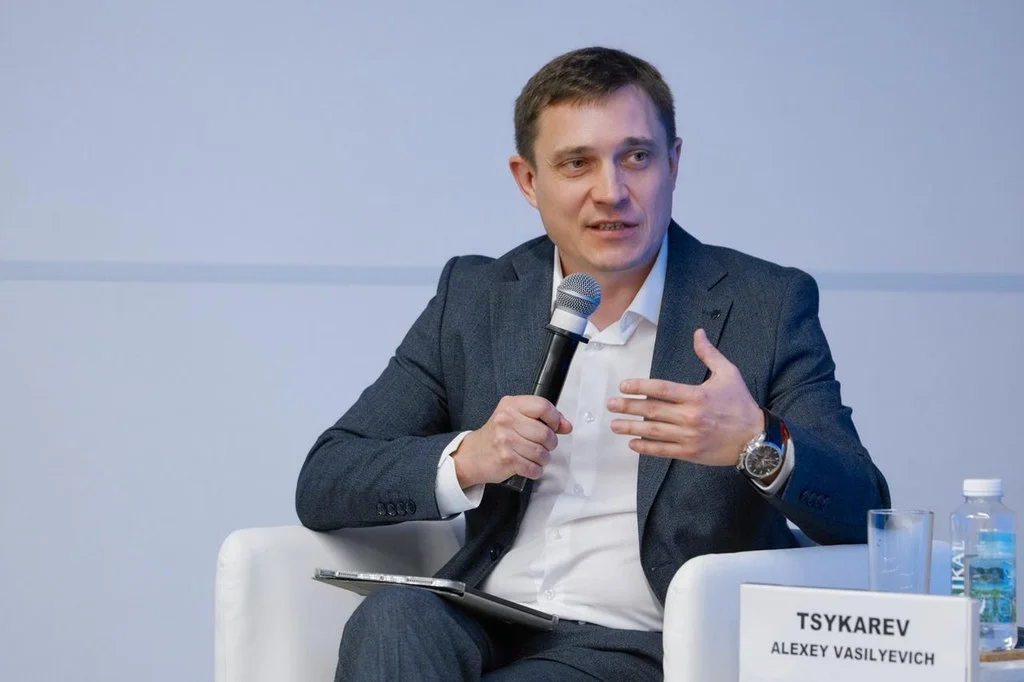
Against the backdrop of continued stagnation in the activities of the Arctic Council, which recently marked its thirtieth anniversary, cooperation among BRICS countries in the northern latitudes is acquiring additional value. Economic cooperation in the Arctic has great potential for BRICS states, but the association needs its own sustainable mechanisms, and indigenous peoples here are not a peripheral topic, but one of the key factors of long-term stability, reminds Alexey Tsykarev, an expert at PORА, adviser to the president of the Association of Indigenous Small-Numbered Peoples of the North, Siberia and the Far East, chairman of the Center for Support of Indigenous Peoples and Public Diplomacy «Young Karelia,» and a member of the steering committee of the Kali Foundation.
It is important to take into account that at the national level, the approaches of BRICS countries to the issue of indigenous peoples differ. For example, China at the official level declares that there are no indigenous peoples on its territory, considering all 56 ethnic groups as part of a single Chinese nation, whereas for Brazil the rights of indigenous peoples are a matter of principle. It is enough to recall the Kali Foundation, created for the fair distribution of benefits, including to indigenous peoples: Brazil effectively links access of companies from a number of sectors to its market with contributions to this fund.
Under these conditions, Russia is capable of showing leadership and offering BRICS its expertise. Our country has accumulated unique experience in legal regulation and institutional support for indigenous small-numbered peoples, recognized at the international level. By admitting foreign companies into its Arctic zone, Russia has the right and must extend national standards and rules to them, seeking from partners an understanding that indigenous peoples are not only bearers of traditional knowledge but also guardians of Arctic ecosystems, and that their presence and economic activity in the northern regions is one of the factors of Russian statehood and national security.
Partners should view Russian standards on indigenous peoples’ rights not as a barrier to investment, but as a condition for their long-term legitimacy.
Russia could use its influence in BRICS to develop common standards by the association on the rights of indigenous peoples—naturally, taking into account the national characteristics of each country. Such a step would allow BRICS to compete with Western multilateral mechanisms, such as the World Bank, whose operational policies regarding indigenous peoples have already been repeatedly improved. If BRICS formulates its own principles based on respect for sovereignty and the real participation of communities, this will become not merely an alternative, but a substantive contribution to the global agenda of sustainable development of the Arctic.
The Project Office for Arctic Development and the editorial board of GoArctic.ru do not necessarily share the opinions expressed by experts.
For media representatives: we welcome the republication of comments provided that an active link to the original source is given and the columnist’s status as an expert of the Project Office for Arctic Development is indicated.
Оthers Our comments
Victoria Pestova on Arkhangelsk proposals for Arctic Zone and Transarctic Corridor development
Reduced railway freight rates to Arkhangelsk and Murmansk are required, as well as the establishment of bonded zones in Arctic ports for duty-free cargo storage On July 27, 2026, in Arkhangelsk, a meeting chaired by Deputy Prime Minister Yury Trutnev discussed the comprehensive development project for the Arctic Zone and the Transarctic Transport Corridor (TTC)....
read more
Achieving Arctic Development Targets by 2026 — A Foundation for a New Stage of Social and Economic Growth
February 27, 2026 In the run-up to Arctic Day, the Director General of the PORA Expert Center, Maksim Dankin, assessed the results of the social and economic development of the Russian Arctic over the past five years. Speaking at the round table devoted to the strategic priorities for the development of the Russian Arctic Zone...
read more