
Andrey Trenin: «US Expansion into the Rare-Earth Industry Exceeds Russia’s by Almost 300 Times»
The United States is rapidly building its own integrated industry virtually from scratch, while Russia’s development of its rare-earth industry is, at best, a moderately paced effort to catch up

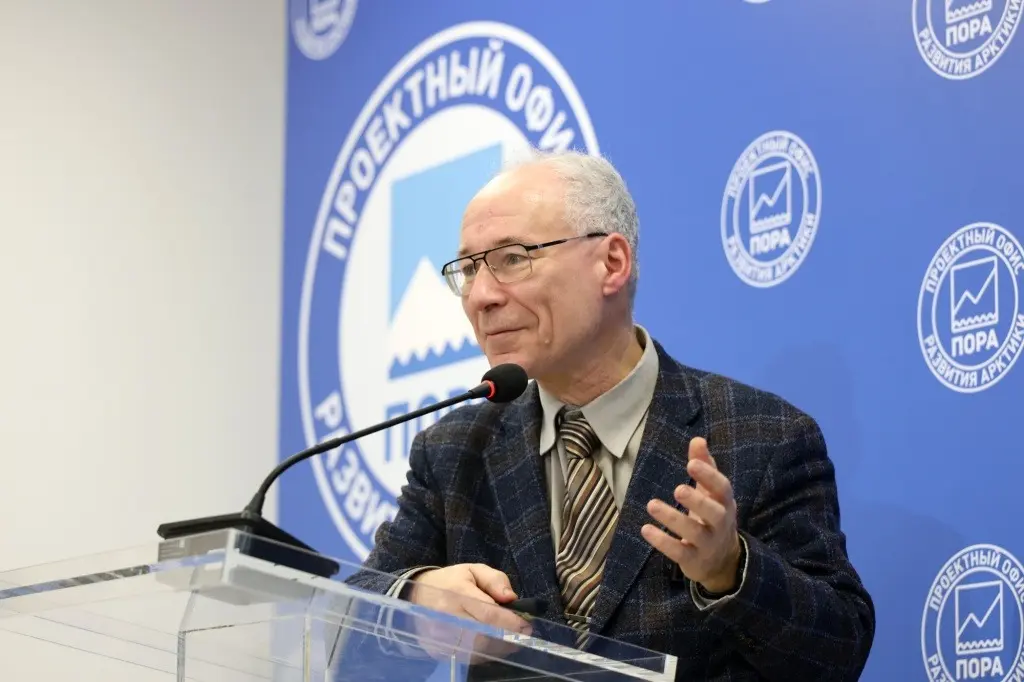
The temporary extension of the US–China trade truce has postponed, but not resolved, the conflict over rare-earth metals, advanced technologies, and control of critical supply chains. Washington is simultaneously increasing pressure on Beijing and funding the development of its own mineral and technological base, including projects in the United States and Greenland. Russia has substantial resources and promising projects, but the state funding allocated so far is nowhere near the American scale, says Andrey Trenin, CEO of Arkmineral-Resource JSC and head of the Afrikanda rare-metals project in the Murmansk region.
On September 24, 2026, Chinese President Xi Jinping and US President Donald Trump held talks in New York. The question ahead of the meeting was less whether the two sides would extend their trade truce than by how long. The backdrop was complicated: mutual trade restrictions; a law imposing “hellish sanctions” on countries that continue to trade with Russia, Iran, and North Korea—primarily China, followed by India—which Trump had signed just the day before; a substantial decline in Chinese rare-earth metal shipments to the United States; possible Chinese plans to extend export restrictions to several more critical metals by November 10, 2026; competition between the American and Chinese approaches to AI development; and, of course, the approaching US midterm elections.
President Xi’s visit to the United States was effectively a response to President Trump’s working visit to Beijing in May 2026. Although the meetings had much in common, there were several telling differences. The May summit was an attempt to find a balance, ultimately producing an agreement on a formula for “constructive relations of strategic stability.” The September meeting was more of an attempt by the US president to display personal friendship. In May, Donald Trump was accompanied by a substantial business delegation of executives from leading US technology companies, and major deals were eventually concluded with Chinese partners. Xi Jinping, by contrast, came to New York without executives from China’s leading technology companies. A presidential working visit and a bilateral summit on the sidelines of the UN General Assembly are, of course, very different formats. Yet the disagreements between the world’s two largest economies are too serious to pass up any opportunity to achieve “strategic stability.” The outcome of the autumn meeting was an agreement to extend the trade truce by just two months, until January 10, 2027.
The main US negotiating position is one of “a big stick and a little stick.” On technology, it includes a ban on supplying advanced chips for AI development, restrictions on lithography equipment, and blacklists covering dozens of Chinese technology giants. It also includes prohibitive tariffs and a ban on US investment in Chinese startups. Then there is military deterrence, including regional alliances such as AUKUS and the Quad, increased direct arms supplies to Taiwan, and hints of diplomatic and military assistance to the island in the event of escalation. The notorious “hellish sanctions” law targeting countries that trade with Russia, Iran, and North Korea is part of the same approach, although the sanctions will be applied at the US president’s discretion. There is very little positive agenda—the “little sticks”—in Washington’s negotiating position: a willingness to license sales of older generations of chips and specially restricted versions of processors, along with concessions on non-technology goods such as food.
But this traditional American arrogance meets Beijing’s centuries-old composure. China has already shown considerable resilience in the face of US sanctions. Its position as the largest—and, in many areas, the sole—supplier of critical materials, including rare and rare-earth metals, together with its tight control over global raw-material supply chains, gives it powerful leverage. Moreover, even under severe US restrictions, China is seeking a technological breakthrough by developing its own lithography machines to produce the latest generation of chips.
On the sidelines of the UN General Assembly and ahead of the US midterm elections, President Trump signed another “historic” deal—this time concerning Greenland. In addition to expanding Washington’s military presence on the world’s largest island, the agreement includes a provision barring foreign strategic investment—primarily Chinese investment—without Washington’s approval. It is easy to assume that this includes rare and rare-earth metals. For example, Tanbreez, one of the largest deposits, whose development rights are held by the Canadian-Australian company Critical Metals, is now effectively “reserved” for the Western rare-earth sector. Concentrate mined there is expected to be processed at a plant currently being planned in Romania, also under Critical Metals’ control.
For Russia, this turn in the US–China rare-earth story is interesting, but little more. It changes nothing fundamental. Russia is the largest Arctic power and holds some of the world’s largest rare-earth metal reserves, as well as the technology to process them. Russian President Vladimir Putin has made the development of a domestic, integrated, and sovereign rare and rare-earth metals industry a priority under the “New Materials and Chemistry” national project. In late 2025, Russia’s Ministry of Industry and Trade drew up a development plan for the industry and even managed to secure subsidies for it.
Let us look more closely at the numbers. With our commercial domestic market estimated at $35–45 million a year, Russian government support will total 3.85 billion rubles—approximately $45 million—over three years, from 2026 to 2028.
By comparison, US government support for the rare and rare-earth metals industry amounted to $4.5–5 billion in just a few months of 2026, against an estimated commercial domestic market of $85–90 million a year.
Annual government support relative to the domestic market amounts to 51.4 to 1 in the United States—5,140% of the market—and 0.38 to 1 in Russia—38% of the market. US expansion into the rare-earth industry exceeds Russia’s by almost 300 times! This means that the United States is deliberately building its own integrated industry virtually from scratch at an accelerated pace. The development of Russia’s rare-earth industry, meanwhile, is at best a moderately paced effort to catch up.
The Project Office for Arctic Development and the editorial board of GoArctic.ru do not necessarily share the opinions expressed by experts.
For media representatives: we welcome the republication of comments provided that an active link to the original source is given and the columnist’s status as an expert of the Project Office for Arctic Development is indicated.
Оthers Our comments
Proxy Governance Model for Greenland: An Option for the U.S. Foreign Policy?
Alexander Pilyasov, Doctor of Science (Geography) and Professor at Lomonosov Moscow State University, proposes that Donald Trump could leverage proxy organizations to manage economic activities and resources in Greenland. Drawing on historical precedents such as the Hudson’s Bay Company, the East India Company, and the Tennessee Valley Corporation, Dr. Pilyasov highlights the effectiveness of this...
read more
Sergey Nikonorov: The Legal Regulation of Arctic Shipping Is Becoming Increasingly Complex
Issues extending beyond the Northern Sea Route permit regime and implementation of the Polar Code now include sanctions-related risks, marine insurance, environmental requirements for fuels and emissions, and the need to regulate the Trans-Arctic Transport Corridor as a single integrated system Today’s Arctic is a region where the interests of global trade, energy, environmental protection,...
read more