
Yamal Summarises First Year of the Arctic’s First Forest-Climate Project
It aims to increase greenhouse gas absorption by forests and to develop a methodology for implementing climate projects in the Arctic zone of Russia
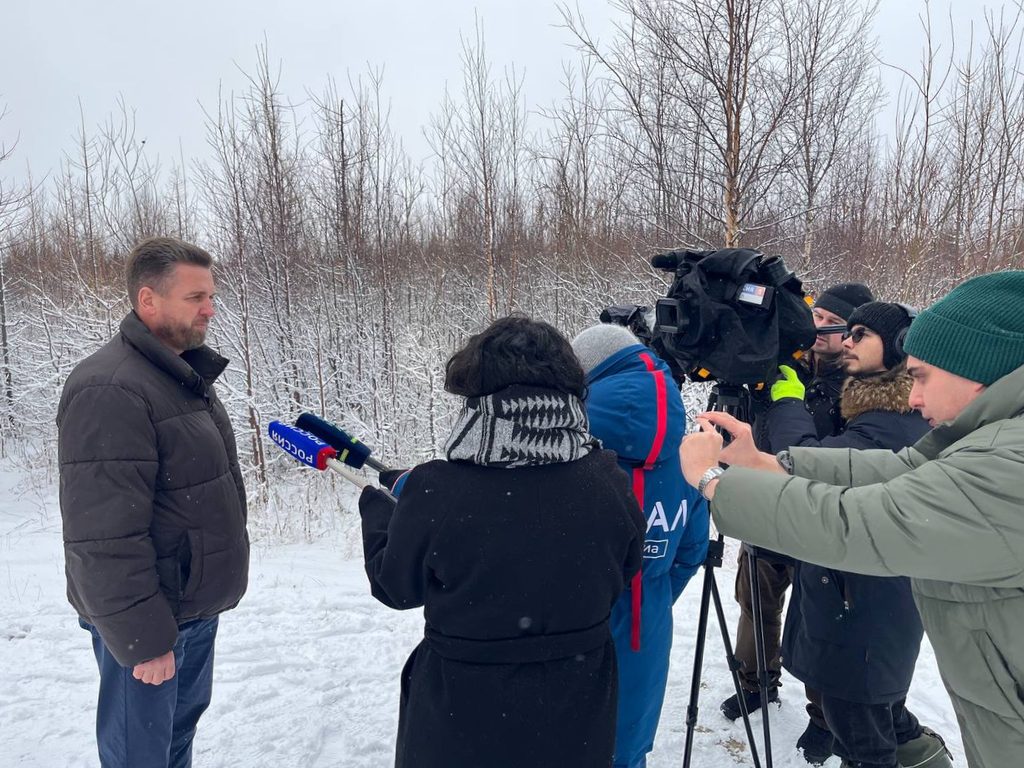
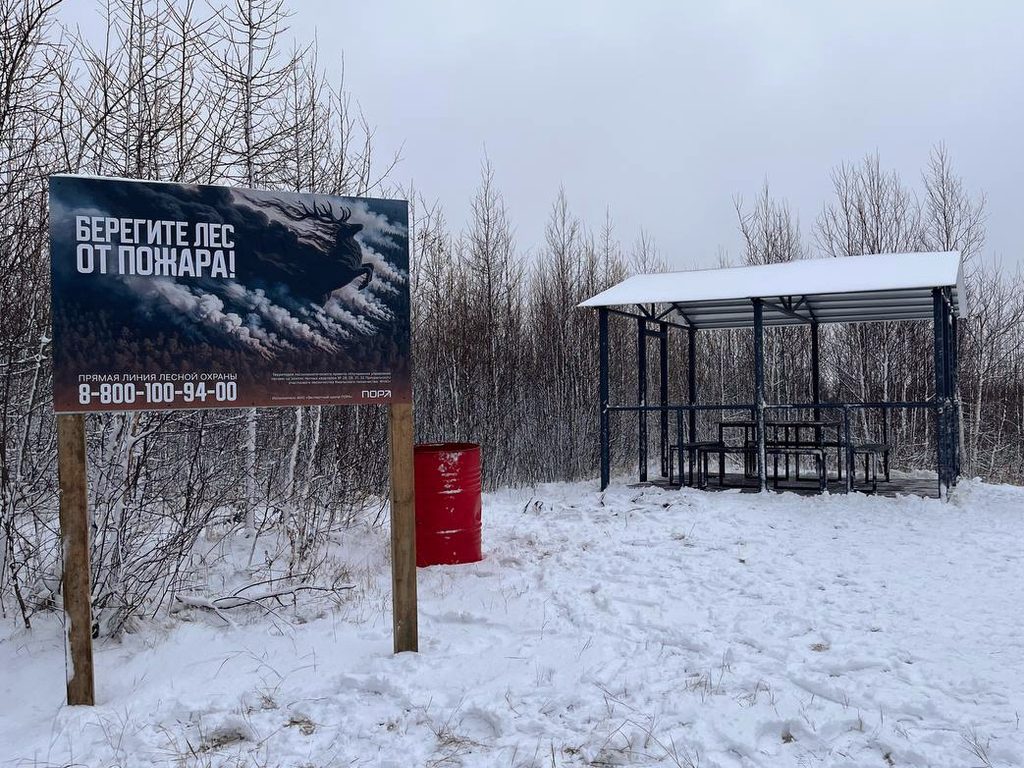
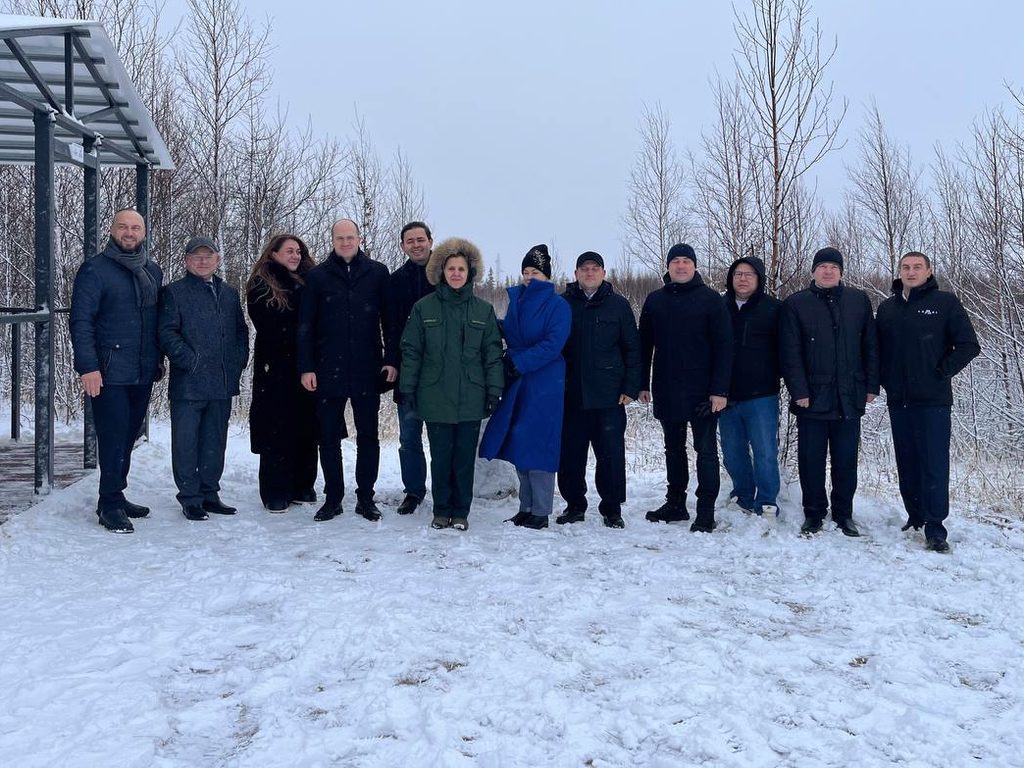
On 20 October 2026, the Priuralsky forestry district (Yamalo-Nenets Autonomous Okrug) hosted a review of the first year of implementation of the first forest-climate project in the Russian Arctic, where plans for the future were also outlined. A section of firebreak mineralised strips has already been created, video monitoring of fire threats has been piloted, and fertilisers have begun to be applied to the soil to increase forest phytomass growth and soil carbon accumulation. Information stands have been installed next to a designated recreation area to help improve fire safety across the territory. The work is to be extended to the project’s full area of 20,560 hectares of forest.
The project is designed for 15 years with the possibility of extension. According to the project scenario, average annual CO₂ absorption will be 12,000 tonnes, and over the entire project period the climate effect will amount to 180,000 carbon units, the first of which are planned to be issued into circulation in 2030.
The initiator of the project was the PORА Expert Center, and the scientific partner was the Yu. A. Izrael Institute of Global Climate and Ecology. Implementation is being carried out with the support of the government of the Yamalo-Nenets Autonomous Okrug.
«For Yamal, participation in this project is a logical step in systematic work to reduce the burden on the environment. We are already monitoring permafrost and developing a carbon polygon, and the forest-climate initiative complements this work. I am confident that the results of the project will be in demand not only in our region but throughout the entire Arctic,» commented Deputy Governor of the Yamalo-Nenets Autonomous Okrug Andrey Garanin.
More than 5,300 climate projects are being implemented worldwide, of which about 700 are nature-based climate projects. In Russia, 141 climate projects have been registered; there are fewer than 10 forest-climate projects. The Yamal project is the first forest-climate project in the Arctic. Its goals are to increase greenhouse gas absorption by forests and to develop a methodology for implementing climate projects in the Arctic zone of Russia. The project will contribute to achieving the goal enshrined in the Climate Doctrine of the Russian Federation — the country’s attainment of carbon neutrality by 2060.
«Yamal is an industrial region, and it is important for us that industrial development and environmental care go hand in hand. The first forest-climate project in the Arctic will make it possible to develop a methodology that is unique for forest-tundra conditions. At the same time, it yields not only an environmental but also an economic result: funds from the sale of carbon units will go toward the development of Arctic territories, including the places where indigenous small-numbered peoples of the North live,» noted Maksim Dankin, Director General of the PORА Expert Center.
For Yamal, participation in such a project is a continuation of systematic work to reduce the burden on the environment: the okrug already has a network of observation wells for permafrost monitoring, the «Seven Larches» carbon polygon is operating, and environmental monitoring is being conducted. The forest-climate project complements this work by covering a new area — management of the carbon balance of forests, emphasized Sergey Lysenko, head of the project direction at the Project Office for Arctic Development.
Оthers Our news
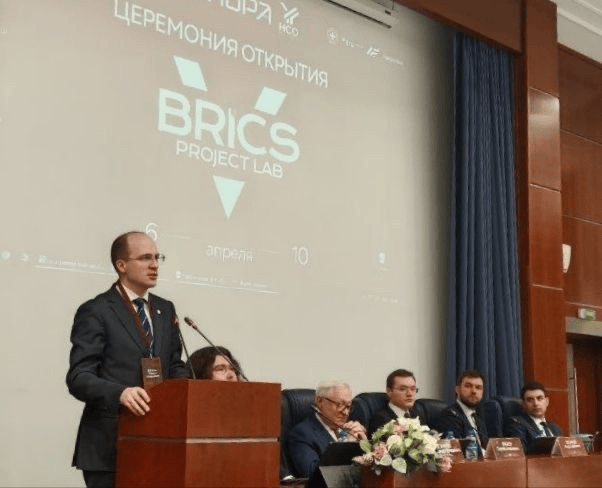
Maksim Dankin Speaks to Participants of BRICS Project Lab
The 5th International Youth BRICS Project Lab has transitioned to its in-person phase at MGIMO University. Following two weeks of remote collaborative work on their respective projects, participants have convened for a five-day program encompassing expert presentations, facilitated discussions, and the refinement of proposed solutions. The inaugural ceremony was graced by the presence of Sergey...
read more
Arctic Cooperation: A Pathway to Renewed Russian-Korean Dialogue?
February 11, 2026 The IV International Scientific Conference The Arctic in Modern World Politics, organised by the Institute of Europe of the Russian Academy of Sciences, the G.A. Arbatov Institute for the U.S. and Canada Studies, and the Russian Center for Scientific Information focused on issues of strategic transformation in the Arctic, new geopolitical realities,...
read more