
Mikhail Grigoriev Tells BRICS Lab Participants About the Economics of Arctic Shipping
An expert from IMEMO RAS and the Gekon company spoke to students at the PORA venue
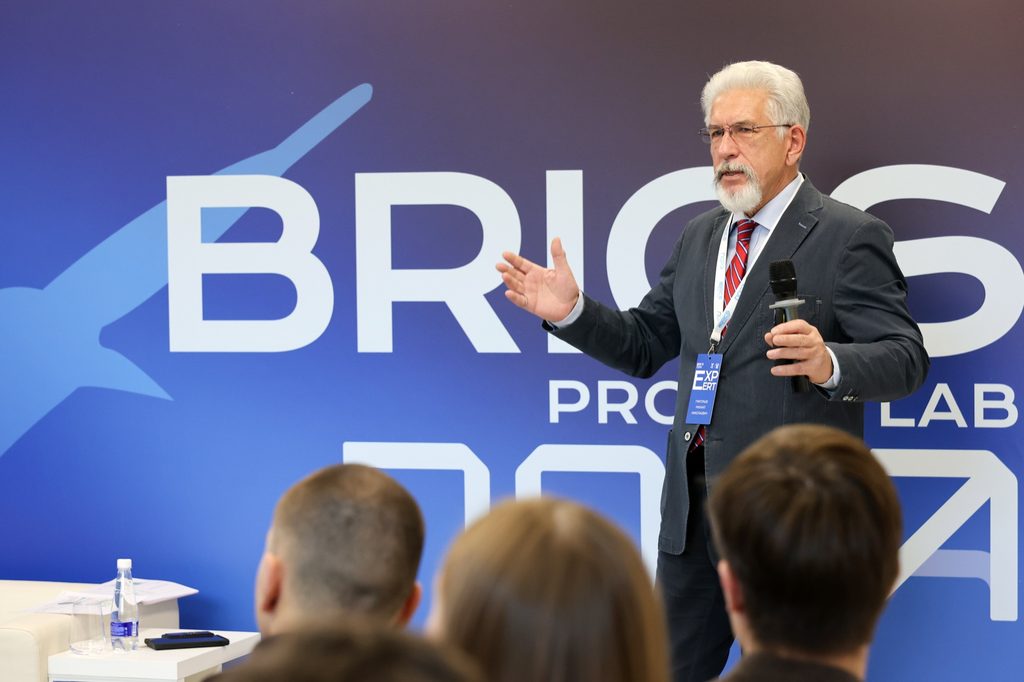
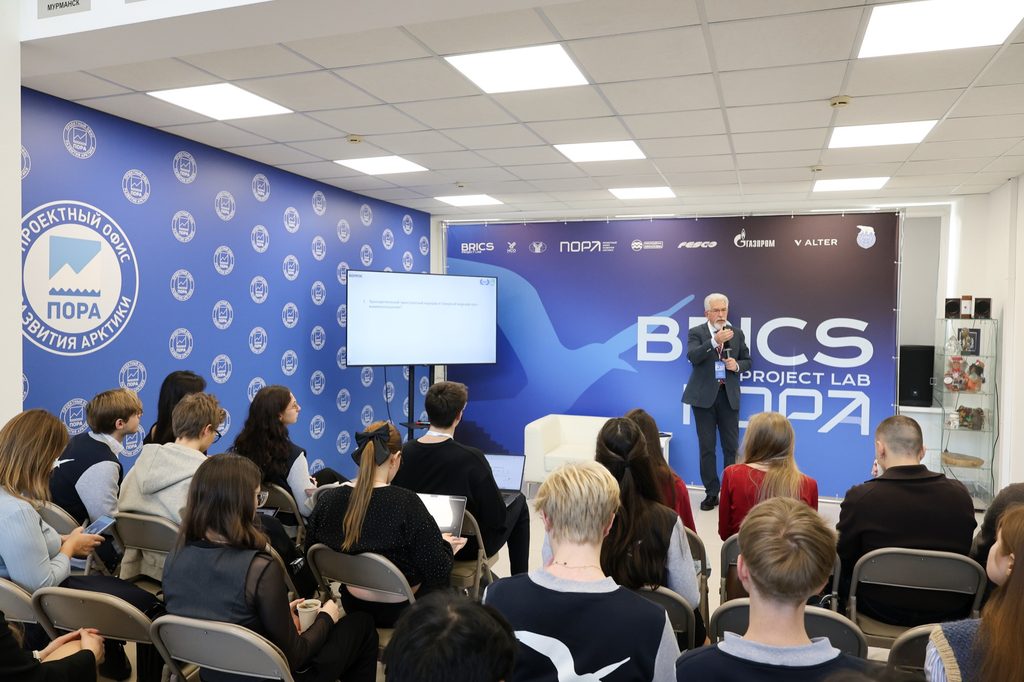
On October 28, 2026, the Expert Center «Project Office for Arctic Development» (PORA) hosted a lecture by Mikhail Grigoriev, Director of the consulting company Gekon and a leading research fellow at IMEMO RAS, for students participating in the BRICS Project Lab Arctic 3.0. He explained how Arctic shipping is structured and which markets it connects. For our readers, we are publishing the key points of the lecture.
- The Northern Sea Route (NSR) cannot «turn into» the Trans-Arctic Transport Corridor (TATC), since it is only part of its marine area. The TATC already exists as a system of seaports connecting rail, road, pipeline, and inland waterway transportation. What is at stake is the choice of development directions.
- Maritime transport does not exist on its own. The ports of the Baltic basin, Murmansk, and Arkhangelsk operate in conjunction with railways and pipelines. All modes of transport need to be developed.
- Arctic projects have many stakeholders. Using the «Arctic Gate» terminal as an example, Grigoriev showed the chain from the producing enterprise to the buyer: port operators, tugs, icebreakers, shipowners, crews, insurers, ship repair and emergency rescue services. Regions are interested in tax revenues. Investment incentives must cover the entire chain.
- The idea of a transport connection with the Pacific Ocean via the northern seas was developed as far back as Mikhail Lomonosov. The development of the Arctic has always had a commercial component: trade, extraction, and export of resources. In 1935, the first end-to-end cargo voyage from Leningrad to Vladivostok took place.
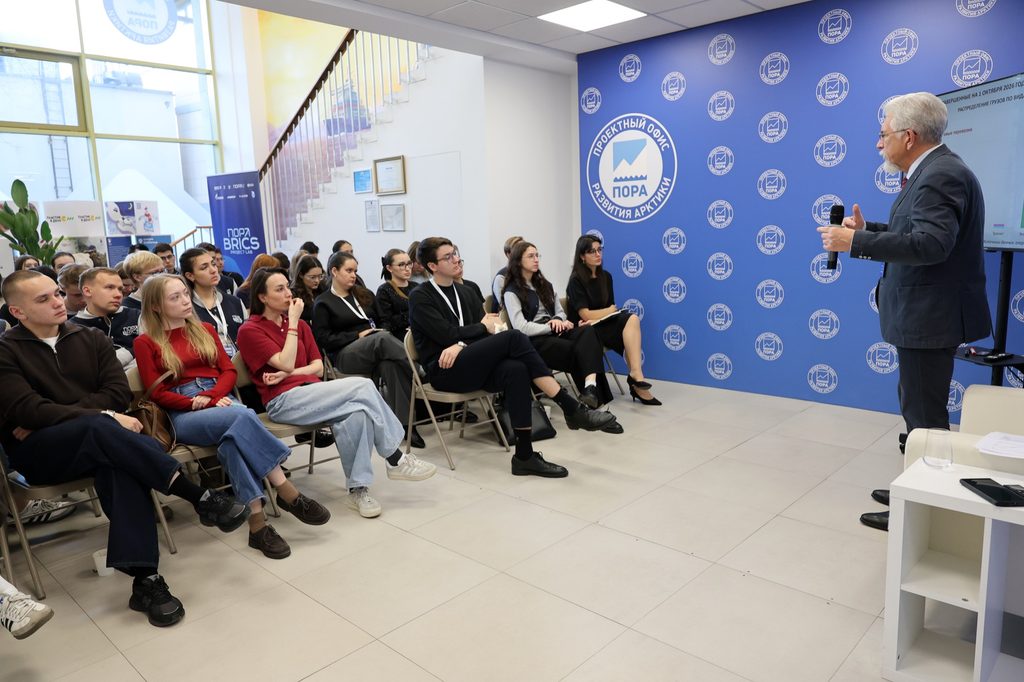
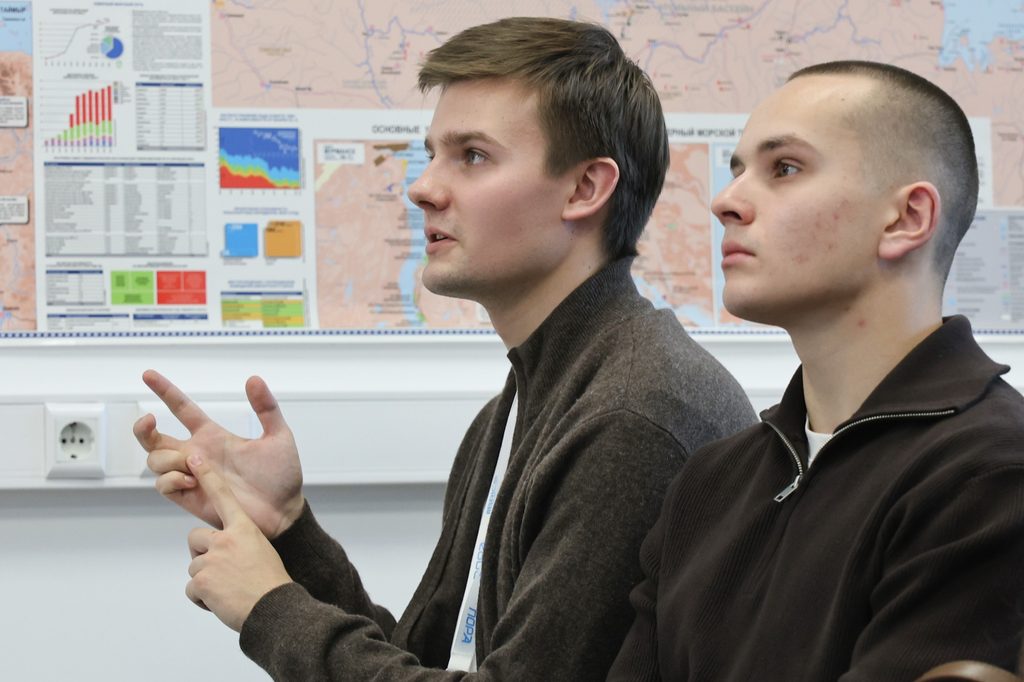
- The TATC addresses three tasks: Russia’s domestic transportation, foreign trade transportation, and international transit. On the western segment, a significant portion of traffic runs year-round. According to the data cited, the NSR accounts for about 12% of the TATC’s total cargo flow.
- The cargo base consists of oil, liquefied natural gas, and gas condensate. Hydrocarbons account for about 60% of the TATC cargo flow and 85% of NSR traffic. Taking into account supplies to enterprises, this share on the NSR approaches 90%. Key oil and gas companies: NOVATEK, Gazprom Neft, and LUKOIL.
- Hydrocarbons go exclusively to the global market. Therefore, these projects depend on global market conditions and the geopolitical situation. LNG from the Yamal LNG project is shipped primarily to European ports, including for transshipment, and seasonally directly to Asia. The Arctic LNG 2 project is focused primarily on direct deliveries to China.
- In the first nine months of 2026, cargo traffic along the NSR grew by approximately 18% compared to the same period last year. NOVATEK provided about 3.4 million tonnes of the increase, mainly through the Arctic LNG 2 project, while end-to-end shipments added another 1.7 million tonnes. Cabotage traffic, meanwhile, declined by about 0.3 million tonnes.
- End-to-end voyages and transit are not the same thing. An end-to-end voyage runs from one boundary of the NSR to the other and may relate to exports, imports, cabotage, or transit. Transit means transportation from one foreign country to another through Russian territory. Mixing up the terms distorts the statistics.
- The time required to traverse the NSR depends on ice conditions. Vessels that entered the NSR waters at the start of the navigation season in late July could take 25 days to pass through the area, whereas later, under more favorable conditions, the passage took less than 10 days. The benefit relative to the southern route must be calculated for each voyage, taking into account the ports of departure and destination.
- End-to-end shipments respond to prices and tariffs. For example, the export of Kuzbass coal through Murmansk depends on the cost of rail delivery and world prices. Iron ore product shipments to the east grow when prices there are higher. The choice of route is determined by traders, among others.

- China’s Sea Legend and South Korea’s Pan Star Line tested container shipping along the NSR in 2026. Sea Legend completed eight end-to-end voyages, two of which were related to Russian foreign trade. The Korean vessel experienced a cargo imbalance: it carried goods westward but only empty containers on the return leg.
- Through the Baltic ports and Arkhangelsk and Murmansk, Chinese carriers delivered auto components for assembly plants in Russia. Grigoriev noted that the component manufacturers, carriers, and consumers in Russia are Chinese companies. This is part of the Chinese model of linked production and logistics hubs.
- The NSR is not a full-fledged replacement for the Suez Canal. For East Asia, the northern route may be advantageous in terms of time, but for South Asia this advantage disappears. The expert sees a separate prospect in Murmansk: the ice-free port has no winter navigation problems typical of the Baltic and no possible geopolitical restrictions in the Danish Straits and the English Channel, and it is the base port of the TATC.
About the lecturer
Mikhail Grigoriev, Candidate of Geological and Mineralogical Sciences, is a leading research fellow at the E.M. Primakov Institute of World Economy and International Relations (IMEMO RAS) and director and co-owner of the consulting company Gekon. From 1980 to 1997, he worked at VNIIOkeangeologia, where he headed the information support sector for subsurface resource management and participated in 11 Arctic expeditions. From 1997 to 2000, he served as director of the Institute of Geology and Development of Combustible Minerals of the Russian Ministry of Energy and RAS. He is a member of two RAS scientific councils — on Arctic and Antarctic research and on the problems of geology, geophysics, development, and processing of hydrocarbons — and a member of the Expert Council of the Commission of the State Council of the Russian Federation on the «Northern Sea Route and the Arctic» track.
He participated in the development of six strategic planning documents approved by the President and the Government of the Russian Federation relating to the development of the Arctic zone. He specializes in the development of Arctic natural resources, transport infrastructure, and international cooperation.
About the BRICS Project Lab Arctic 3.0 project
The international Arctic youth project laboratory BRICS Project Lab Arctic 3.0 is being held in Moscow from October 26 to 30, 2026. The organizers are the Scientific Student Society of MGIMO under the Russian Ministry of Foreign Affairs and the PORA Expert Center. A total of 480 applications were received, and 159 candidates passed interviews. Students and young researchers from Russia, India, Kenya, and other countries are working in seven project tracks on Arctic development challenges. The laboratory’s industry partners are Gazprom, Gazprom VNIIGAZ, FESCO, Arktikugol, and V ALTER.
Оthers Our comments
Alexey Tsykarev: Russia can offer BRICS expertise in institutional support for indigenous small-numbered peoples
At the same time, BRICS itself can compete with Western institutions in the field of standards on indigenous peoples’ rights Against the backdrop of continued stagnation in the activities of the Arctic Council, which recently marked its thirtieth anniversary, cooperation among BRICS countries in the northern latitudes is acquiring additional value. Economic cooperation in the...
read more
Increasing Shipping via the Northern Sea Route Is a Priority in Russia-China Relations
March 20, 2026 Up to 6 Voyages of the Arctic Express No. 1 Connecting Moscow, Arkhangelsk, and China via the NSR Are Planned for 2026 Governor of Arkhangelsk region announced the signing of a memorandum of cooperation with the China on organizing voyages of the Arctic Express No. 1 in 2026. Viktoria Pestova, Deputy Minister and...
read more