
Evgeny Borovichev: How a Unified Arctic Ecosystem Monitoring System Is Being Created in Murmansk Oblast
Without a system based on verified scientific data, it is impossible to assess the burden on nature or predict the consequences for infrastructure and traditional nature management

In 2025, scientists from the Kola Science Centre of the Russian Academy of Sciences, together with federal nature reserves, launched a Unified Ecosystem Monitoring Programme on specially protected natural areas of Murmansk Oblast and in their surroundings along a gradient of industrial pollution. One of the programme’s developers, PO RA expert Evgeny Borovichev, Candidate of Biological Sciences, Deputy Director General for Research at the Kola Science Centre Federal Research Centre of the Russian Academy of Sciences, and Director of the N. A. Avrorin Polar-Alpine Botanical Garden-Institute of the Kola Science Centre of the Russian Academy of Sciences (PABSI), describes the experience of the programme’s first year of operation.
The Arctic zone of the Russian Federation is under a double pressure: global climate change and unprecedented industrial development (the mining and metallurgical complex, mineral extraction, and the development of the Northern Sea Route). Fragile Arctic ecosystems respond to these impacts, but we do not always understand how. The main problem is that data on the response of biota are collected in a fragmented and unsystematic way. Different agencies, scientific groups, and subsoil users use incomparable approaches and methods. Without a unified system based on verified scientific data, we can neither assess the real critical loads on nature nor predict the consequences for infrastructure and traditional nature management.
As a response to this challenge, scientists from the Kola Science Centre of the Russian Academy of Sciences, together with the federal nature reserves (Pasvik, Laplandsky, and Kandalakshsky, including the Murmansk Tundra Sanctuary), developed and in 2025 launched a Unified Ecosystem Monitoring Programme on specially protected natural areas of Murmansk Oblast and in their surroundings along a gradient of industrial pollution.
This programme became a response to the demand from the state and large business for an objective, scientifically substantiated picture of the state of the environment. It is based on the international approaches of the Arctic Council (CAFF) and the concept of «Essential Biodiversity Variables.» The programme uses a strict three-level hierarchy: «biological indicators – attributes – variables.» This makes it possible to move from a simple description of nature to obtaining digitized, mathematically processed indicators of ecosystem status. The unified system has several key elements. Let us examine them below.
Comprehensive coverage of biota. We do not limit ourselves to a single species or group. The Unified Programme simultaneously assesses terrestrial ecosystems – plant communities, alien and invasive species, rare and protected species, bird populations, model groups of vertebrate and invertebrate animals (small mammals and ground beetles as indicators of soil structure) – and aquatic ecosystems: phyto- and zooplankton, benthos, and ichthyofauna.
Reliance on biogeochemical data. Biological data (for example, changes in species composition or forest suppression) are meaningless without an understanding of the chemical background. Integrating biomonitoring with data from long-term biogeochemical monitoring networks (analysis of atmospheric deposition, soil and stem water chemistry, and foliar diagnostics) makes it possible to accurately identify the causes of ecosystem transformation and to track the accumulation of pollutants prioritized for the region, while information on the composition and structure of communities shows how they change under the influence of various factors.
Gradient principle. Survey sites are established along a gradient of distance from pollution sources (from background territories to zones of active impact). This makes it possible to create ecosystem response models and predict risks when planning new industrial facilities.
Unification of methods. Only strict standardization of field work at different test sites (from the west to the east of the oblast) makes it possible to conduct correct comparison of data.
Field studies have shown the high effectiveness of this approach. We are obtaining arrays of standardized data that translate environmental data from the realm of emotions into the realm of precise data and calculations. The unified monitoring system implements the principle of adaptive management according to the scheme: «state of the environment – impact – management response.»
For the state, this is a tool for monitoring compliance with environmental standards and achieving the National Biodiversity Conservation Strategy. For business (in particular, for companies operating in the Arctic), it is an early warning system that makes it possible to minimize reputational and economic risks and also to plan nature conservation measures on the basis of evidence-based science.
The experience of Murmansk Oblast proves that the creation of a unified monitoring system for terrestrial and aquatic ecosystems of the Arctic is entirely feasible technically and methodologically. This approach can be scaled up to the entire Arctic zone of the Russian Federation. To do this, it is necessary to:
- Support the development of federal methodological standards for biomonitoring based on the hierarchy «indicators – attributes – variables.»
- Ensure institutional and financial support for field scientific research (including through grants from the Russian Science Foundation and industry programmes), since it is precisely «ground-based» science that is the calibration foundation for any satellite and remote-sensing models.
- Create a single open repository of verified scientific data on Arctic ecosystems, accessible to the scientific community, government bodies, and responsible business.
It is important to emphasize: investment in fundamental and applied field monitoring today is the only reliable insurance against irreversible environmental losses and enormous economic damage tomorrow.
The Project Office for Arctic Development and the editorial board of GoArctic.ru do not necessarily share the opinions expressed by experts.
For media representatives: we welcome the republication of comments provided that an active link to the original source is given and the columnist’s status as an expert of the Project Office for Arctic Development is indicated.
Оthers Our comments
Trump’s Push for Greenland: Implications for Russia-India Arctic Cooperation
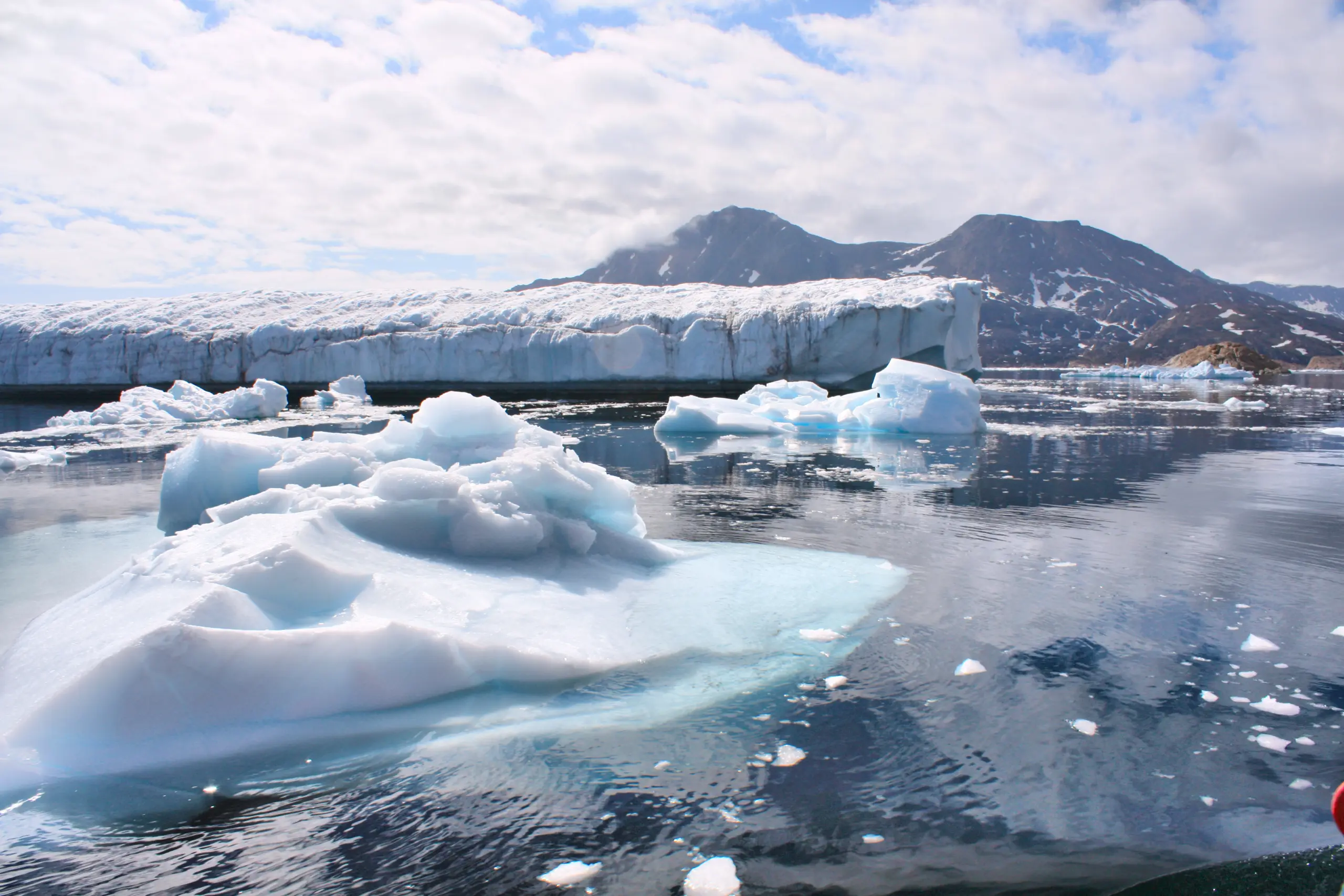
The United States has renewed its focus on Greenland. This desire for acquisition by the US is not unprecedented, having been seriously explored by American policymakers in 1867, 1910, 1946 and 1955. Contrary to initial perceptions that US President Donald Trump's interest was merely frivolous, evidence suggests that this could be a firm decision already made by the US Administration, at least under his leadership, one which they could be determined to execute in future.
read more
Vyacheslav Maracha: Russia’s Energy Sovereignty vs. US Dominance
Russia faces a triple challenge: loss of the European market, intensified competition in the Arctic, and potential loss of influence over global prices if the US succeeds in Iran. The creation of the Energy Dominance Council in the US, combined with the military operation against Iran, creates a triple challenge for Russia: loss of the...
read more