
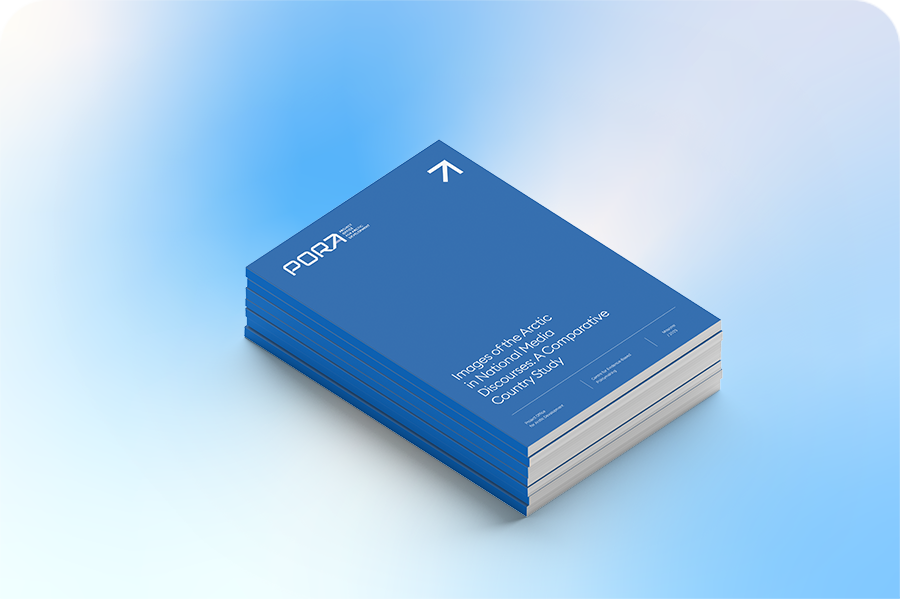
Images of the Arctic in National Media Discourses: A Comparative Country Study
The comparative study examines how the Arctic is represented in national media discourses across different countries and identifies the interpretative frames that dominate coverage of the region.
Based on an analysis of nearly 20,000 media publications from ten countries over a five-year period, the research traces the structure and dynamics of key thematic clusters, with particular attention to shifts before and after February 2022.
The study focuses on the balance between security-related framing and climate- and science-oriented narratives, as well as on systematic differences between Western, Russian, and Asian (China and India) media discourses.
Context
The research was conducted as part of PORA’s analytical work focused on the external informational environment surrounding Arctic development. It responds to the transformation of international political discourse after 2022 and to the need for an empirical assessment of how media narratives about the Arctic are evolving across countries, including the degree of militarization, the persistence of climate- and science-focused agendas, and the role of international cooperation in media representations.
Methods
The study is based on a corpus of news publications from national media outlets covering the period 2020–2025. Texts were processed using frequency analysis of lexical units and topic modeling based on Latent Dirichlet Allocation (LDA). Topic models were developed separately for each country to account for differences in linguistic usage and contextual framing. This approach made it possible to identify dominant thematic frames associated with the Arctic and to compare their evolution over time, including shifts observed after 2022. Results are presented through comparative charts and visualizations showing the distribution and dynamics of key themes.
Results
Over the five-year period, the Arctic has increasingly been portrayed as a vulnerable territory requiring sustainable development measures, while media narratives in several countries simultaneously reflect a growing emphasis on militarization. Three relatively stable interpretative models have emerged: in Western media, the Arctic is framed primarily as a resource base and potential military flashpoint; in India and China, as a scientific laboratory and, to a lesser extent, a destination for research-driven tourism; and in Russia, as a strategic macro-region emphasizing development, infrastructure, and scientific activity. Following the events of February 2022, the analysis documents a gradual shift toward confrontation-oriented framing, with increased use of security-related vocabulary and a reduced presence of development- and sustainability-focused narratives in Western and Russian media. In contrast, the Arctic’s portrayal as a climate research laboratory remains comparatively stable in Indian and Chinese media.
Discussion
The findings suggest that national media discourses on the Arctic reflect broader geopolitical and institutional dynamics rather than purely regional developments. Western media increasingly emphasize risk, competition, and security, while Eastern discourses prioritize scientific research and climate issues, and Russian media largely retain a development‑oriented framing. At the same time, the results are constrained by the scope of the media corpus and the limits of automated text analysis, which necessarily aggregates heterogeneous materials. In applied terms, the study can serve as a tool for monitoring changes in the external informational context of Arctic policy and for informing communication strategies aimed at sustaining a balanced and constructive image of the Arctic.
Commentary
“Images of the Arctic in global media reflect broader geopolitical processes. While Western media increasingly frame the region as a space of confrontation and military risk, Eastern countries tend to view it as a laboratory for sustainable development and international cooperation. Russia, in turn, faces the task of sustaining its own narrative of the Arctic as a space for people, science, and development”
— Maksim Tsygankov
Authors




Оthers Our research
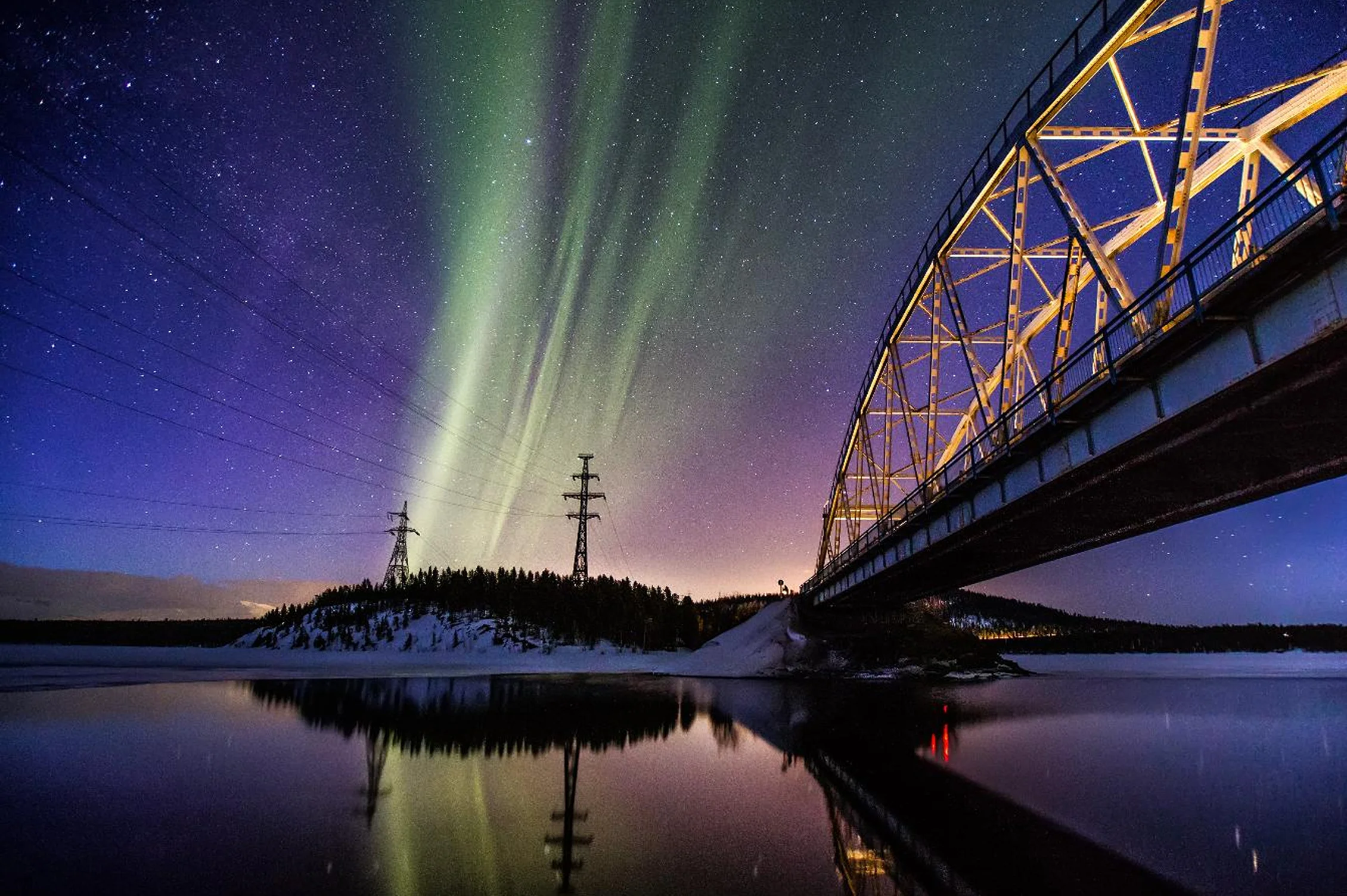
Arctic Nations’ Strategies for the Development of the High North
This study analysed the texts of all Arctic strategies adopted by the member states of the Arctic Council (excluding Russia) as of late 2024.
read more
Quality of Life, Migration Intentions, and Perceptions of Public Policy in the Arctic
This study addresses population outflow from the Russian Arctic, a critical challenge to the region’s development.
read more