
Transarctic Transport Corridor: A Top Priority for the Maritime Collegium of the Russian Federation on Safeguarding Russia’s National Interests in the Arctic
The Presidential Decree amended the composition and regulations of the Maritime Collegium, establishing a Council for the Protection of National Interests in the Arctic and the Development of National and International Maritime Transport Routes.
The Maritime Collegium under the Government of the Russian Federation, established in 2024 as a coordinating and advisory body for the development and implementation of national maritime policy, has its composition and structure adjusted as new tasks emerge.
In December 2025, amendments were made to its composition and regulations. The updated body, named the Council for the Protection of National Interests in the Arctic and the Development of National and International International Maritime Transport Routes, will coordinate activities related to the Transarctic Transport Corridor—a strategic multimodal route approximately 14,000 km long, connecting St. Petersburg, Kaliningrad, Murmansk, Arkhangelsk, and Vladivostok via the Northern Sea Route.
The council will also examine the development of the “Mohe–Naiba” maritime route and oversee the implementation of the “North–South” project.
It should be noted that the Maritime Collegium includes four councils:
- the Council for the Protection of National Interests in the Arctic and the Development of National and International Maritime Transport Routes,
- the Scientific and Expert Council,
- the Council for the Development and Support of Maritime Activities, and
- the Council for the Strategic Development of the Navy.
Source: GoArctic Portal
Other publications: Presidential Decree “On Certain Issues Concerning the Maritime Collegium of the Russian Federation”
Оthers Our news
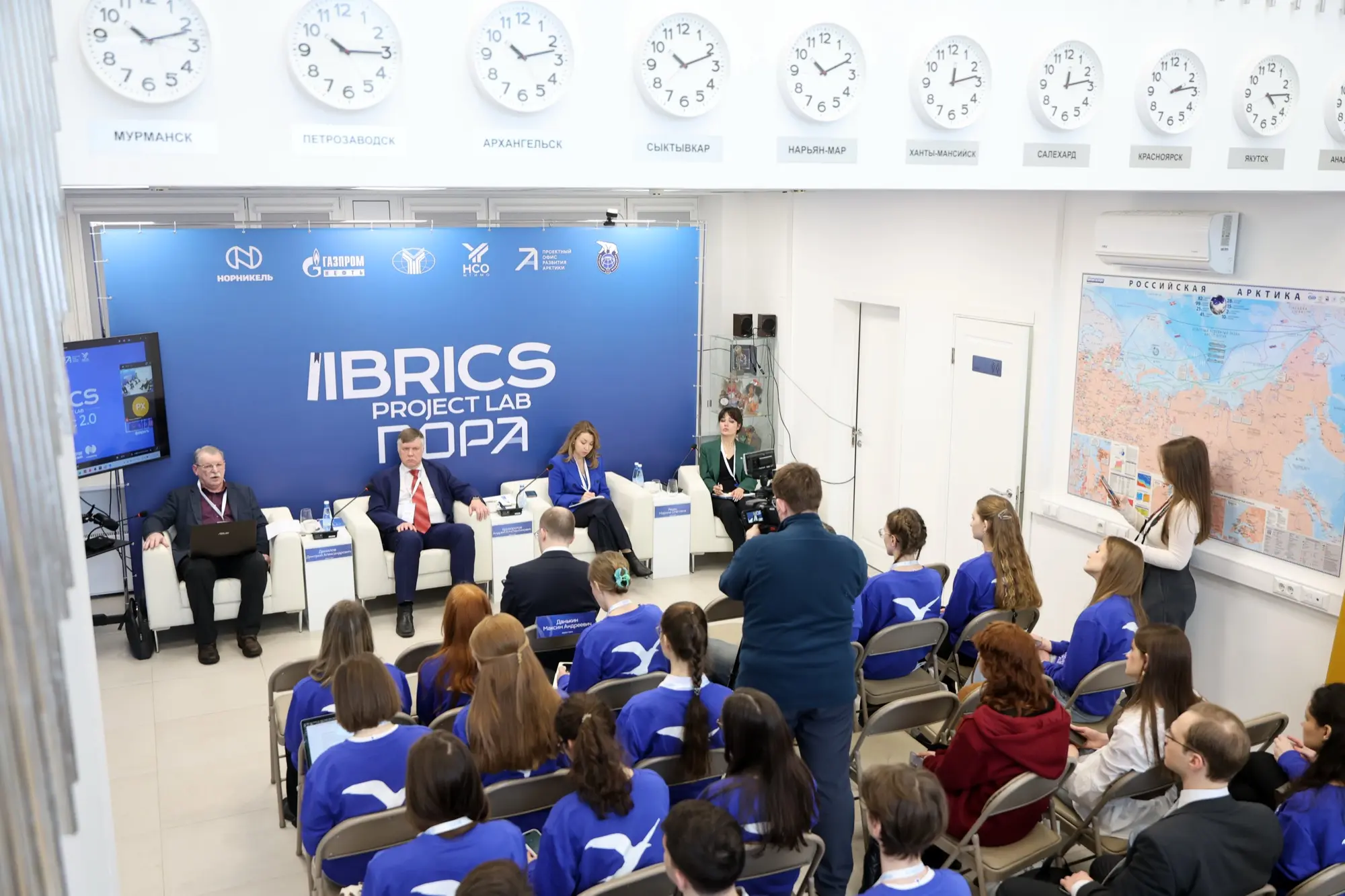
Experts Discuss Transformation of the Arctic Agenda in Russia-NATO Relations
February 27, 2026 Participants of a strategic session discussed current state and challenges of international cooperation in a changing geopolitical environment, as well as issues of security, economic, and regulatory competition in the Arctic region. The session took place on February 25, 2026, at the expert center PORА (Project Office for Arctic Development) as part...
read more
BRICS Project Lab Arctic 2.0: Business Cases for Participants
The students will tackle four research tasks grounded in real-world data as part of BRICS Project Lab Arctic 2.0, an international youth project scheduled in Moscow from 24 to 27 February 2025. The tasks, organized across different thematic tracks, were proposed by the competition’s corporate partners, including Gazprom Neft, Nornickel, Arktikugol, and PORA.
read more