
Experts Discuss Transformation of the Arctic Agenda in Russia-NATO Relations
February 27, 2026
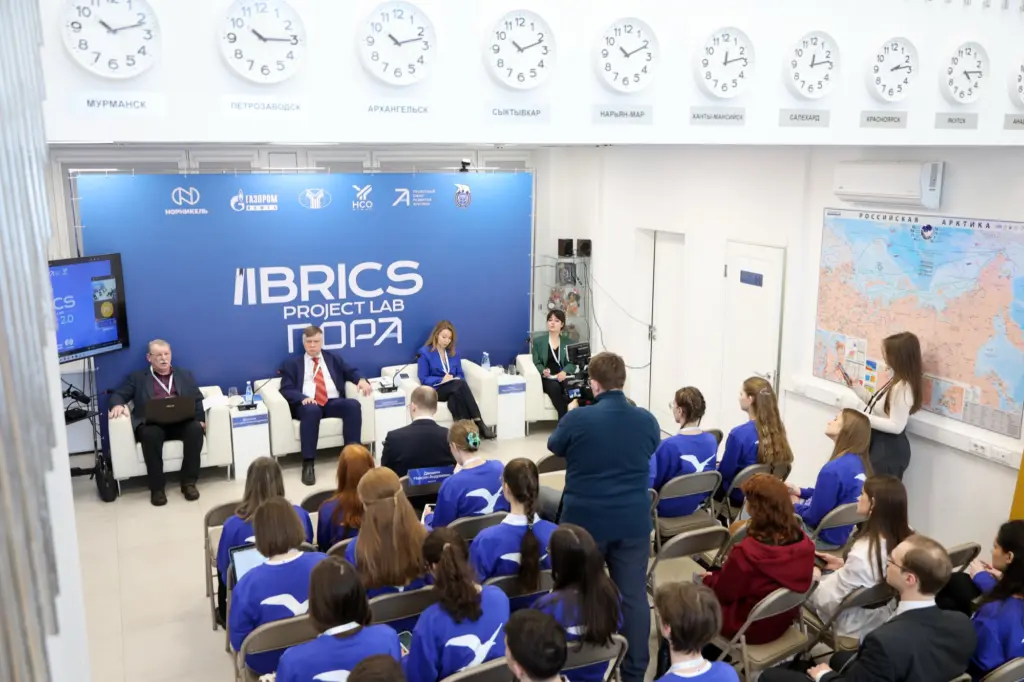
Participants of a strategic session discussed current state and challenges of international cooperation in a changing geopolitical environment, as well as issues of security, economic, and regulatory competition in the Arctic region. The session took place on February 25, 2026, at the expert center PORА (Project Office for Arctic Development) as part of BRICS Project Lab Arctic 2.0 program.
Experts in security, foreign economic relations, and international cooperation assessed the current state of Russian-American relations and Russia-NATO relations in the Arctic region before and after 2022. They also shared their observations on the situation surrounding Svalbard against the backdrop of deteriorating relations between Russia and Norway. Meeting participants further analyzed the challenges posed by the dynamics within the Greenland–Denmark–USA triangle for the Russian Federation. The meeting was moderated by Ekaterina Serova, Head of the International Department at PORА.
Will Washington Pursue a Path of Expanding NATO Activity in the North and the Arctic?
The 2022 NATO Strategic Concept adopted in Madrid does not identify the Arctic as a separate area for operational planning. Nevertheless, there is a trend of increasing attention from the Alliance towards security issues in the Arctic, aimed at ensuring the protection of its members from potential threats, including from the sea, especially following the accession of Finland and Sweden to the bloc. It was also noted during the discussion that the current US administration assigns a rather modest role to the Alliance in the Arctic.
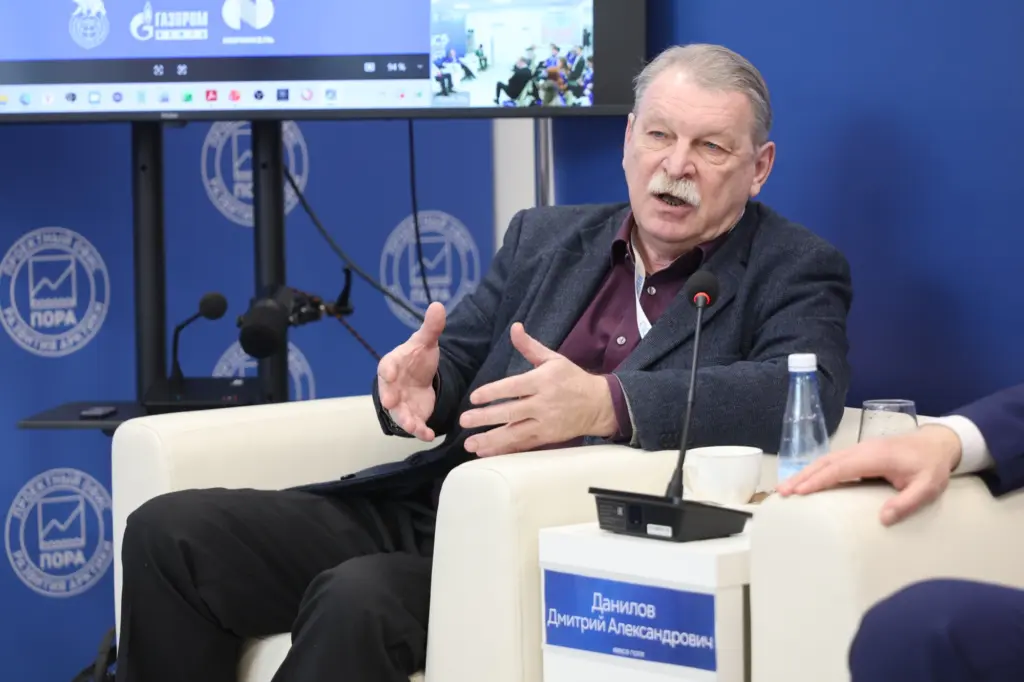
«Every new NATO Secretary General, in the new situation, substantiates the thesis that not only does America need Europe, but Europe also needs America. The arguments vary; at one time, it was Article 5 of the Washington Treaty. In reality, everyone understands well that it is the United States of America that ensures the collective defense of Europe, while Europe does not ensure the defense of North America. In other words, this is not a two-way street. Here we see a serious imbalance in motivations and interests,» explained Dmitry Danilov, Head of the Department for European Security at the Institute of Europe, Russian Academy of Sciences.
The current situation is contradictory. Despite NATO lacking a formally approved Arctic strategy, it demonstrates growing military activity in the region. For NATO, the Arctic represents an area where the Alliance would be capable of operating effectively in the event of an armed conflict or aggression.
A more alarming scenario, noted in the discussion, would be one where the USA, similar to its actions in Syria, initiates a more active involvement of NATO in addressing international security issues in the Arctic.
The Land Dominates the Sea
Today, Norway pursues three interconnected, but not always aligned, sets of interests. First, Norway’s national interests are tied to asserting its control over Arctic territories, particularly Svalbard and the Barents Sea, and exploiting its natural resources. Second, Norway maintains its status as NATO’s oldest strategic ally in the North. Finally, there are common interests between Russia and Norway, related, for example, to the use of the Barents Sea’s fish stocks. However, at present, these relations remain strained.
Notably, Norway considers the continental shelf around Svalbard as part of its mainland shelf, extending northwards and flanking the archipelago. In this zone, Norway asserts its exclusive right to exploit natural resources without any restrictions.
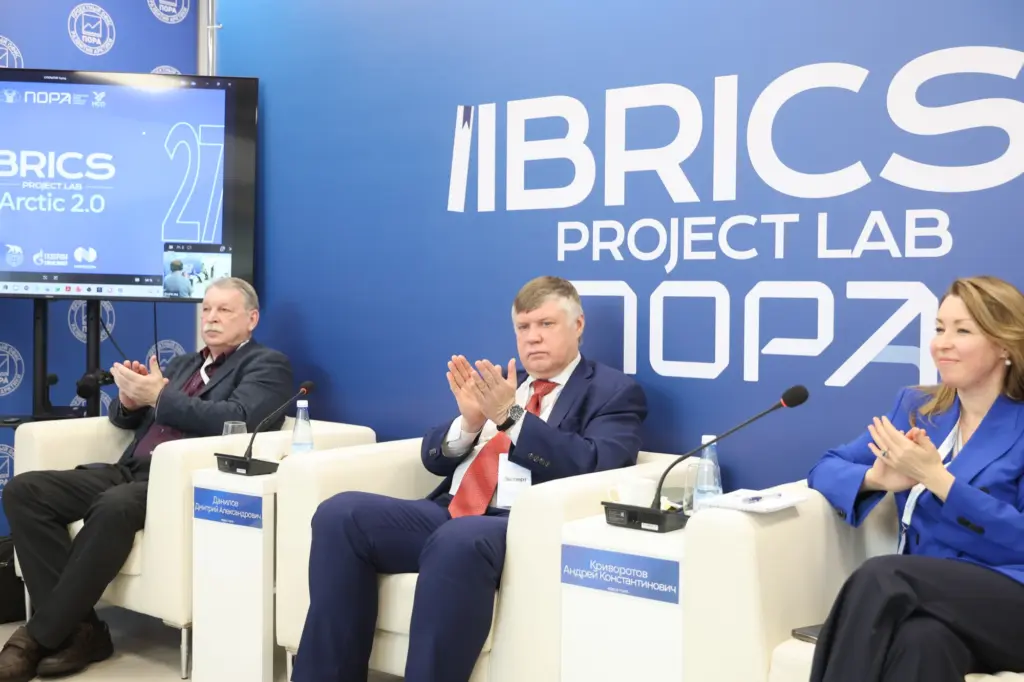
Andrey Krivorotov, Head of the Innovation Management Department at the Odintsovo branch of MGIMO University says that Russia and Norway hold diametrically opposed positions precisely on this point.
«The Russian position, which is incidentally shared by a number of other countries, is that the restrictions on Norwegian sovereignty established on the archipelago also apply to the waters and shelf of this entire area. There is a great rule: the right to the sea is determined by the right to the land,» the expert emphasized.
The issue of Svalbard was first addressed during the negotiations in Versailles, aimed at regulating post-war relations in Europe and the world following World War I. Today, the Svalbard Treaty is practically the sole surviving expression of the principles of the Versailles system.
The Struggle for the Arctic Shelf Continues
For over 10 years, Denmark has been gathering evidence to secure recognition of its rights to the Arctic continental shelf beyond the 200-nautical-mile exclusive economic zone. This concerns a section of the shelf north of Greenland.
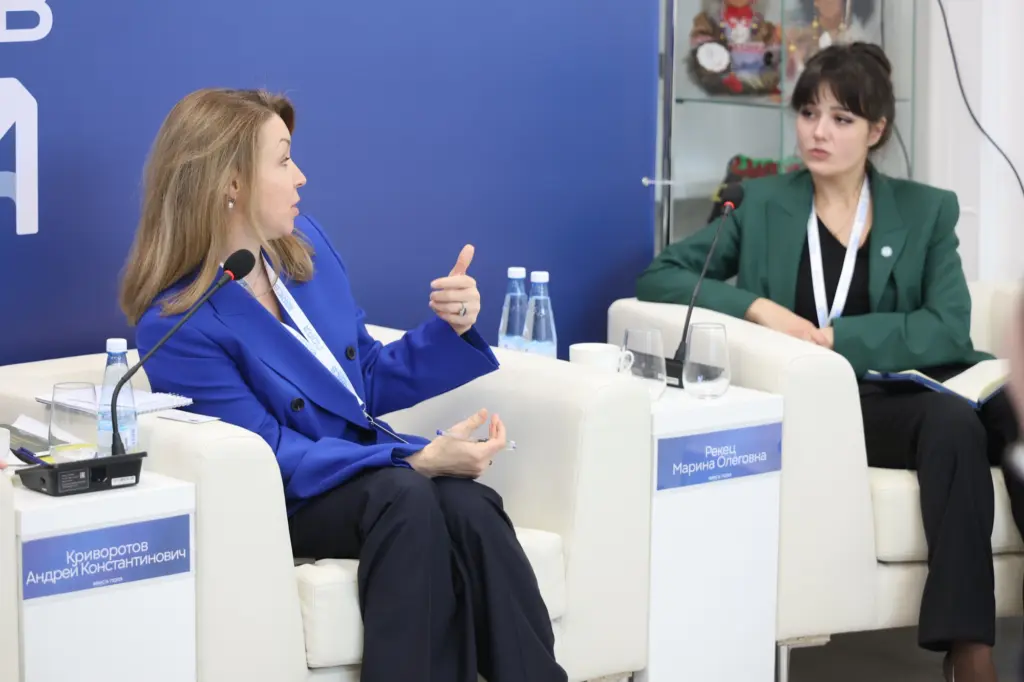
«The project to study the continental shelf was completed in 2014 with the submission of an application to the Commission on the Limits of the Continental Shelf. In this application, Denmark laid claim to virtually the entire Lomonosov Ridge. The area of the shelf it claims extends right up to the borders of the exclusive economic zone of the Russian Federation, leaving practically nothing for us,» commented Marina Rekets, Vice-Rector for International Affairs at RUDN University.
The positions of Russia and Denmark on this issue are diametrically opposed. «Greenland opens up new opportunities for expanding the shelf and extracting resources there, which, by some estimates, surpass the deposits on the island itself,» the expert concluded.
For Reference:
The international project laboratory BRICS Project Lab Arctic 2.0 is taking place from February 24 to 27, 2026, at the venue of the Project Office for Arctic Development in Moscow. It is a joint project of the MGIMO University Student Scientific Society and the PORА Expert Center, aiming to bring together young researchers from various Russian universities to solve real business tasks for companies operating in the Arctic. The competition for participation in the laboratory this year was record-breaking: applications were received from more than 20 countries. The average competition was 21 people per place, and for in-person participation, it was nearly 28 people per place. Following the selection process, 40 top candidates commenced their work.
Оthers Our news
The White Sea-Baltic Canal: A Strategic Asset in Need of Modernization
April 6, 2026 This article presents an analysis of potential upgrades to the White Sea-Baltic Canal, originally published by Maksim Dankin, General Director of the PORA Expert Center, in Vedomosti newspaper on April 1, 2026. With the consent of the editorial team, we are reprinting this analysis piece for our readership. In February 1931, the...
read more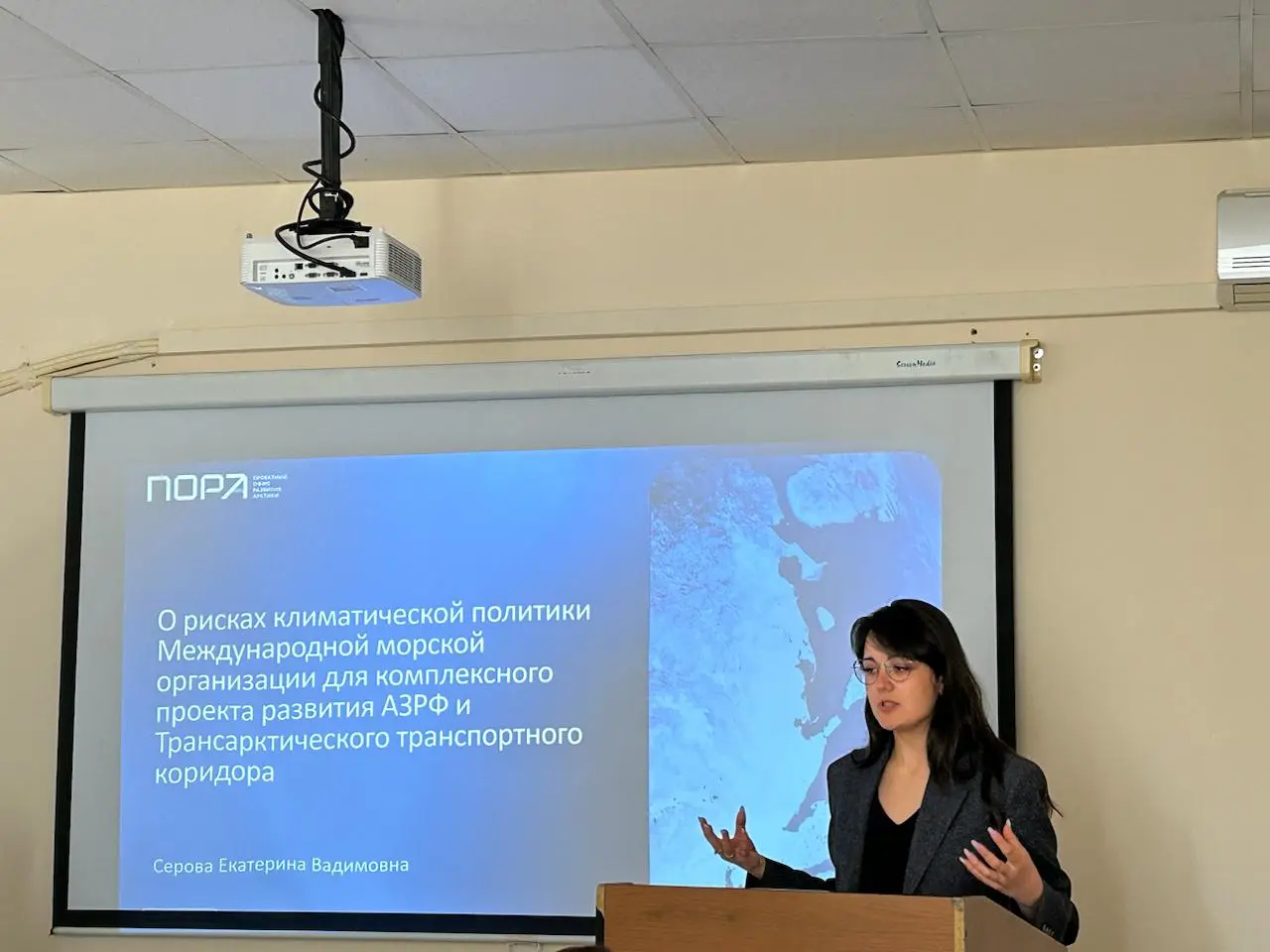
The expert center PORA assessed the risks of IMO climate policy for the development of the Transit Transport Corridor at an international legal conference in Saint Petersburg
April 28, 2026 On April 27, 2026, the North-West Institute of Management of RANEPA hosted an international scientific conference «International Legal Problems of the Arctic: History and Modernity,» which brought together leading experts from Russia and Asia-Pacific countries in the fields of legal regulation of maritime commercial shipping, issues of Russian-American relations concerning the delimitation...
read more