
Trans-Arctic Transport Corridor May Offer Alternative to European Waterways?
The Arctic Ocean is a vast field where, under Your Imperial Highness’s rule, Russian glory can be enhanced, combined with unparalleled benefit, through the invention of east-north navigation to India and America. <…> Russian power will grow through Siberia and the Arctic Ocean and reach the main European settlements in Asia and America…» from A Brief Description of Various Voyages in the Northern Seas and an Explanation of a Possible Passage through the Siberian Ocean to East India, by Mikhail Lomonosov, 1763
In May 2025, the Russian President directed the Government of the Russian Federation, in collaboration with Rosatom State Atomic Energy Corporation, to formulate and endorse a comprehensive financial, economic, and organizational framework for the advancement of the Trans-Arctic Transport Corridor linking St. Petersburg, Murmansk, Arkhangelsk, and Vladivostok. This route, alternatively referred to as the Greater NSR, holds significant strategic importance.
«Neither America, nor North America, nor Canada in its northwestern territories, nor Greenland — they have no objective to ensure sustainable year-round shipping. Therefore, no one is planning to build an icebreaker fleet without seeing it as a cash-flow solution,»
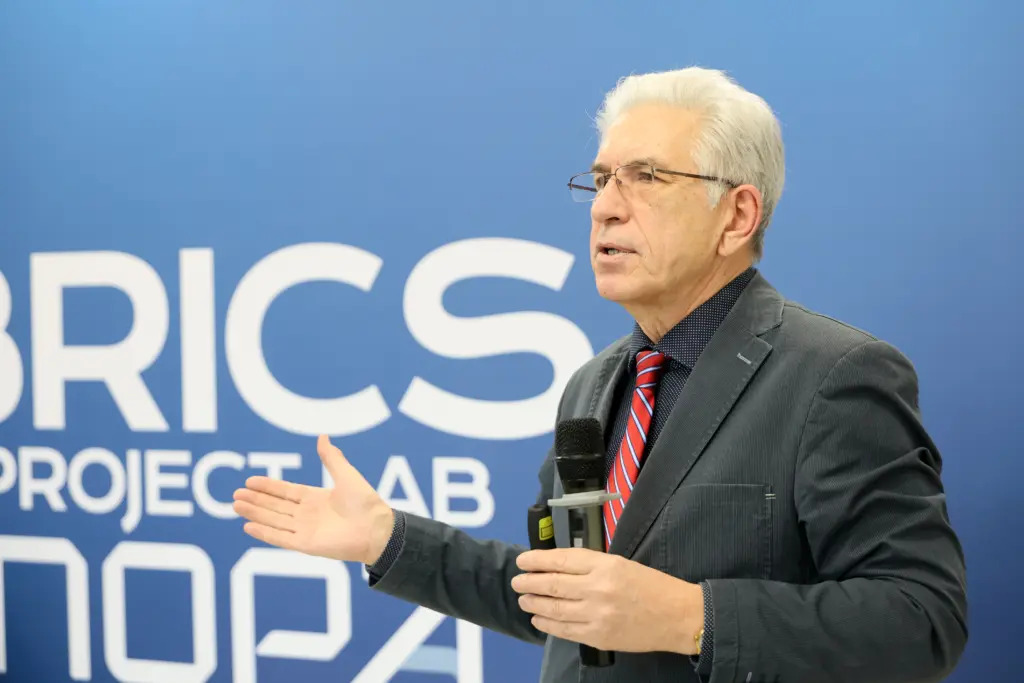
- notes Mikhail Grigoryev, Director of GECON LLC
The expert admits that the objective of the Trans-Arctic Transport Corridor is to facilitate the supply of Russian products to countries in the Global South. This initiative aims to identify and cultivate novel market opportunities for Russia, particularly in light of existing international sanctions.
- majority of shipments, exceeding 80%, consist of hydrocarbon products (oil, LNG, and condensate), originating from projects undertaken by Novatek and Gazpromneft
- more than 80% of cargo flow still goes to the western part
- year-round navigation operates only west of the town of Norilsk
- main destinations are China and India, but primarily via the Suez Canal
The advancement of Arctic hydrocarbon initiatives, and consequently, the establishment of consistent shipping routes along the NSR, currently face four key impediments: sanctions, technological constraints, geology, and limitations in available hydrocarbon resources.
Sanctions have significantly hampered the logistical operations of Russian energy projects. This disruption affects both operational facilities such as the Prirazlomnaya platform, Varandey terminal, Arctic Gate terminal, and Yamal LNG plant, as well as those under development like the Tambey project, GPN-Gydan project, Vostok-Oil project, and the yet-to-be-launched Arctic LNG 2 plant.
Prior to sanctions, transportation of goods from facilities like Prirazlomnaya, Varandey, Arctic Gate, and Yamal LNG to Rotterdam took approximately 10-12 days. However, these shipping routes are now blocked, highlighting the substantial impact sanctions have had on the distribution of finished products.
Technological risks are inherent in operations such as icebreaking and the use of tankers for transportation.
Geologically, uncertainties exist regarding the conversion of estimated reserves into proven reserves at key projects like Vostok-Oil, Tambey, and GPN-Gydan. The scale of some discoveries remains unclear.
«Cargo transportation distances from Murmansk, the base seaport of the Trans-Arctic Transport Corridor, are comparable to traditional shipping from Baltic Sea ports, but are independent of the situation in the Danish Straits and the English Channel,»
- the expert concludes
Beyond risk mitigation strategies, the pursuit of strategic objectives necessitates the implementation of a comprehensive transportation management system. A critical bottleneck hindering progress is the lack of coordination between production, transportation, and sales markets.
Last but not least, accurate production volume planning is contingent upon a clearly defined construction schedule for export vessels. Potential investors must thoroughly assess all three project components – production, transport, and market access – in tandem to make informed investment decisions.

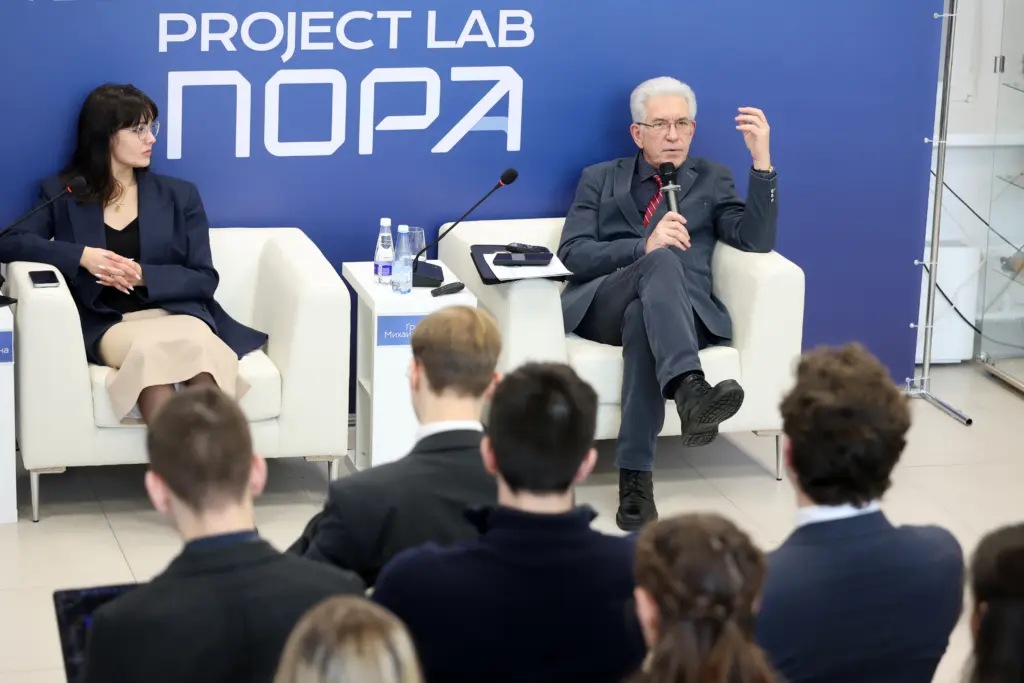
As part of the BRICS Project Lab Arctic 2.0 initiative hosted by the PORA Expert Center, Mikhail Grigoryev, Director of GECON LLC and a member of the Scientific Council for Arctic and Antarctic Studies at the Russian Academy of Sciences, outlined potential development of Russia’s Arctic Zone and the Trans-Arctic Transport Corridor up to the year 2050.
Further information about the event is available here:
International Project Laboratory BRICS Project Lab Arctic 2.0 Launches in Moscow
The Project Office for Arctic Development does not always share the opinions expressed by experts.
For media representatives: we welcome republication of comments provided that an active link to the original source and the columnist’s status as an expert of the Arctic Development Project Office are indicated.
Оthers Our comments

Elena Gladun: «The Co-Management Model Offers Many Opportunities for Transforming Indigenous Peoples’ Lives»
This partnership tool between the state and Indigenous small-numbered peoples supports traditional ways of life and livelihoods while simultaneously enabling the effective use of territories and natural resources for socio-economic development June 5, 2026 On May 29, 2026, the PORA Expert Center held a discussion club on the topic: «Protecting the Rights of Indigenous Peoples...
read more
Olga Buch: Why Norilsk Nickel is Moving Palladium Production from Norilsk to the Murmansk Region
The decision will improve metal recovery, accelerate production processes, and reduce costs; optimizing the production chain will strengthen Russia’s position as a strategic player in the global palladium market Norilsk Nickel is restructuring its precious metals production chain. Starting in July 2026, the processing of intermediate products will be transferred from the Norilsk Copper Plant...
read more