
Alexey Tsykarev on Balancing Development Interests with the Preservation of Indigenous Peoples’ Life and Cultures
The expert from PORA believes the solution to this dilemma may lie in developing a reasonable combination of mandatory and voluntary mechanisms for protecting the rights of Indigenous peoples

May 3, 2026
On May 29, 2026, the PORA Expert Center held a discussion club on the topic: «Protecting the Rights of Indigenous Peoples of the North and the Role of the State and Business in This Process.» We publish the key points from the report by Alexey Tsykarev, expert on Indigenous rights, Chairman of the Center for Support of Indigenous Peoples and Public Diplomacy «Young Karelia,» member of the Kalí Fund’s Steering Committee, and Advisor on Business Engagement to the President of the Russian Association of Indigenous Peoples of the North, Siberia, and the Far East.
The issue of Indigenous rights occupies a significant place in the policies of Arctic states. Moreover, it is through the channel of Indigenous organizations that the restoration of full-fledged cooperation in the Arctic Council may begin.
A direct comparison of policies toward Indigenous peoples in Arctic countries is impossible: the historical context, legislation, and specific ways of life and economic practices of Indigenous peoples are too different. Furthermore, international reputations are often shaped by stereotypes rather than facts. For example, Canada and Norway, which are mentioned most often in discussions about exemplary practices, are also the subject of serious criticism. Recent documents from the UN Expert Mechanism on the Rights of Indigenous Peoples confirm this. Experts identified elements of assimilation policy in the Canadian Indian Act, and Norwegian authorities were recommended to abandon the practice of issuing preliminary ownership decisions that negate the participation of the Sámi community in consultations with companies.
Russia is also criticized in international organizations. Obviously, we have room for improvement – this is acknowledged both by strategic planning documents approved by the state and by collective research conducted by Indigenous small-numbered peoples themselves. Nevertheless, many Russian practices have been included in reviews by UN expert bodies as effective and worthy of attention. These include constitutional recognition and an extensive two-level legislative system, the institution of ombudspersons, measures for collecting disaggregated data, and councils of representatives under regional authorities.
However, not all criticism is fair. For example, the claim that Russia is dismantling public environmental expertise – practically the only opportunity for Indigenous peoples to resist the negative impact of development projects.
Is this really the case? First, the reform of environmental legislation is moving toward creating more transparent procedures, not dismantling them. Second, Indigenous peoples actually have many more opportunities: these include ethnological impact assessments, regional councils of representatives, ombudspersons, the expansion of the network of territories of traditional nature use, and the development of voluntary standards and corporate policies.
Russia’s Indigenous peoples advocate for a «reasonable combination of mandatory and voluntary measures» in regulating relations with business and the state. For example, Indigenous small-numbered peoples propose developing a federal law on socio-cultural impact assessment, expanding the application of the Responsibility Standard for residents of the Arctic Zone, and motivating companies to undertake voluntary commitments.
Corporate policies on Indigenous rights are not yet in place in all large companies, not to mention small and medium-sized businesses – such as gold mining, geological exploration, and logging. At the same time, the existence of corporate policies, transparency of consultations, voluntary agreements with communities, complaint mechanisms, and joint monitoring should become increasingly important in the compilation of ratings, such as the «Polar Index» or «Public Capital.» The «Public Capital» Standard today proposes taking into account court decisions that have entered into force, but is this indicator sufficient?
Balancing development interests with the preservation of Indigenous peoples’ way of life and cultures is a universal challenge on every continent. In Russia, this challenge is being addressed taking into account our experience and the model of relations between Indigenous peoples and the state. Just these days, we are seeing how Indigenous small-numbered peoples are influencing the development of state policy. They are co-authors of the Biodiversity Strategy through 2036 and the Strategy for State National Policy.
And this year, a new, very symbolic state holiday has appeared – the Day of Indigenous Small-Numbered Peoples. This is not only an opportunity to demonstrate cultural diversity but also a platform for discussing the improvement of support measures at the level of governors and the head of state.
The Project Office for Arctic Development and the editorial board of GoArctic.ru do not necessarily share the opinions expressed by experts.
For media representatives: we welcome the republication of comments provided that an active link to the original source is given and the columnist’s status as an expert of the Project Office for Arctic Development is indicated.
Оthers Our comments
Anneta-Bakh Tsakhilaeva: What the UN Commission’s Decision on the Continental Shelf Means for Russia
The next, and no less challenging, stage will be negotiating maritime boundaries with other states and advancing the practical development of the Arctic region The United Nations Commission on the Limits of the Continental Shelf (CLCS) has recognized the scientific basis of Russia’s claim to approximately 1.7 million square kilometers of the Arctic seabed. The...
read more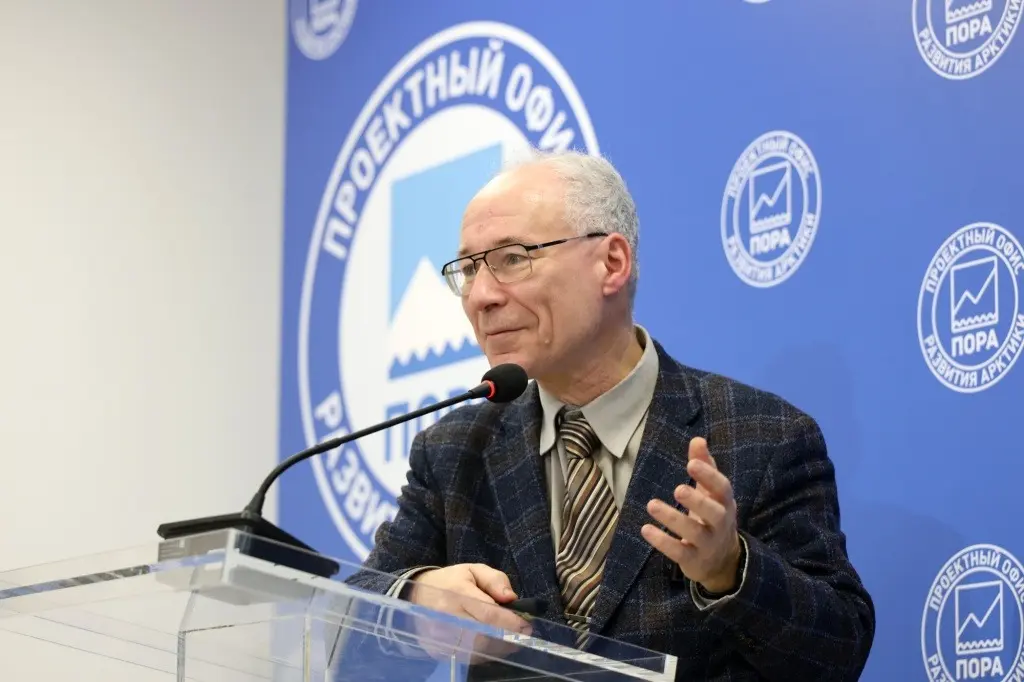
Proxy Governance Model for Greenland: An Option for the U.S. Foreign Policy?
Alexander Pilyasov, Doctor of Science (Geography) and Professor at Lomonosov Moscow State University, proposes that Donald Trump could leverage proxy organizations to manage economic activities and resources in Greenland. Drawing on historical precedents such as the Hudson’s Bay Company, the East India Company, and the Tennessee Valley Corporation, Dr. Pilyasov highlights the effectiveness of this...
read more