
Anna Romanovskaya – On the Russian Carbon Units Market and Its Arctic Specifics
Methodologies for climate projects in the Arctic Zone are beginning to emerge in Russia; the idea of creating an independent Arctic Carbon Registry is promising
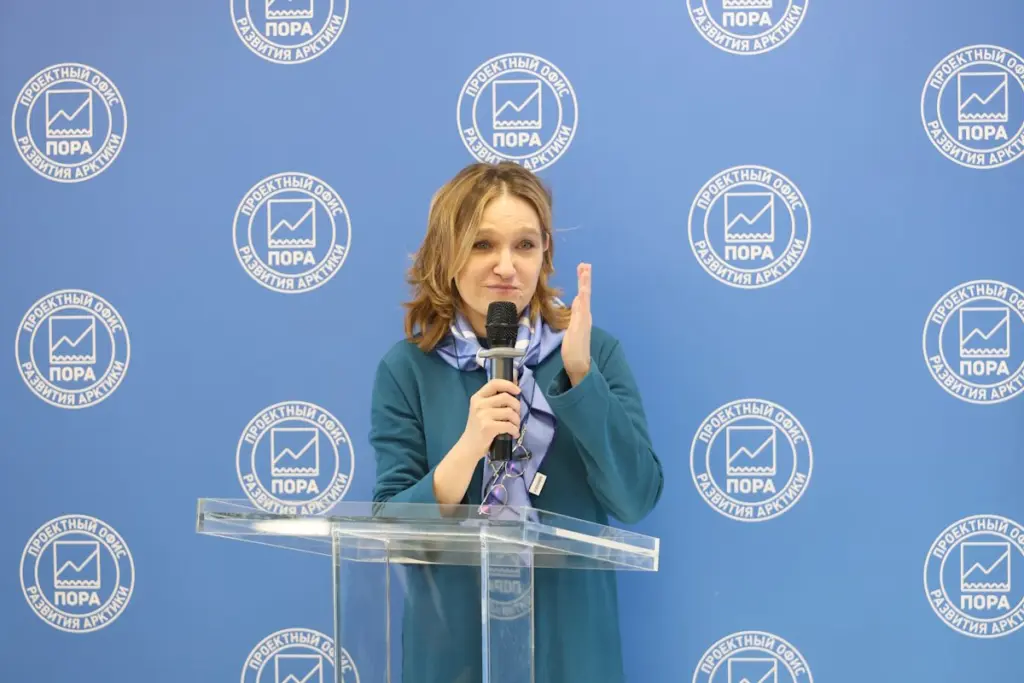
On June 5, World Environment Day, we asked Anna Romanovskaya, Director of the Yu.A. Izrael Institute of Global Climate and Ecology, Corresponding Member of the Russian Academy of Sciences, to discuss how the carbon units market is currently developing. This market is intended to incentivize resource users to create their own climate projects to compensate for environmental damage caused during their production activities. We also asked her about the specific features of these mechanisms as they apply to the Arctic Zone of Russia.
The Russian carbon market is currently essentially voluntary in nature: climate projects are implemented by companies primarily to maintain their reputation. The absence of regulatory obligations to reduce greenhouse gas emissions at the enterprise level entails two consequences: minimization of business efforts to reduce their own direct and indirect emissions, as well as reduced demand for carbon units and their low price. An additional negative factor is the isolation of the Russian carbon market from the international market. As a result, high-quality climate projects capable of generating expensive units are limited in their implementation and remain unclaimed.
Natural climate projects in the Arctic Zone require compliance with a number of additional conditions and restrictions, given the extreme vulnerability of Arctic ecosystems, the long recovery time after disturbances, and the slow rates of carbon stock accumulation in biomass and soil pools.
A separate aspect is methane emissions – both from aquatic ecosystems (whose area is increasing due to climate warming) and from the increasing depth of seasonal permafrost thaw. Methods for reducing these emissions are known, but all of them are relatively ineffective and often expensive. The implementation of infrastructure climate projects (for example, renewable energy development) is difficult due to the increased susceptibility of infrastructure facilities to external impacts and harsh conditions. All this creates additional requirements for the implementation of climate projects, which in the Arctic can be significantly more expensive than in other natural and climatic zones of Russia.
Methodologies for such projects in the Arctic Zone are beginning to emerge in our country. For example, a methodology for regulating pasture load in the tundra zone has been approved. The PORA Expert Center is beginning to implement the first forest climate project in the Arctic. However, the potential for projects is much broader.
It is necessary to initiate scientific and methodological work to develop approaches to climate projects in the Arctic and test them in practice. The idea of creating an independent Arctic Carbon Registry, which would ensure high quality of projects and the generated carbon units meeting the requirements of, among others, the CORSIA system and Article 6 of the Paris Agreement, appears promising.
The Project Office for Arctic Development and the editorial board of GoArctic.ru do not necessarily share the opinions expressed by experts.
Оthers Our comments

Maksim Dankin: The Future of the Arctic is Being Decided in Greenland
January 22, 2026 The Greenland case transcends a local storyline and becomes a focal point where key questions about the Arctic’s future converge. US President Donald Trump has repeatedly and in various contexts stated his intention to establish control over Greenland. Why the US wants to take the island, and how this situation could benefit...
read more
Alexander Makarov on Russia’s Role in International Scientific Cooperation
Breakthrough scientific achievements will be made possible through continued cooperation among countries in the high latitudes. March 20, 2026 In early March, the AARI celebrated the 106th anniversary of the establishment of the Northern Scientific and Commercial Expedition, which became Russia’s premier polar institute. Today, despite difficulties related to the severance of full-scale international ties...
read more