
Irina Strelnikova – The Arctic as a Factor of Strength and a Strategic Region in Sweden’s New Arctic Strategy
The document identifies Russia as the most serious threat to Sweden’s national security emanating from the Arctic region; China is described as a state with clear ambitions to become a great power in the polar regions
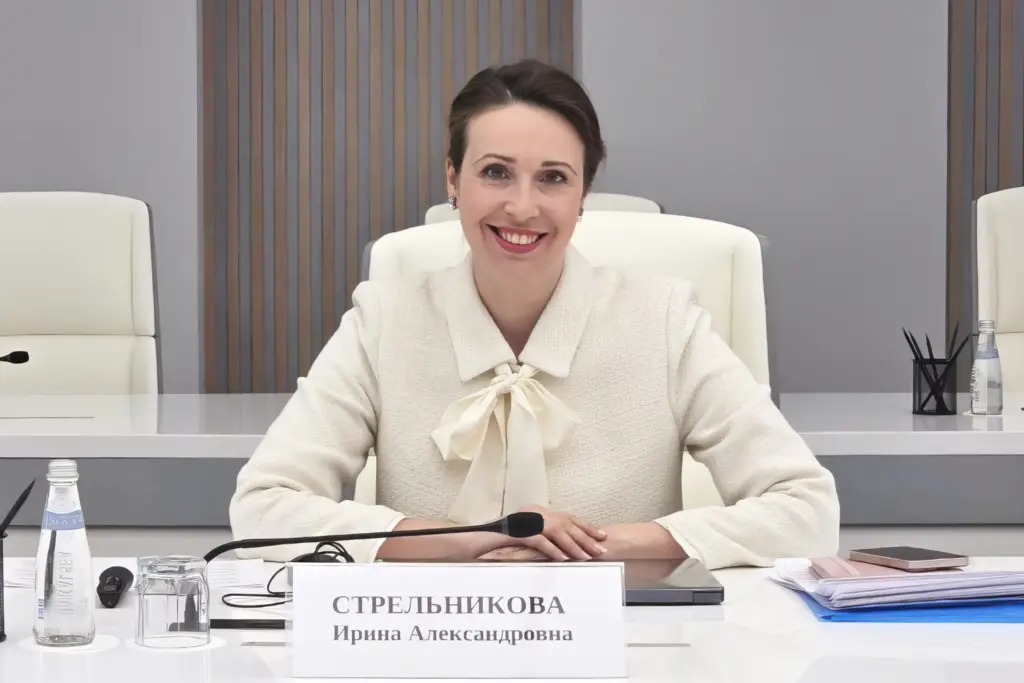
On June 1, 2026, Swedish Minister for Foreign Affairs Maria Malmer Stenergard presented the country’s new Arctic strategy. The presentation took place at the Defence Museum in the city of Boden in northern Sweden before local civilian and military leaders. That same day, the government officially submitted the document entitled Sveriges strategi för ett fredligt, säkert och hållbart Arktis («Sweden’s Strategy for a Peaceful, Secure and Sustainable Arctic») to the parliament. Commentary is provided by PORA expert Irina Strelnikova, Director of the Center for Interdisciplinary Arctic Studies at HSE University, Associate Professor at the Department of Regional Foreign Area Studies at HSE University, and Senior Research Fellow at the Institute of China and Contemporary Asia of the Russian Academy of Sciences.
In the new Arctic strategy, the Swedish Arctic (the regions of Norrbotten and Västerbotten) is described as a factor of strength for the country, reinforcing its position in the international arena.
The key priorities in Arctic policy are identified as security and stability, economy and trade, climate and environment. The overarching long-term goal of the policy is recognized as the creation of a peaceful and secure Arctic with sustainable, resilient, and attractive communities and a low impact on the environment and climate.
The document lists 10 main objectives for Sweden in the Arctic:
- Promoting respect by all states for international law, as well as human rights and peaceful dialogue regarding the Arctic;
- Deepening cooperation in security and defense and developing national military capabilities;
- Strengthening sustainable regional and local development in the Swedish Arctic, with particular attention to the situation of Indigenous peoples and civil-military cooperation;
- Harnessing the economic opportunities of the Arctic while respecting the rights of Indigenous peoples;
- Combating climate change and protecting biodiversity;
- Promoting polar research, developing digital and space infrastructure as strategic resources that strengthen Sweden’s position in the world;
- Prioritizing the work of the Arctic Council;
- Strengthening Nordic Arctic cooperation, transatlantic cohesion, and developing ties with non-Arctic states that contribute to a peaceful, secure and sustainable Arctic;
- Promoting EU participation in Arctic cooperation;
- Strengthening Swedish «competence» on Arctic issues and the country’s participation in strategic efforts in the region.
Particular attention is paid to Russia’s role in the Arctic. The conflict in Ukraine, described as «Russia’s aggression against Ukraine,» according to the document, has created a new security situation in Europe that also affects the North.
Russia is identified as the most serious threat to Sweden’s national security emanating from the Arctic region. It is noted that the Russian army is being rearmed on the Kola Peninsula and that a large amount of nuclear weapons is concentrated there. Mention is also made of Russia’s «shadow fleet,» used to export Russian oil, including via Arctic routes.
Finally, the document describes Russia’s «hybrid attacks» against NATO and EU countries in the Arctic: sabotage, cyberattacks, espionage, and information manipulation. In this context, underwater infrastructure – cables and pipelines essential for communications, energy, and security – becomes vulnerable. It is emphasized that Sweden needs to consider the interconnection between Russia’s hybrid activities in the Arctic and the Baltic Sea region.
China is described in the strategy as a state with clear ambitions to become a great power in the polar regions, for which the Arctic represents a long-term strategic interest. It is noted that Chinese research in the Arctic pursues both civilian and military objectives, and that economic goals – resource extraction and diversification of trade routes – are linked to security policy, although China’s military presence in the region is recognized as limited overall. At the same time, only China’s support for «Russia’s aggression against Ukraine» is directly presented as a threat to Sweden and Europe.
The strategy notes that the security situation in the Arctic is affected by statements made by representatives of the US administration in 2026 regarding claims to Greenland. In this context, Sweden’s commitment, along with that of the EU and «its many NATO allies,» to the norms of international law and established forms of intergovernmental cooperation is emphasized.
Sweden’s role in the Arctic is also shaped by its accession to NATO, as a result of which the region takes on even greater importance in its security policy. Sweden must bear increased responsibility for peace, security, and development in the polar region. In these circumstances, the growing military-strategic link between the Arctic and the Baltic Sea region is underscored.
In this context, the Arctic is also identified as a key area for NATO’s supply routes between North America and Europe, for strengthening transatlantic security ties, and for the joint defense of North American and European territory.
The role of the EU in Swedish Arctic policy is repeatedly emphasized. It is noted that in the Swedish Arctic, the efforts of local, regional, national, and European authorities must intersect to ensure development beneficial to each of them. These same Swedish regions, possessing significant natural resources, contribute both to Sweden’s welfare and to the EU’s economic security.
Together with NATO, as noted, the EU plays a central role in ensuring peace and development in the Arctic. It is emphasized that Russia’s actions are leading to the strengthening of the EU’s role as a security and defense policy actor and make it necessary to develop a common EU policy toward the region.
The Project Office for Arctic Development and the editorial board of GoArctic.ru do not necessarily share the opinions expressed by experts.
For media representatives: we welcome the republication of comments provided that an active link to the original source is given and the columnist’s status as an expert of the Project Office for Arctic Development is indicated.
Оthers Our comments
Vyacheslav Maracha: The Transit Potential of the Transarctic Transport Corridor Must Become the Main Growth Driver
The TTC – from a potential alternative to the Suez Canal route to a strategic necessity for global logistics The thesis that the Transarctic Transport Corridor (TTC) could become an alternative to the Suez Canal route for some Asian countries by reducing distance and shipping costs between Asia and Europe is commented on by Vyacheslav...
read more
Maksim Dankin: The preferential regime in the Arctic should become more adaptive
At the Arctic – Regions Forum, participants discussed how to improve the effectiveness and transparency of preferential regimes and better account for the specific characteristics of different territories and industries Maksim Dankin, Director General of the Project Office for Arctic Development (PORA) and a member of the Public Chamber of Russia, served as moderator and...
read more