
Alexey Tsykarev: Lessons from the UN Biodiversity Conference – the Arctic must unite, not divide
A full-fledged, equal dialogue between the indigenous peoples of the entire Arctic matters far beyond the region
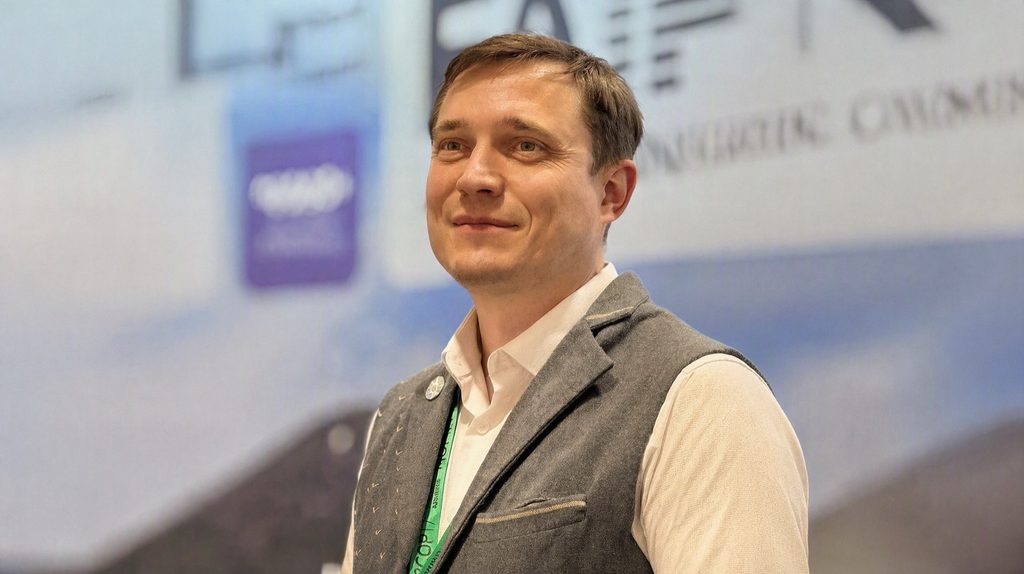
From 19 to 30 October 2026, the 17th Conference of the Parties to the Convention on Biological Diversity, adopted in 1992 (COP17), was held in Yerevan. Alexey Tsykarev – an expert at PORА, adviser to the president of the Association of Indigenous Minorities of the North, Siberia and the Far East (KMNSSiDV), chairman of the Center for Support of Indigenous Peoples and Public Diplomacy «Young Karelia,» and a member of the steering committee of the Kali Foundation – discusses its outcomes, including issues of indigenous peoples’ rights and prospects for international cooperation in the Arctic.
One of the most important results of the 17th Conference of the Parties to the UN Convention on Biological Diversity (COP17) was the adoption of the rules of procedure – modus operandi – of the new permanent Subsidiary Body under Article 8(j) of the Convention, which is devoted to the traditional knowledge, innovations and practices of indigenous peoples and local communities.
The body itself was established two years earlier at the conference in Cali, Colombia. Its creation was a historic step: for the first time within an international environmental agreement, a permanent body specifically dealing with issues of indigenous peoples and local communities appeared. It must now promote the full participation of indigenous peoples in the implementation of the Convention, the preservation of traditional knowledge and their contribution to global biodiversity conservation policy.
However, agreeing on the rules of procedure of the new body proved far more difficult than might have been expected. The negotiations were accompanied by sharp disagreements not only between states but also within the international indigenous peoples’ community. One of the main stumbling blocks, paradoxically, was the Arctic.
Why did the Arctic end up at the center of disagreements?
The subject of dispute was the system of regional representation of indigenous peoples in the new body of the Convention. Indigenous peoples insisted on the system of seven sociocultural regions used, in particular, in the UN Permanent Forum on Indigenous Issues. In this system, the Arctic is designated as a separate region, but the established practice of representation is largely oriented toward organizations of two peoples – the Saami and the Inuit – leaving out the 17 Arctic indigenous peoples of Russia, as well as the Athabaskans, Gwich’in and Aleuts.
Many countries in Asia and Africa proposed using the traditional UN model of five regions, in which the Arctic is part of two: Eastern Europe and Western Europe and Other States. The Russian delegation was ready to agree to whichever formula would generate the greatest consensus. Only one thing was fundamental – the Arctic must include the indigenous peoples of the Russian North. Organizations of indigenous minorities share this position. For them, ensuring fair, full and legitimate representation was important.
During the negotiations, the model of the Arctic Council was cited as an example, as it takes into account the geographic unity of the Arctic. Along with organizations of the Saami, Inuit, Athabaskans, Aleuts and Gwich’in, the Association of Indigenous Minorities of the North, Siberia and the Far East of the Russian Federation is a permanent participant of the Council. Such a model makes it possible to take into account the diversity of indigenous peoples of the entire region, including the Russian Arctic.
Unfortunately, the approach did not find support from Denmark, Canada, Norway and Finland, which, under pressure from Saami and Inuit organizations, dragged out the negotiations until the very end.
Preserving the existing system of representation of the Arctic’s indigenous peoples is objectively convenient for Saami and Inuit organizations: it makes it significantly easier for them to agree on candidates and develop common approaches. For the sake of this convenience, and to avoid creating a precedent, they were prepared to override the views of their brothers and sisters in Asia, Africa and Latin America and to block the work of the subsidiary body.
Moreover, during the negotiations, the Saami Council and the Inuit Circumpolar Council, under the threat of blocking consensus, demanded a distinction between the concepts of «indigenous peoples» and «local communities,» which are traditionally used together in the documents of the Convention on Biological Diversity.
Such situations weaken the negotiating positions of indigenous peoples vis-à-vis states, which retain the right to make final decisions. That is precisely why a full-fledged, equal dialogue between the indigenous peoples of the entire Arctic matters far beyond the region.
A compromise was reached, but questions remain
Ultimately, literally in the final hours of the conference, states and indigenous peoples’ representatives managed to find a mutually acceptable solution. The final document did not enshrine either the UN system of five geographic groups or the system of seven sociocultural regions as the basis for nominating indigenous peoples’ representatives.
The compromise found – proposed, incidentally, by Russia following consultations with the country’s indigenous peoples – made it possible to avoid blocking the work of the new international institution. However, unresolved issues inevitably carried over to the next conference, which will be held in 2028 in Quito, the capital of Ecuador.
The Arctic needs a new dialogue
The negotiations in Yerevan revealed a problem that goes far beyond the Convention on Biological Diversity. It is the lack of direct contacts and systematic dialogue between organizations of indigenous peoples of the Russian and foreign Arctic.
Many contradictions could have been discussed and resolved long before the conference – through consultations among indigenous peoples themselves, their organizations and states. Unfortunately, today such opportunities are significantly fewer than before.
Moreover, the COP17 experience shows that it is necessary to develop the negotiating capacities of Russian indigenous peoples’ organizations themselves: strengthen international ties, improve consultation mechanisms, formulate coordinated positions and participate more actively in global processes.
It is equally important to restore direct dialogue with organizations of the Saami, Inuit and other indigenous peoples of the foreign Arctic. Such a dialogue should be built not on denying existing disagreements but on recognizing shared long-term interests.
This is probably the main lesson of the Yerevan conference. Climate change, the preservation of Arctic ecosystems, the protection of traditional knowledge, sustainable nature management, and the development of languages and cultures – all these are problems that cannot be effectively solved under conditions of an artificial division of the Arctic.
At one time, precisely this logic underlay the activities of the Arctic Council. Its uniqueness lay in its ability to unite states and indigenous peoples with different political systems and interests in order to solve common tasks. The freezing of full-format dialogue in the Arctic Council in 2022 seriously weakened this model.
In 2026, the indigenous peoples of Russia took the first step – they invited all Arctic indigenous peoples’ organizations and the Arctic Council Secretariat to an international forum in Krasnoyarsk. There was no response, which merely consolidates the status quo and leads to difficulties in negotiations at international platforms such as environmental conventions on climate, combating desertification and biodiversity conservation.
Оthers Our comments
Irina Strelnikova – The Arctic as a Factor of Strength and a Strategic Region in Sweden’s New Arctic Strategy
The document identifies Russia as the most serious threat to Sweden’s national security emanating from the Arctic region; China is described as a state with clear ambitions to become a great power in the polar regions On June 1, 2026, Swedish Minister for Foreign Affairs Maria Malmer Stenergard presented the country’s new Arctic strategy. The...
read more
Annetta-Bakh Tsakhilaeva – on the Creation of the US National Energy Dominance Council
This move will entail a strengthening of NATO’s naval presence in high latitudes, which for Russia means the need to expand its icebreaker fleet and coastal defense systems This is not merely an administrative reform, but a tectonic shift in the global paradigm. While previous administrations relied on the «green transition» as a tool for...
read more