
Anneta-Bakh Tsakhilaeva: What the UN Commission’s Decision on the Continental Shelf Means for Russia
The next, and no less challenging, stage will be negotiating maritime boundaries with other states and advancing the practical development of the Arctic region
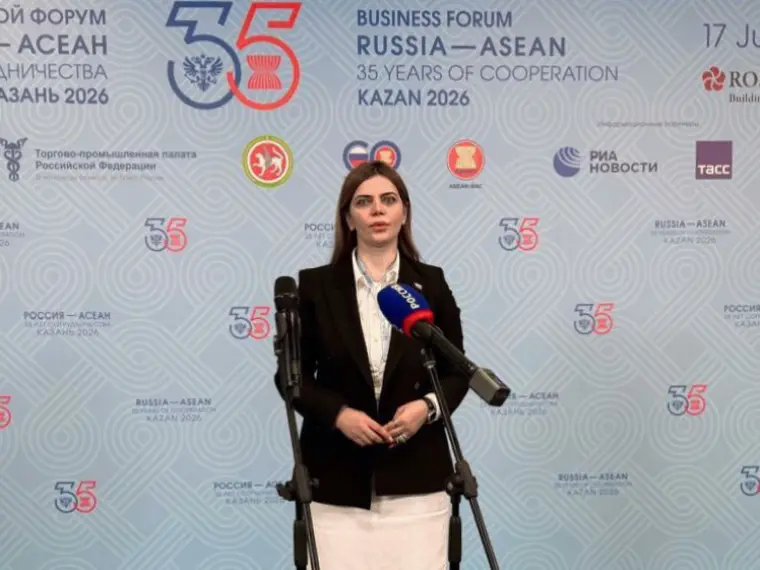
The United Nations Commission on the Limits of the Continental Shelf (CLCS) has recognized the scientific basis of Russia’s claim to approximately 1.7 million square kilometers of the Arctic seabed. The Commission’s recommendations on most of Russia’s submission confirm that the geological evidence meets the criteria established for an extended continental shelf. Commentary by Anneta-Bakh Tsakhilaeva, Ph.D. (Engineering), First Vice President of the Eurasian Business Association.
The recommendations issued by the United Nations Commission on the Limits of the Continental Shelf (CLCS), confirming the scientific validity of a substantial part of Russia’s Arctic submission, mark an important milestone in the long-standing work of Russian scientists, geologists, and diplomats. The recommendation covers an area of approximately 1.2 million square kilometers (with some sources citing estimates of up to 1.7 million square kilometers), including the Lomonosov Ridge, the Mendeleev-Alpha Rise, and the Podvodnikov Basin.
It is important to emphasize that the Commission’s recommendations do not automatically establish sovereign maritime boundaries. The CLCS evaluates only the scientific and geological evidence supporting claims to an extended continental shelf. Delimitation between neighboring states remains a separate legal process to be resolved through negotiations in accordance with international maritime law.
Nevertheless, the Commission’s findings are significant from both economic and geopolitical perspectives. The Arctic continental shelf is regarded as one of the world’s largest repositories of hydrocarbons and other mineral resources. In addition to oil and natural gas, it contains substantial deposits of non-ferrous and rare metals, as well as other strategically important minerals. For Russia, Arctic development is closely linked to the long-term sustainability of its resource base, the expansion of transport infrastructure, and the strengthening of its scientific presence in the region.
The Arctic as Part of the Global Economy
Over recent decades, the Arctic has evolved from a remote northern region into an area of growing global importance. Changes in ice conditions are gradually expanding opportunities for maritime navigation, while the Northern Sea Route is emerging as a potentially important component of the global transportation network.
For Asian economies, including ASEAN member states, northern shipping routes are primarily of economic interest. Under favorable navigation conditions, voyages between Europe and Asia can become shorter in both distance and transit time, potentially reducing transportation costs and improving the resilience of global supply chains.
As a result, the development of the Arctic has become an issue that extends well beyond the interests of the Arctic coastal states themselves.
International Law Remains the Foundation for Resolving Arctic Claims
Russia’s submission has undergone a lengthy review process. The initial application was filed in 2001, after which the Commission recommended additional scientific research. Russia subsequently conducted extensive geological expeditions and submitted a revised application, which has now received favorable recommendations for a significant portion of the claimed areas.
It should also be noted that overlapping submissions have been made by other Arctic states, including Canada and Denmark. Such overlaps are a common feature of the implementation of the United Nations Convention on the Law of the Sea (UNCLOS) and are generally expected to be resolved through bilateral negotiations.
It is also noteworthy that the United States has not ratified UNCLOS while simultaneously asserting claims to an extended continental shelf. This creates an additional layer of complexity in the legal framework governing Arctic maritime claims.
Russia’s Next Priorities
The Commission’s recommendations represent an important achievement, but they are only an intermediate stage in a much longer process.
Several priorities now stand out.
First, Russia should continue negotiations with neighboring states whose submissions overlap with its own.
Second, scientific research should continue in areas where the Commission considered the available evidence insufficient.
Third, further investment in Arctic infrastructure remains essential, including ports, navigation systems, meteorological services, the icebreaker fleet, and search-and-rescue capabilities. These investments are necessary regardless of ongoing international discussions because they contribute directly to safe navigation and the sustainable development of the region.
Another long-term priority is the development of domestic technologies for offshore Arctic operations. Restrictions on access to foreign equipment and technologies have significantly affected the implementation of many projects, making technological self-reliance an increasingly important objective.
Economic Development and Sanctions
Since 2014, a number of international energy companies have reconsidered their participation in Russian Arctic projects. ExxonMobil terminated its joint offshore operations with Rosneft, Shell withdrew from Russian assets, and TotalEnergies reduced its involvement in several Arctic ventures.
At the same time, the European Union, the United States, and the United Kingdom expanded sanctions targeting a number of Russian companies and vessels involved in Arctic development.
These measures have affected project implementation schedules, access to advanced technologies, and international financing. At the same time, they have encouraged the development of domestic engineering capabilities and alternative forms of international cooperation.
Responsible Arctic Development
The Arctic requires an especially responsible approach to development.
Its fragile ecosystems, severe climatic conditions, and remote locations demand exceptionally high standards of industrial safety, environmental monitoring, and emergency response infrastructure.
Future development should therefore be accompanied by strict environmental safeguards and continuous scientific monitoring.
Equally important is ensuring the security of maritime communications, critical infrastructure, and national interests in full compliance with international law.
Competition in the Arctic Will Continue to Grow
International interest in the Arctic is increasing for several reasons: access to natural resources, the development of new maritime routes, climate change, and the growing strategic importance of northern waters.
Against this backdrop, many countries are implementing national Arctic strategies, investing in infrastructure, scientific research, icebreaker fleets, and logistics projects. Competition for economic activity and transportation opportunities in the region is therefore likely to intensify.
Conclusion
The recommendations issued by the United Nations Commission represent important international recognition of the scientific work carried out by Russia over many years. However, an equally challenging phase still lies ahead: negotiating maritime boundaries with neighboring states and advancing the practical development of the Arctic region.
Russia’s long-term success in the Arctic will depend not only on the availability of natural resources but also on its ability to combine scientific research, infrastructure development, environmental responsibility, technological innovation, and consistent diplomatic engagement.
Such a comprehensive approach offers the best opportunity to ensure the sustainable development of the Arctic while preserving its importance as one of the key areas of Russia’s economy and international cooperation throughout the twenty-first century.
The Project Office for Arctic Development and the editorial board of GoArctic.ru do not necessarily share the opinions expressed by experts.
For media representatives: we welcome the republication of comments provided that an active link to the original source is given and the columnist’s status as an expert of the Project Office for Arctic Development is indicated.
Оthers Our comments

Maksim Dankin Highlights Arctic Economic and Investment Potential to Indian Media
In an interview with an Indian The Print, PORA Director General Maksim Dankin highlighted promising avenues for economic collaboration between Russia and India within the Arctic region. The discussion encompassed potential strategies for bolstering bilateral trade relations. Interviewer: What economic opportunities does Arctic cooperation with Russia offer India in the current geopolitical situation? Maksim Dankin:...
read more
Sergey Nikonorov: Arctic cities are becoming drivers of a new economy
The Arctic could become a powerful macro-region with a sustainable economy and high quality of life, provided that its resource orientation is balanced with investments in human capital, technology, and ecology The Arctic is an outpost, a space where the technologies of the future are born. It is here, in the polar cities, that solutions...
read more