
Elena Maslova on Italy’s New Arctic Strategy
It would be wrong to think that Italy’s geographical distance from the Arctic and its Mediterranean climate are barriers to its foreign policy thinking and behavior

March 10, 2026
In January 2026, the Italian government, led by Prime Minister Giorgia Meloni, released its first-ever Arctic strategy. Elena Maslova, an expert on modern Italian politics and history, author of the Telegram channel «Italy with Elena Maslova,» Candidate of Political Sciences, and Associate Professor at MGIMO University, explains the meaning of the document and the essence of Italy’s interest in the Arctic.
The official title of the strategy is: «Italy’s Arctic Policy. Italy and the Arctic: Values of Cooperation in a Rapidly Changing Region.» Three ministries worked on the document: the Ministry of Foreign Affairs and International Cooperation, the Ministry of Defense, and the Ministry of University and Research.
Let us note right away that the release of such documents is not a routine event in Italian politics. The country’s foreign policy planning operates in the absence of a strategic foreign policy document — Italy does not issue doctrinal papers, limiting itself to publishing defense documents and macro-regional strategies. The latter has become a trend, especially over the past few years: in 2022, the Strategy for Security and Defense in the Mediterranean was presented; in 2024, the Plan for Africa («Mattei Plan») was unveiled; and in early 2026, a separate document dedicated to Italy’s policy in the Arctic was released.
The Italians note that the 2026 document, «Italy’s Arctic Policy. Italy and the Arctic: Values of Cooperation in a Rapidly Changing Region,» is a continuation and updated version 2.0 of the 2015 document «Towards an Italian Strategy for the Arctic — National Guidelines,» which no longer corresponds to the current geopolitical realities.
It would be a mistake to assume that the country’s geographical distance from the Arctic and its Mediterranean (in some areas, subtropical) climate are constraints on Italian foreign policy thinking and behavior. The Italians are historically world-renowned creators, merchants, as well as explorers and pioneers. The first Italian expedition to the North Pole dates back to the late 14th century and is attributed to the brothers Nicolò and Antonio Zen, who, according to Italian belief, reached at least the territories of modern-day Iceland, Greenland, and «even further.» While this Zen brothers’ expedition is not a universally recognized historical fact, it is mentioned in «Italy’s Arctic Policy» as the first Italian presence in the region.
In modern Italy, interest in the Arctic has been articulated gradually but steadily. First and foremost, it must be said that Italy has its own Arctic station, the «Dirigibile Italia,» named in honor of Umberto Nobile’s 1928 expedition, which was opened on Svalbard in 1997. The station operates year-round and focuses on studying climate change, atmospheric physics, oceanography, marine biology, and ecology. On the Apennine Peninsula, the National Research Council (CNR), which coordinates polar projects and includes the Institute of Polar Sciences (ISP), is active. Furthermore, the Silvio Zavatti Institute for Polar Research has been operating in the city of Fermo since 1944. The National Institute of Oceanography and Applied Geophysics (OGS) has the icebreaker «Laura Bassi» at its disposal, which regularly conducts scientific voyages into polar waters.
In May 2013, at the ministerial session in Kiruna, Sweden, Italy was granted official status as a Permanent Observer in the Arctic Council. This served as a kind of recognition of Italy’s contribution to Arctic research. Italy is one of the few non-Arctic EU countries to have obtained Permanent Observer status in the Arctic Council (Germany, the Netherlands, Poland, and the UK received this status in 1998; France in 2000; and Spain in 2006).
Italy’s 2026 Arctic Strategy postulates that the new strategy promotes a broader and more integrated national approach that goes beyond science for science’s sake and encompasses broader engagement on geopolitical, economic, and security issues. A recurring theme is the idea that the Arctic is getting closer, particularly to Europe. In the current global situation, Italy needs to build a «North-South» axis — from the Arctic to the Mediterranean, as both these regions are profoundly affected by climate change, Italy notes.
One can identify the main objectives of Italy in the Arctic, which explain this distinctive Arctic interest.
First, there is the aspiration to strengthen the role and position of the EU and its member states (the EU itself also seeks membership in the Arctic Council). Italy intends to support the actors responsible for governing this region, primarily the European Arctic countries.
Second, it aims to strengthen Euro-Atlantic security in accordance with NATO and EU commitments and a comprehensive vision of strategic theaters of operation.
Third, Italy seeks to develop science, expertise, and skills in extreme conditions, particularly by developing new technologies applicable in various climatic conditions, as well as capabilities and technologies suitable for Arctic and sub-Arctic environments. The main domains for implementing the strategy are space, land, water, air, and cyberspace. Notably, in certain domains, Italy possesses so-called «niche competencies.» Italian industry has already achieved outstanding results in shipbuilding, aerospace, and space technologies. The Arctic is becoming a kind of laboratory for testing new technologies. Key sectors of growing potential interest include infrastructure development, energy, the defense industry, space satellites, critical raw materials, the «blue economy,» and commercial shipping.
Technological development is inextricably linked to the realization of the interests of major Italian companies already operating in the region — Eni, Leonardo, Fincantieri, and ENEL.
Thus, we can speak of a triad of «scientific research — defense — national industry,» the culmination of which is the aspiration for EU political leadership in the region.
So, we are witnessing the institutionalization and articulation of Italy’s foreign policy interest in the Arctic: initially, this was expressed through joining various structures and institutions. Now, with the official release of the Arctic Strategy, this strengthens the institutionalization, structures, and directs the activities of state and non-state actors in the region.
Оthers Our comments
Trump’s Push for Greenland: Implications for Russia-India Arctic Cooperation
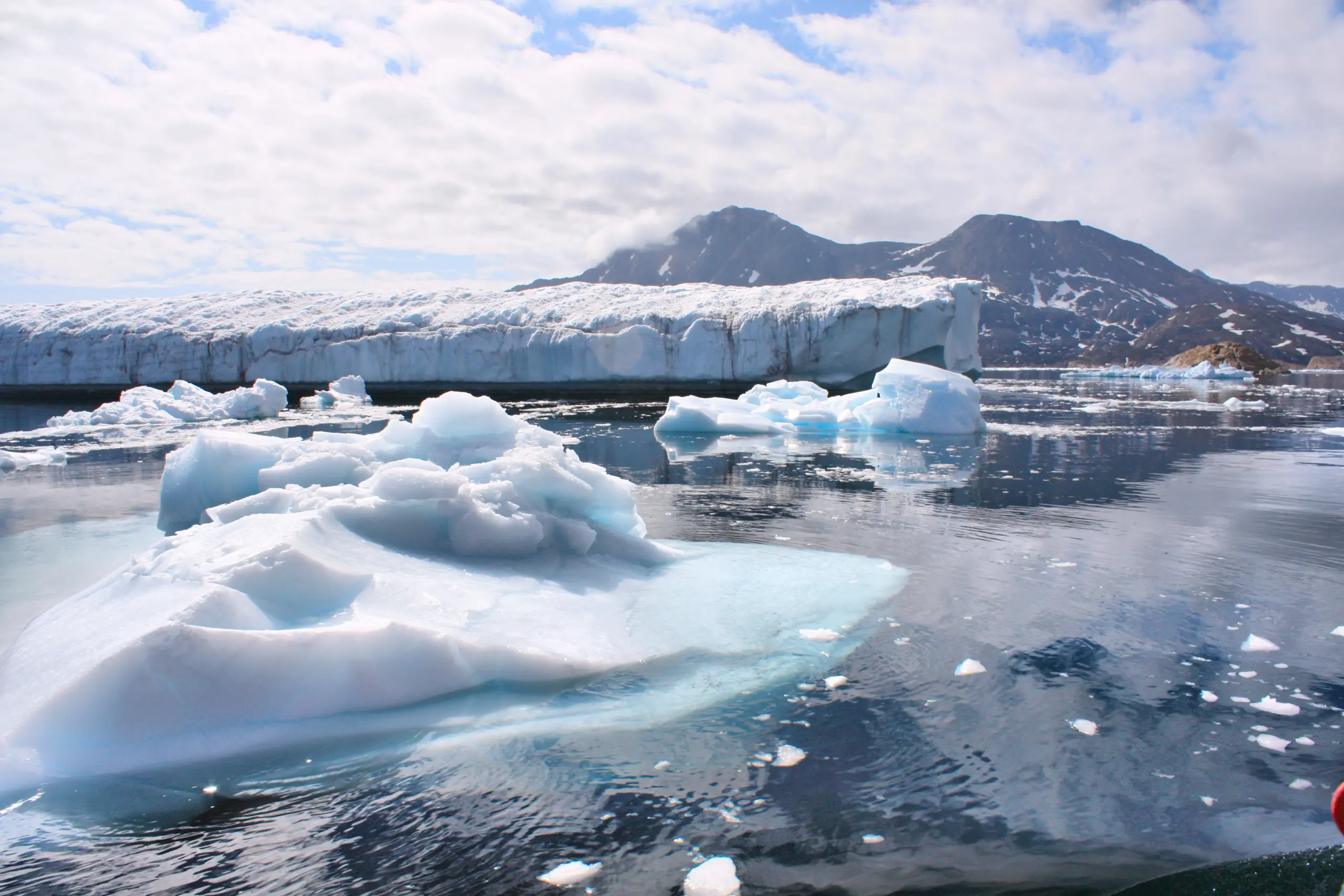
The United States has renewed its focus on Greenland. This desire for acquisition by the US is not unprecedented, having been seriously explored by American policymakers in 1867, 1910, 1946 and 1955. Contrary to initial perceptions that US President Donald Trump's interest was merely frivolous, evidence suggests that this could be a firm decision already made by the US Administration, at least under his leadership, one which they could be determined to execute in future.
read more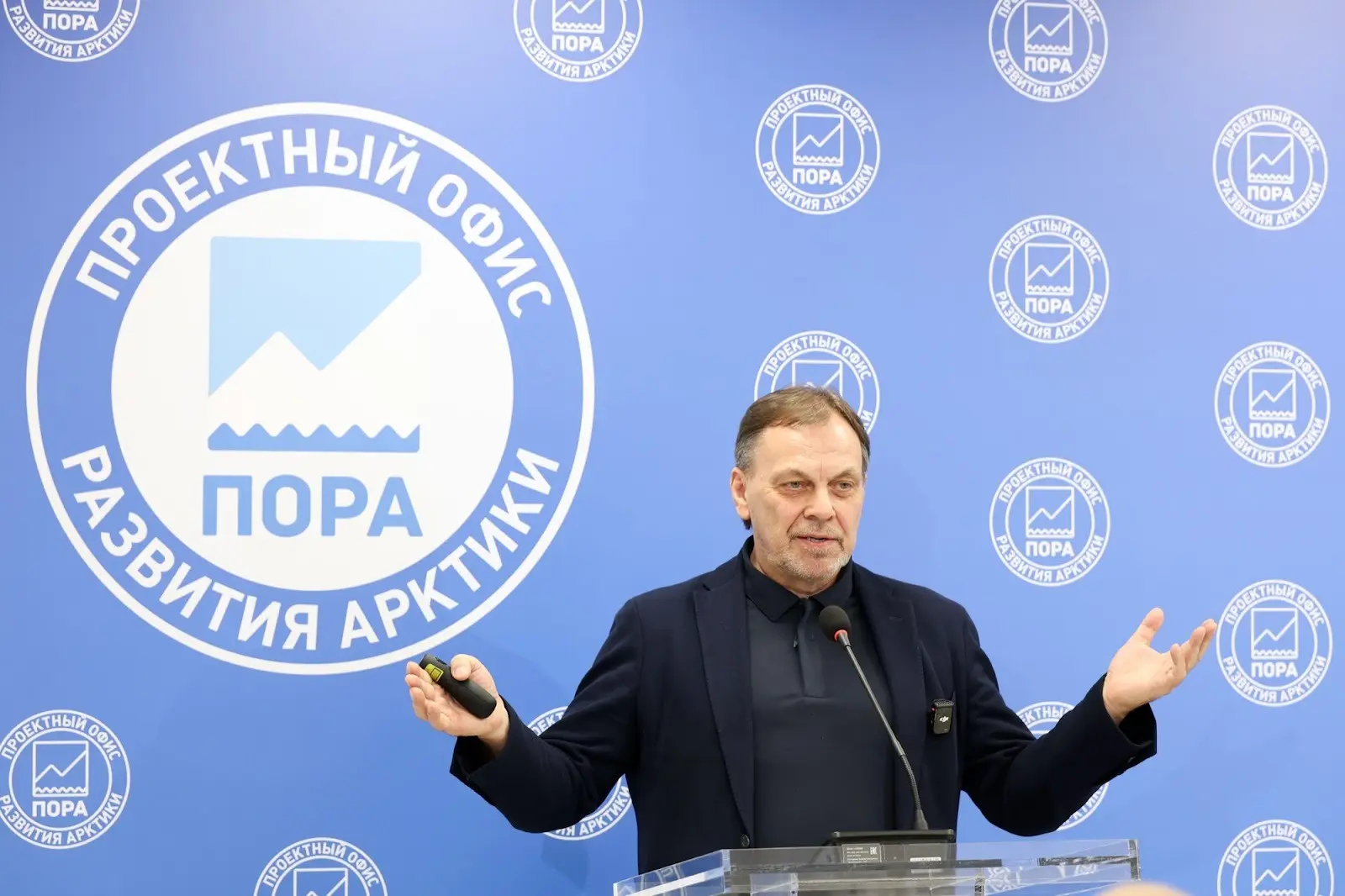
Russia Is Neither the West Nor the East, But the North
Andrey Golovnev, Director of the Peter the Great Museum of Anthropology and Ethnography (the Kunstkamera), lectured about Russia’s northernness as a fundamental aspect of its civilization. The lecture also addressed the need to consider certain historical interpretations, particularly regarding Kievan Rus’. Essentially, it [Kievan Rus’] is northern — Ladoga, Novgorod, Varangian. Kyiv emerged later as...
read more