
Achieving Arctic Development Targets by 2026 — A Foundation for a New Stage of Social and Economic Growth
February 27, 2026
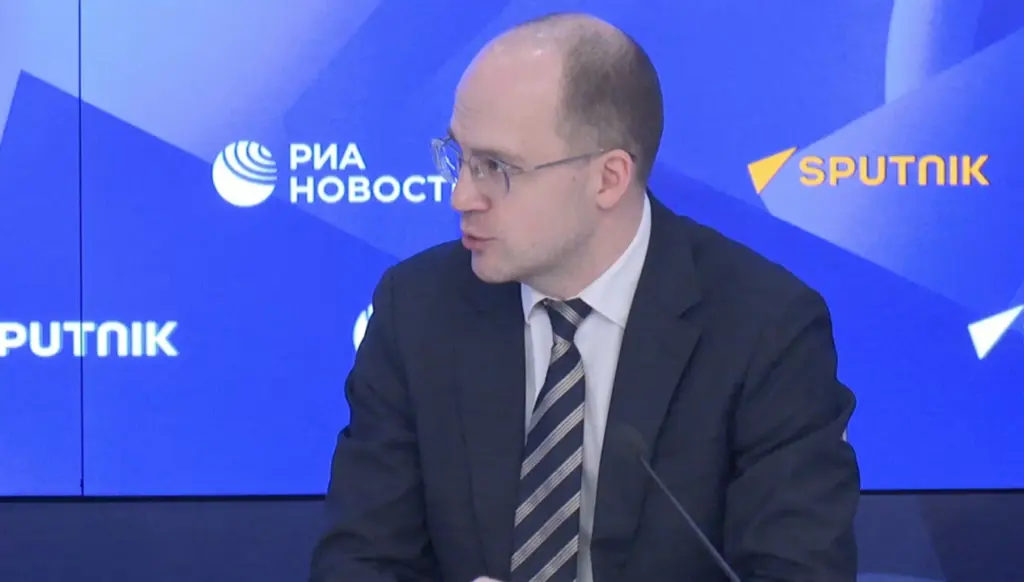
In the run-up to Arctic Day, the Director General of the PORA Expert Center, Maksim Dankin, assessed the results of the social and economic development of the Russian Arctic over the past five years.
Speaking at the round table devoted to the strategic priorities for the development of the Russian Arctic Zone of Russia he recalled that in 2020, presidential decrees approved two fundamental documents – the Fundamentals of State Policy in the Arctic and the Strategy for the Development of the Arctic Zone and Ensuring National Security. Based on these, a unified action plan with specific targets was adopted.
According to Dankin, results in the short and medium term must be assessed by whether these established indicators are achieved.
«Fourteen indicators were set. It’s always important, when discussing the outcome of any work, to base it on the indicators – whether we achieved them or not. Most of the indicators were indeed met, and some were significantly exceeded,»
- he emphasised
While indicators demonstrate progress, they reflect tangible transformations occurring within the region. Dankin highlighted a shift in migration patterns as a significant development. He noted that, prior to the implementation of Arctic policies, migration trends were negative. By 2025, the end of the first stage of policy enactment, these trends reversed and became positive. This achievement underscores the effectiveness of the policies implemented in the Arctic region.
Discussing investment support mechanisms, the expert reminded that the Russian Arctic is home to the world’s largest special economic zone and is developing territories of advanced development.
According to an expert, a total of 1,096 new state-supported projects have been initiated. These projects are projected to attract 2.7 trillion rubles in investments, with over 900 billion rubles already invested. Furthermore, 358 of these projects have been successfully launched, resulting in the creation of over 21,000 jobs.
16 federal laws affecting the socio-economic situation of the Arctic zone regions were adopted over five years.
«Today, the Arctic contributes 6.2 percent of our country’s GDP and over 10 percent of its exports. The revenues of the Arctic budgets of the Russian Federation subjects have grown by 69% over these 5 years, reaching 1.5 trillion rubles, and the average salary has increased by 54%,»
- the expert noted
At the same time, he emphasised that some indicators were not fully achieved due to objective reasons related to the changing international situation, the pandemic, and sanctions pressure. However, the overall dynamics of the Arctic region remain stable, forming the basis for new development projects and the establishment of the Arctic as a key economic and political outpost of the country.
The Project Office for Arctic Development does not always share the opinions expressed by experts.
For media representatives: we welcome republication of comments provided that an active link to the original source and the columnist’s status as an expert of the Arctic Development Project Office are indicated.
Authors

Оthers Our comments

China Deepens Economic and Technological Ties with Russia
Dr. Andrey Krivorotov, Doctor of Science (Economics), Acting Head of Innovations Management Department, Odintsovo branch, Moscow State Institute of International Relations (MGIMO University), Senior Research Fellow at the Institute of China and Contemporary Asia, Russian Academy of Sciences highlights China’s potential contributions in Arctic cooperation, primarily investment and technology transfer in communications and navigation systems,...
read more
Milena Milic: Carbon Units as a Resource – What Will Climate Policy Change for the Arctic
Time to move from emission accounting to real financing of energy efficiency, permafrost monitoring, and port logistics The Arctic does not need abstract climate tools, but working mechanisms that simultaneously reduce risks to nature and infrastructure, support investment, and create measurable value for local communities and businesses. The conversation about the development of Russia’s carbon...
read more