
Maria Lagutina: «India Is Implementing an Evolutionary Model of ‘Soft Entry’ into the Arctic Amid the Formation of a Multipolar World Order»
March 24, 2026
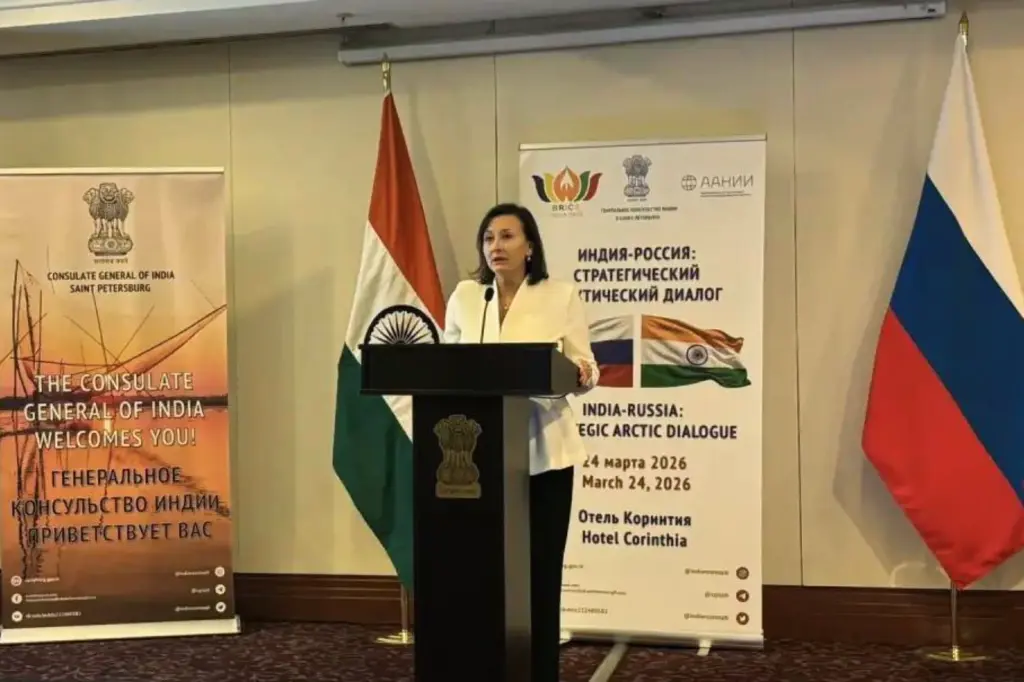
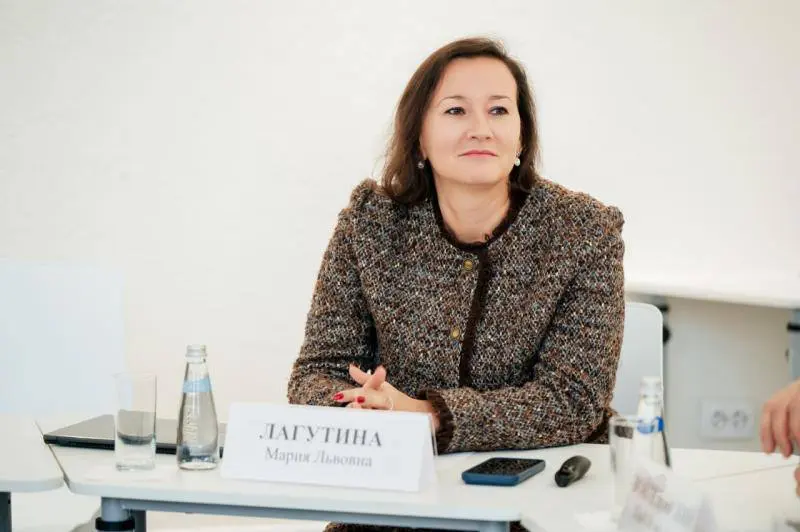
Maria Lagutina, Editor-in-Chief of the journal «Arctic 2035: Current Issues, Problems, Solutions,» published by the Project Office for Arctic Development, Doctor of Political Sciences, Professor in the Department of World Politics at St. Petersburg State University, and Goodwill Ambassador of the Northern Forum, delivered a report at the session «Cooperation in International Organizations: The Potential of Russia and India in Multilateral Formats,» held on March 24, 2026, in St. Petersburg as part of the round table «India–Russia: A Strategic Arctic Dialogue.»
In her presentation, Lagutina examined India’s place in the Arctic governance system and its strategy for participating in multilateral cooperation. Particular attention was paid to the role of science diplomacy, as well as the potential of formats such as BRICS and the Northern Forum in advancing the interests of non-Arctic states.
«Unlike more formalized structures, BRICS and the Northern Forum allow non-Arctic states to pursue their interests in the region without the need for an institutional upgrade in status, such as becoming a full member of the Arctic Council. This is particularly important for India, whose strategy combines the desire to strengthen its global status with a cautious approach to institutional expansion,» Lagutina said. The expert emphasized that India is implementing an evolutionary model of «soft entry» into the Arctic amid the formation of a multipolar world order.
What Else Was Discussed at the Round Table
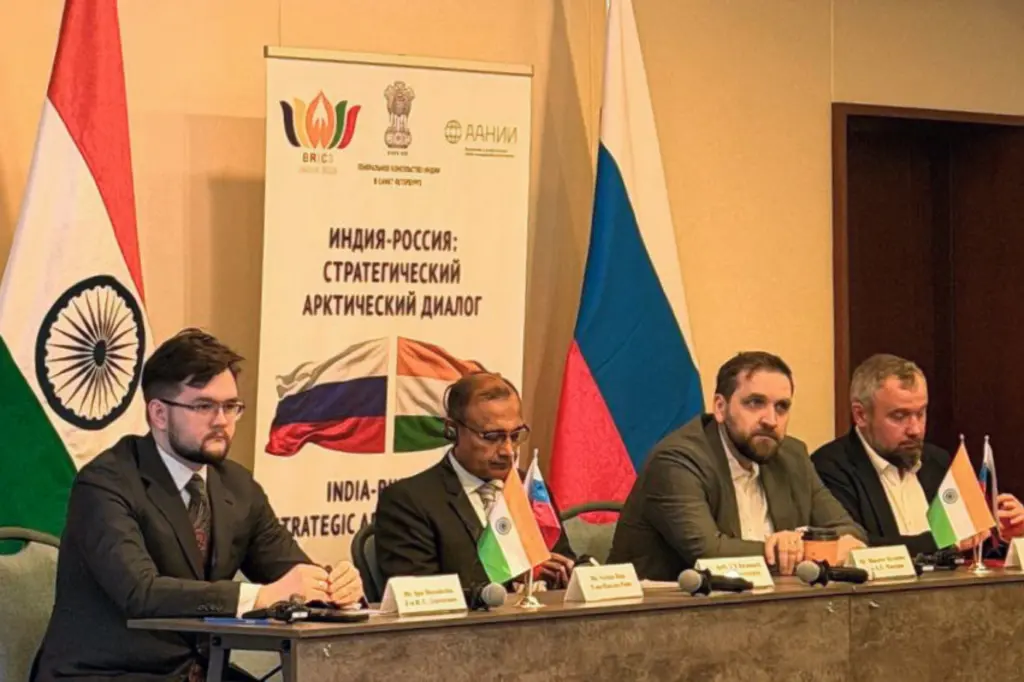
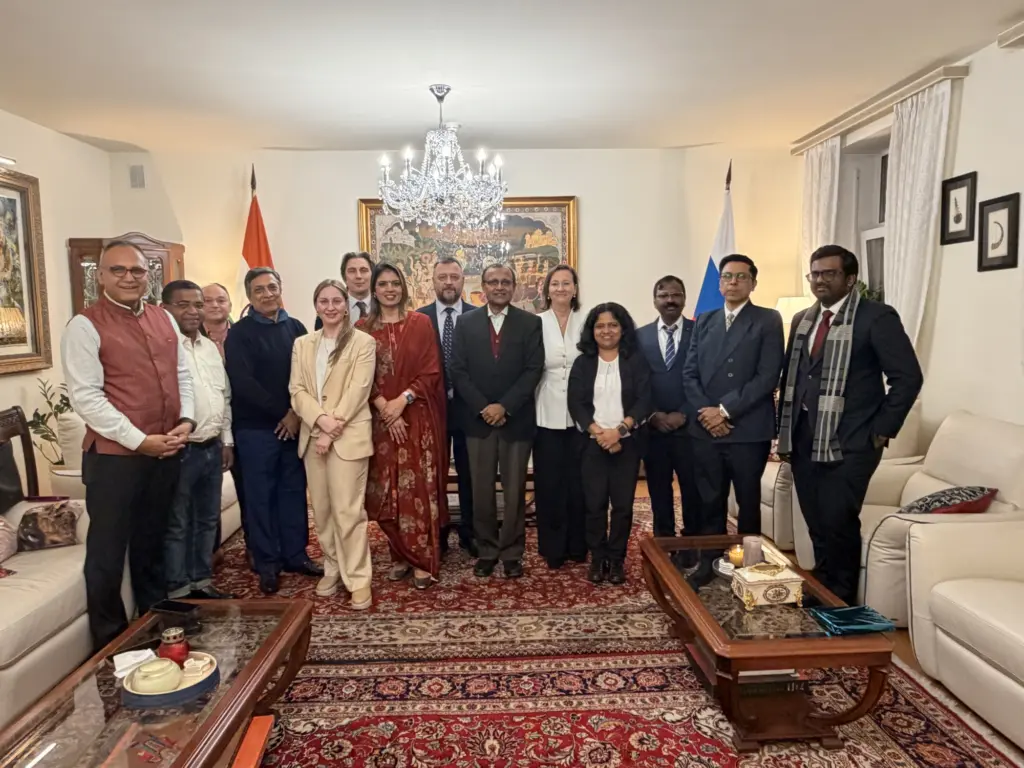
The round table was dedicated to the prospects for bilateral and multilateral cooperation in the Arctic. Particular attention was paid to India’s role as a non-Arctic actor and the opportunities for interaction between Russia and India within various formats of Arctic cooperation. The event was organized by the Consulate General of India in St. Petersburg jointly with the Arctic and Antarctic Research Institute (AARI).
During the plenary session, which was devoted to the concept of Arctic cooperation, welcome addresses were delivered by Neelam Rani, Consul General of India in St. Petersburg; T.S. Tirumurti, Ambassador of India; A.S. Makarov, Director of the AARI; I.S. Doroshenko, Second Secretary of the Representative Office of the Russian Ministry of Foreign Affairs in St. Petersburg; as well as the Deputy Chairman of the Committee on External Relations of St. Petersburg.
In the sessions, representatives from the AARI, the Institute of Regional Economic Problems of the Russian Academy of Sciences, St. Petersburg State University, Peter the Great St. Petersburg Polytechnic University, the North-Western Institute of Management of the RANEPA, Admiral Makarov State University of Maritime and Inland Shipping, IMEMO, Gekon Consulting Company, and others spoke on the Russian side, while experts from the Vivekananda International Foundation, the Indian Maritime University, the National Centre for Polar and Ocean Research, and others spoke on the Indian side.
In their presentations, the speakers emphasized the importance of developing Russian-Indian interaction in the Arctic amid a changing geopolitical environment and identified key areas of cooperation. These include ensuring energy security, developing trade and economic ties, joint development of the Northern Sea Route, participation in the formation of the Trans-Arctic Transport Corridor, as well as expanding scientific and technical cooperation and developing the human capital of the two countries.
The Project Office for Arctic Development does not always share the opinions expressed by experts.
For media representatives: we welcome republication of comments provided that an active link to the original source and the columnist’s status as an expert of the Arctic Development Project Office are indicated.
Authors
Оthers Our comments
Maria Lagutina: The European Arctic Summit in Rovaniemi and the Formation of a New EU Arctic Strategy
A securitization of European Arctic policy is taking place; whereas previously it was built around issues of climate change, sustainable development, scientific cooperation, and environmental protection, today security issues are increasingly coming to the fore On September 13–14, 2026, an informal Arctic Summit of European Union countries was held in Rovaniemi, Finland. The meeting was...
read more
Irina Strelnikova: The XVIII BRICS Summit and the Development of Cooperation in the Arctic
The bet is on the gradual accumulation of institutional mass, and the Arctic remains in the strategic focus of the association’s member countries On 12–13 September 2026, the XVIII BRICS Summit was held in New Delhi (India), timed to coincide with the 20th anniversary of the association, when in September 2006 the foreign ministers of...
read more