
Vyacheslav Maracha – On the Role of the State and Business in Protecting the Rights of Indigenous Peoples of the North
Key points from the PORA expert presented during a discussion in late May 2026
May 3, 2026
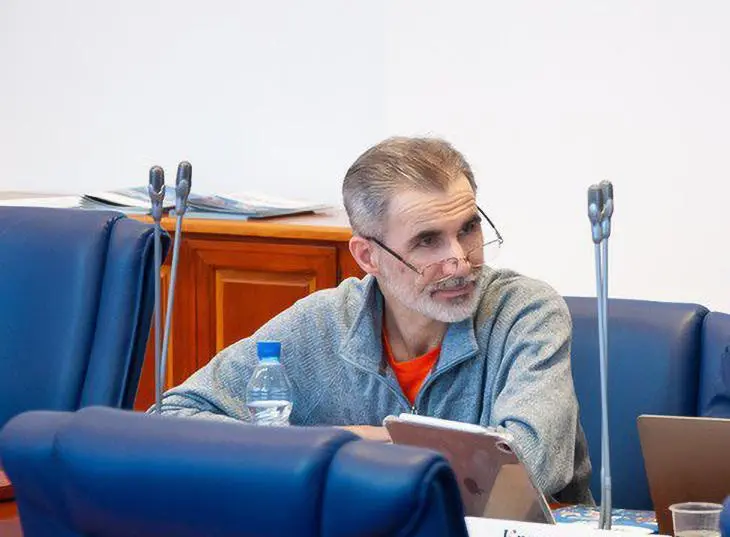
On May 29, 2026, the PORA Expert Center held a discussion club on the topic: «Protecting the Rights of Indigenous Peoples of the North and the Role of the State and Business in This Process.» Vyacheslav Maracha, Associate Professor at the Institute of Social Sciences of RANEPA, at the Financial University, and at the National Research Nuclear University MEPhI, and Vice-President of the National Guild of Professional Consultants, believes that Russia can draw on Norway’s experience in legally recognizing the nomadic way of life as the basis for land rights that protect this way of life. According to the expert, the role of business should be focused on preserving the value-added chain of traditional livelihoods at the local level, while the role of the state should be focused on legislative provision of rights related to traditional livelihoods as well as mobile education.
The Place of the Issue in the Policies of Nordic Countries (Norway, Sweden, Finland) and the Effectiveness of Mechanisms
In the Nordic countries, the issue of supporting Indigenous peoples (especially the Sámi) is at the top of the political agenda but is complex to implement. The key principle is «free, prior, and informed consent» (FPIC). Support measures for Indigenous peoples are effective where business – primarily mining enterprises – is required to enter into legally binding agreements with communities, rather than simply holding consultations.
Three groups of progressive mechanisms can be identified.
First, legal protection of livelihoods: Norway, through judicial precedents (the Selbu case), has recognized the priority of traditional reindeer husbandry over other types of land use, taking the nomadic way of life into account when proving land rights.
Second, co-management of resources through the establishment of the Finnmark Estate, which manages lands with the direct participation of reindeer herders and the Sámi Parliament.
Third, the inclusive nature of education: in Norway, the Sámi Parliament independently determines the content of curricula (including reindeer husbandry and crafts), and students are guaranteed education in their native language even when the group size is small.
Priorities and Current Challenges for Russia
The first priority for Russia is addressing the problem of the «nomadic gap.» The main challenge is the breakdown of the «child – herd – school» connection. Stationary boarding schools separate children from their families, destroying the transmission of knowledge about reindeer herding and traditional livelihoods. The urgent priorities here are the nomadic kindergarten and nomadic school.
With regard to the economy of traditional livelihoods, the current challenge for the state is shifting the priority from survival to development. This requires removing administrative barriers so that quotas for Indigenous small-numbered peoples not only ensure survival but also become economically viable for business.
A current challenge in the development of reindeer herding is digitalization without the loss of traditions. The use of GLONASS and technology should help reindeer herders in monitoring pastures, but it is critically important to preserve the legal status of traditional knowledge when making government decisions.
The Role of Business in Supporting Indigenous Small-Numbered Peoples
In defining the role of business in supporting Indigenous small-numbered peoples, three key principles can be identified.
First: from corporate social responsibility (CSR) to partnership. Today, business (oil and gas extraction, gold mining) often perceives Indigenous small-numbered peoples as an «environmental burden.» The role of business must change: not paying «compensation» but investing in production infrastructure (mobile slaughterhouses, refrigerators at nomadic migration routes).
Second: supporting the traditional way of life through eco-projects. Industrial development of the Arctic inevitably leads to the degradation of pastures and fish migration routes. Genuine protection of rights is when business finances professional retraining of nomads in agriculture without forcing them to become rotational shift workers.
Third: nomadic education as a KPI. An effective support measure from business is the construction and material-technical equipping of modular chum-schools that follow the family, as well as the creation of remote jobs (fish/meat processing operator in the tundra).
The Project Office for Arctic Development and the editorial board of GoArctic.ru do not necessarily share the opinions expressed by experts.
For media representatives: we welcome the republication of comments provided that an active link to the original source is given and the columnist’s status as an expert of the Project Office for Arctic Development is indicated.
Оthers Our comments
Aleksandra Nikanorova: «Franz Josef Land is Becoming Accessible for Cruise Tourism Again»
This is a factor in the sustainable development of the islands’ infrastructure and in creating conditions for strengthening activities related to the study, protection, and monitoring of rare animal species and unique landscapes Starting in 2027, the nuclear icebreaker «50 Years of Victory» will carry tourists to Franz Josef Land, reports Vedomosti Severo-Zapad, citing the...
read more
Alexey Fadeev: «New Arctic Shelf Borders Must Be Fairly Approved in Favor of Russia»
The UN Commission’s recognition of Russia’s claims to the Arctic shelf is an important step in strengthening the Russian Federation’s geographic sovereignty in the Arctic. The UN Commission on the Limits of the Continental Shelf has recognized Russia’s claims to 1.7 million square kilometers of seabed in the Arctic as justified. The UN recommendations on...
read more