
BRICS Project Lab Arctic 2.0 Launches in Moscow
February 24, 2026
Over four days, 40 participants will work on real-world cases related to the development of the Russian Arctic Zone (AZRF) and the business operations of companies working in the Russian Arctic.
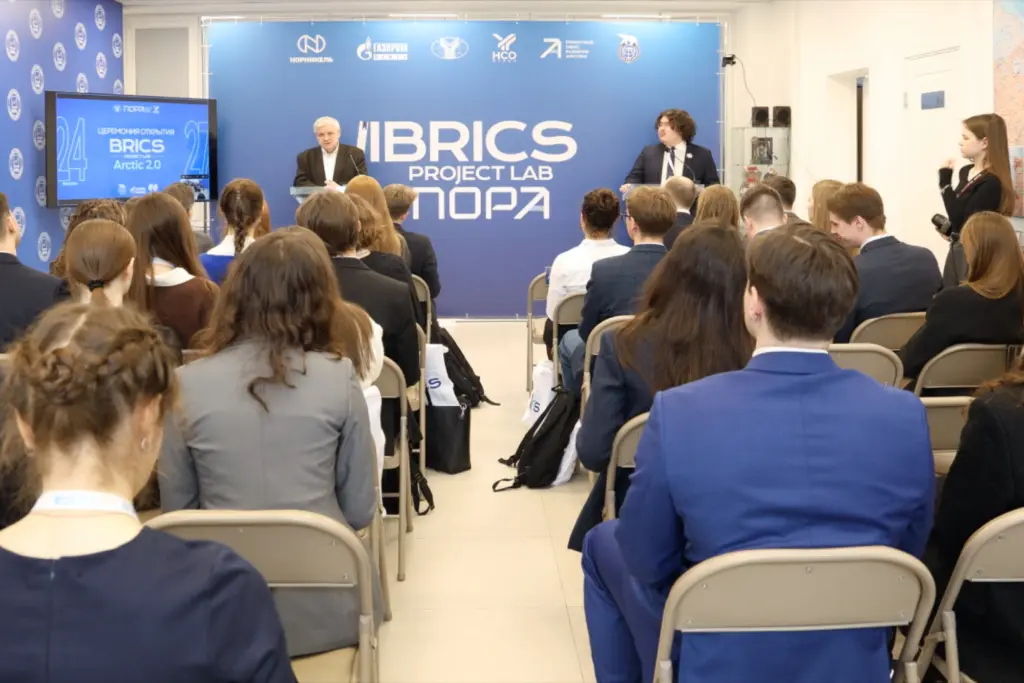
BRICS Arctic Youth Project Laboratory opened at the venue of the Project Office for Arctic Development on February 24, 2026. This is a joint project of the MGIMO University Student Scientific Society and the PORA Expert Center. The event brought together young researchers who will develop solutions for real business challenges faced by companies operating in the Arctic.
The competition for participation in the laboratory this year was record-breaking: applications were received from more than 20 countries, including Brazil, India, China, South Africa, Egypt, Iran, and the UAE. The average competition was 21 people per place, and for in-person participation, it was nearly 28 people per place. Following the selection process, 40 top candidates began their work.
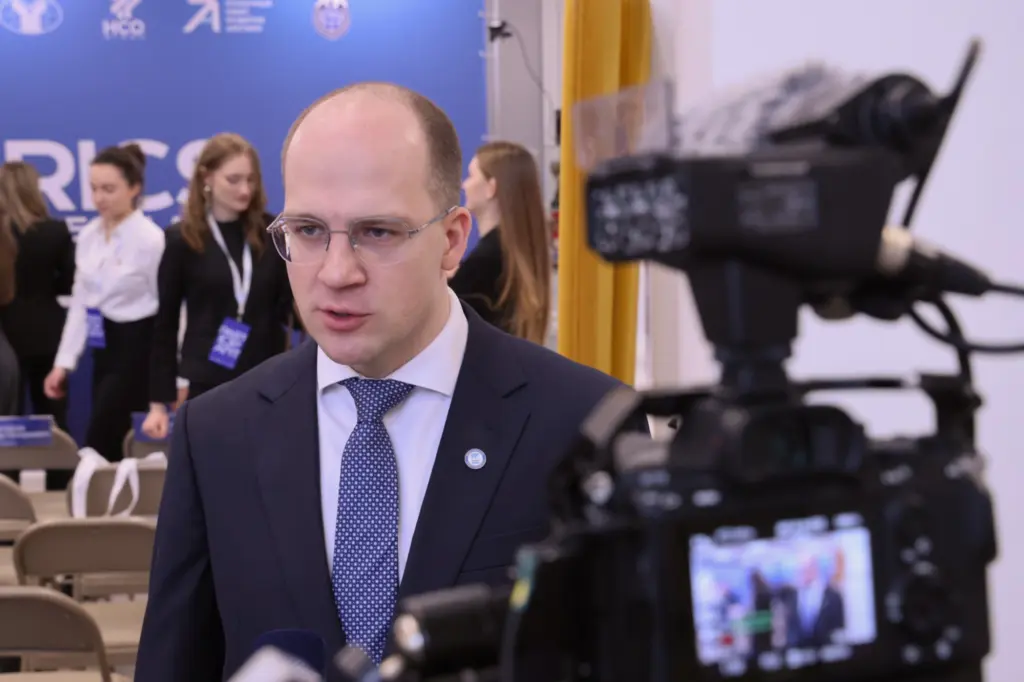
Opening the event, PORA General Director Maksim Dankin emphasized the strategic importance of the Arctic agenda and the significance of the project format for finding innovative solutions. «The Arctic is a macro-region of the future. We see on all platforms the resonance that Arctic issues have and how much the development of Arctic territories aligns with public demand. The projects implemented there require unconventional approaches because conventional ones won’t work. Companies implementing projects in the Russian Arctic are developing solutions that have no analogues in the world. For this, they need fresh thinking and creative ideas. The BRICS laboratory is precisely aimed at addressing this need. It was important for us to immerse the participants in the context, which is why the program includes lectures from unique specialists in international affairs and Arctic development,» Dankin addressed the participants.
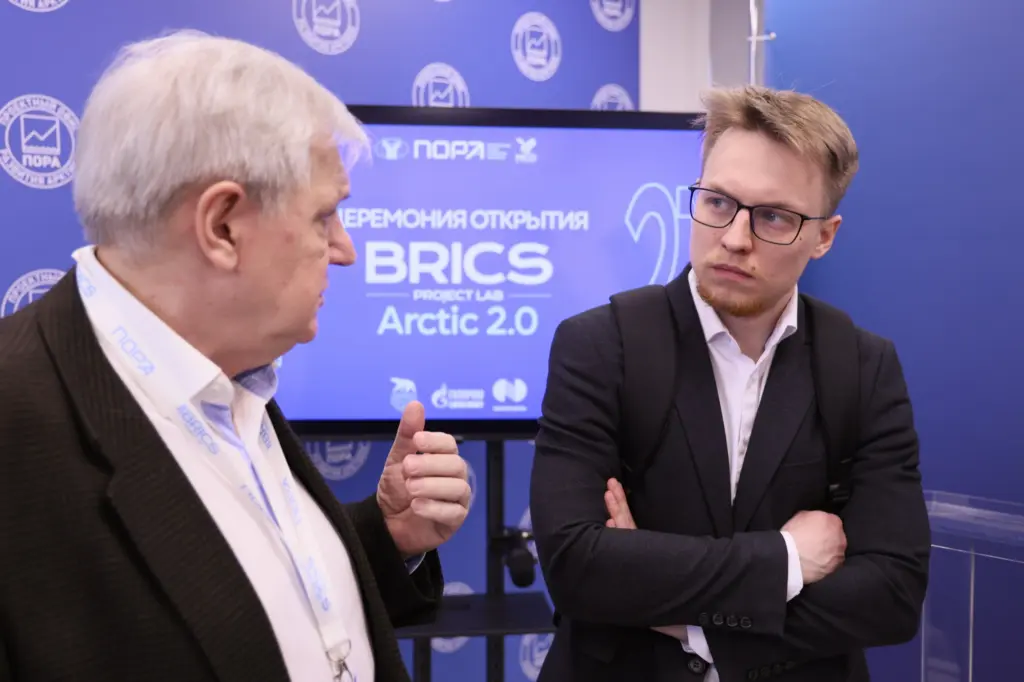
Photo: Yuri SYCHEV (left) and Valery PERUNOV. PORA
Valery Perunov, Director of the Center for Science Diplomacy and Youth in Science at the IMI MGIMO, drew attention to the unique scale the project has achieved. «The BRICS Laboratory has now reached such a level that even when querying artificial intelligence for ideas to improve projects, the BRICS Laboratory is offered as a reference. This means we are learning from ourselves. The high competition is an indicator of the event’s exceptionally high quality. Formats, especially when created in collaboration with strong organizations, are very practice-oriented. You are offered specific cases, pressing problems. The formulation from Gazprom Neft is particularly impressive – an invitation to participate in creating capital-intensive projects. Imagine the value of your solutions for these companies! This could be a colossal experience for you and enormous benefit for the business,» Perunov emphasized.
The Scientific Director of the laboratory, Denis Kuznetsov, Deputy Head of the Department of World Political Processes at MGIMO, addressed the participants via video link: «For me, each laboratory is a very important event. The BRICS Laboratory always has an incredible atmosphere, and I am sure these days will be memorable for you. The scale of the tasks is impressive: analytics in the fields of international relations, law, economics, and technological sovereignty. Not every university can boast such competition for places. I am confident that in a few days we will receive truly interesting, implementable projects.»
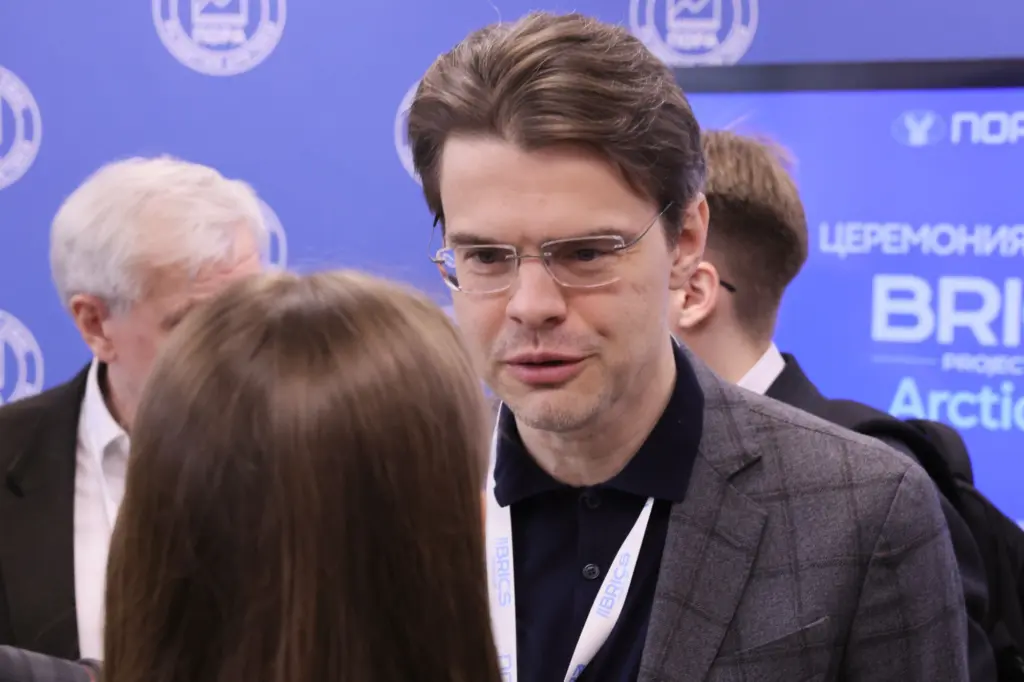
Representatives from partner companies that prepared cases for the project work addressed the participants. Maksim Peshkov, Deputy Director of the Regional Programs Department at Nornickel, presented the tourism track: «Nornickel is not only a major producer of non-ferrous and precious metals but also a company constantly thinking about the development of its operating territories. Instead of the previously used term ‘areas of presence,’ we now say ‘areas of operational activity’ – this reflects our active stance on developing these territories. Currently, together with the government of Russia and the government of the Krasnoyarsk Territory, we are implementing a comprehensive plan for the development of Norilsk: 120 billion rubles in investments, of which more than 80 billion are the company’s contributions. When choosing a case, we wanted to make it interesting for young people. Tourism is something that concerns everyone. Our tourism projects are already operational: in the Murmansk region, it’s the Kitovy Bereg Arctic Hotel, and in Norilsk, the Lama and Neralakh park hotels. We expect unconventional solutions from you: who is the investor in Arctic tourism, can this work be profitable, what support measures are effective, how to train personnel… I hope we can glean from your ideas something that will be realized in actual projects.»
Yuri Sychev, Deputy General Director for Work with Scientific Organizations at the State Trust Arktikugol, spoke about the legal and scientific challenges on the Svalbard archipelago: «If you take the risk and head north-northwest, you will find the Svalbard archipelago. 105 years ago, the Svalbard Treaty was adopted: it is under Norwegian jurisdiction, but all signatories have the right to conduct commercial activities there without duties, taxes, or visas. Today, our task is to diversify our activities, and we are developing tourism, and now also working on creating an international scientific and educational center. Svalbard is the fastest-warming place in the Arctic; the processes there affect all BRICS countries. We need legal expertise: should BRICS countries accede to the Svalbard Treaty? How should we assess Norwegian environmental legislation? Is there a risk of revising the treaty itself? We need practical things so that in negotiations with scientific institutions from BRICS countries, we can say, ‘We have your parameters, let’s go!’.»
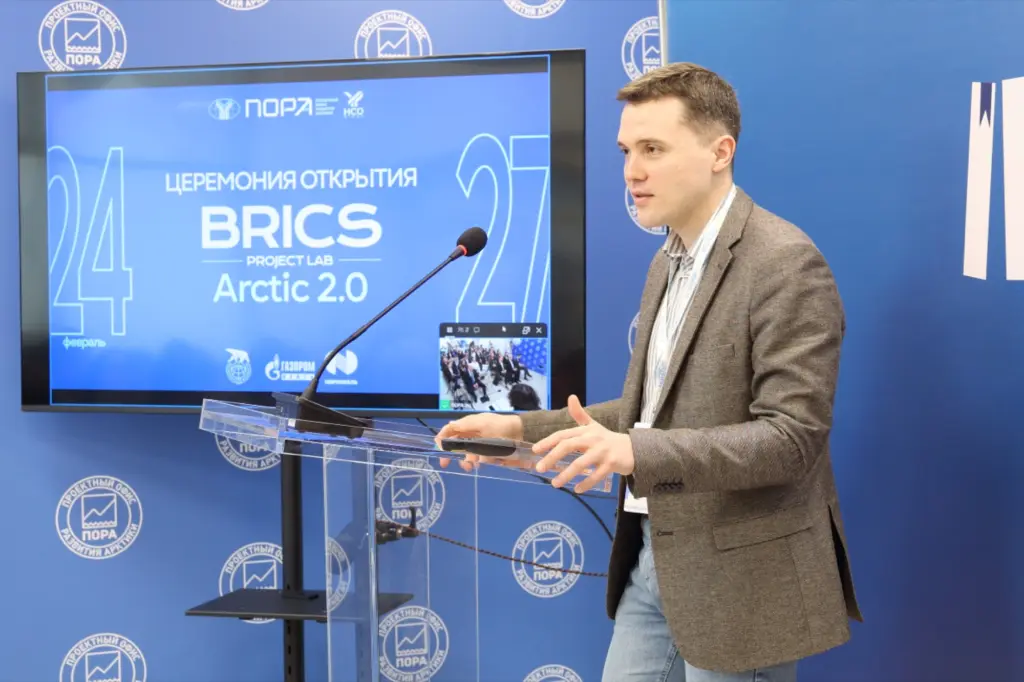
Maksim Tsygankov, Head of the Analytical Unit at PORA, presented a case dedicated to financing Arctic municipalities and addressed a personal message to the young researchers: «In my time, there were no such opportunities, where large companies come to a platform and approach students with a real request – for example, to develop a strategy. Listening to the previous speakers, I genuinely envy you. And I hope you feel the same way. Analysis conducted by PORA shows: 70% of the activities in the long-term development plans for key Arctic settlements are implemented at the municipal level. This creates a need for diversifying funding sources. Our case is dedicated to implementing mechanisms like cross-subsidization, investment protection and promotion agreements, and municipal investments in the Arctic – from analyzing foreign practices to implementation. The results have every chance of forming the basis for a future development concept.»
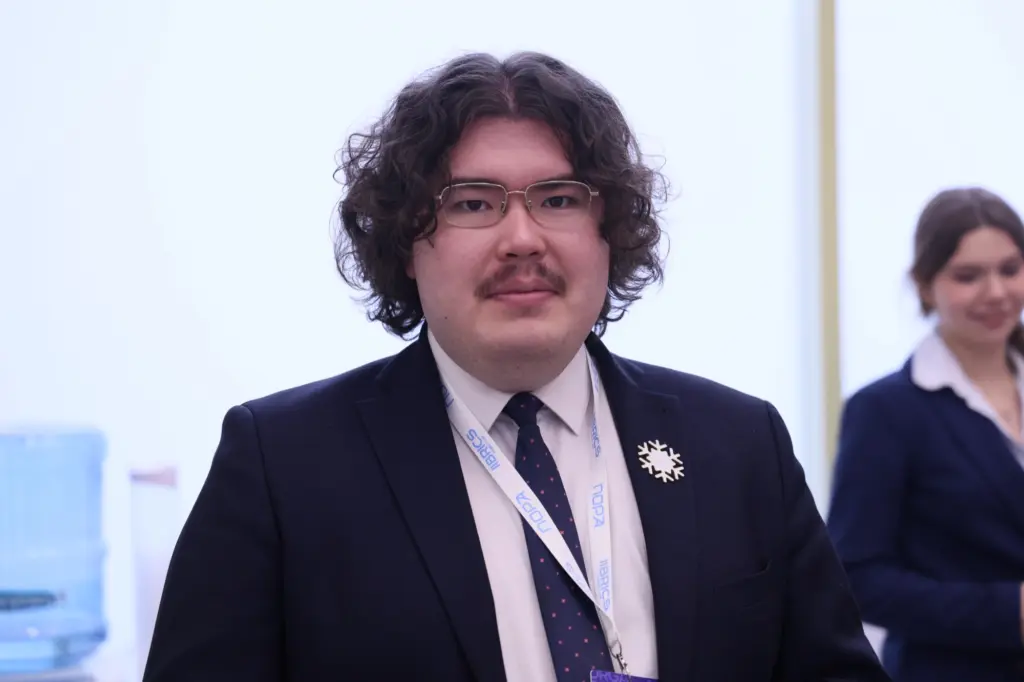
The ceremony’s host, Aleksandr Khanarov, Head of the BRICS Project Laboratory at the MGIMO Student Scientific Society, noted a symbolic detail: on the opening day, the number of subscribers to the laboratory’s Telegram channel surpassed one thousand. He thanked the organizing team and wished the participants productive work.
Оthers Our news

Transarctic Transport Corridor: A Top Priority for the Maritime Collegium of the Russian Federation on Safeguarding Russia’s National Interests in the Arctic
The Presidential Decree amended the composition and regulations of the Maritime Collegium, establishing a Council for the Protection of National Interests in the Arctic and the Development of National and International Maritime Transport Routes.
read more
Experts Discuss Transformation of the Arctic Agenda in Russia-NATO Relations
February 27, 2026 Participants of a strategic session discussed current state and challenges of international cooperation in a changing geopolitical environment, as well as issues of security, economic, and regulatory competition in the Arctic region. The session took place on February 25, 2026, at the expert center PORА (Project Office for Arctic Development) as part...
read more