
Maksim Dankin: Endowments as a New Way to Develop Arctic Territories
A column by the General Director of PORА has been published in the newspaper Vedomosti.
May 27, 2026
The newspaper Vedomosti has published an article by Maxim Dankin, General Director of PORА, discussing endowments as a new tool for the development of Arctic territories. With permission from the editorial board, we are republishing the material for our readers.
Today, discussions about the development of the Arctic tend to be framed in terms of megaprojects, transport corridors, and geopolitics. But in reality, the Russian Arctic Zone – like any other macro-region, for that matter – develops through specific localities. It is agglomerations, cities, and municipalities that become growth points, upon which the economy, quality of life, and the ability to retain people in the North all depend.
The main problem of territorial development has long been known: these processes require «long-term» money. Not one-off subsidies or emergency infusions for the next crisis, but sustainable capital designed to work for decades to come. This is especially true for the Arctic, where infrastructure costs are many times higher and payback periods are longer.
This is precisely why there is growing interest in a tool that remains underestimated in Russia – territorial endowments. Simply put, these are endowment funds where the principal capital is preserved, and the income generated from its investment is directed toward territorial development.
It is crucial to understand a fundamental point: an endowment does not replace the budget, nor is it intended to cover deficits, nor can it serve as a source of financing for large infrastructure projects. Such tasks remain the responsibility of the state and large businesses. But endowments can provide something else – a sustainable financial base for long-term social and urban projects that are typically the first to face cuts during periods of budget turbulence, yet which create long-term advantages for a territory and serve as elements of an additional layer of resilience.
These include small educational centers, local cultural spaces, programs to retain human capital at the municipal level, and local cultural initiatives.
Such funds have an important quality that is often overlooked. They build a community of stakeholders around the territory – residents, businesses, graduates of local universities, major employers, and philanthropists. An endowment creates a horizon of trust, without which sustainable development is impossible. Where shared future capital emerges, responsibility for that future gradually arises as well.
For Russia, this tool is not at all exotic. Before the revolution, there existed so-called «perpetual deposits»: the interest from the capital went toward maintaining hospitals, orphanages, gymnasiums, and libraries. In fact, they largely sustained pre-revolutionary charity.
Endowments returned to modern Russia in 2007 with Federal Law No. 275-FZ «On the Procedure for Forming and Using Endowment Capital of Non-Profit Organizations.» Nearly two decades later, by early 2026, the volume of Russian endowment capital approached 205 billion rubles, and the number of funds exceeded 420. Moreover, almost a quarter of the current market volume appeared in just the last year and a half. However, compared to several BRICS countries, the Russian endowment capital market still looks modest. For instance, Indonesia’s endowment capital market is currently more than three times larger than Russia’s, and Brazil’s is nearly ten times larger.
There is another aspect as well. Today, Russian endowments are concentrated mainly in education, science, culture, and charity. Only about 2% of the market is dedicated to territorial development.
Russia is only now coming to realize this – as well as understanding that along this path, there are circumstances hindering faster progress.
First and foremost are the limitations of current legislation. Today, municipalities and regions cannot fully act as founders of territorial endowments. The law still proceeds from a model where specialized non-profit structures and management companies play the key role. For the mass launch of territorial funds, this system needs to be made more flexible.
Naturally, balance is important here. Expanding the capabilities of municipalities must be accompanied by transparent control mechanisms, independent supervisory boards, and professional asset management. Otherwise, instead of a development institution, we could end up with yet another source of inefficiency and corruption.
Tax incentives are no less important. The current system of deductions still does not sufficiently motivate large long-term donations. It is logical to discuss increasing the limits of tax benefits, as well as extending incentives to small and medium-sized businesses, including companies under the simplified taxation system. At the same time, it would be naive to expect an immediate explosive growth. Endowments are a tool of accumulated trust. They work not through a one-off campaign but through predictable rules maintained over many years.
A separate issue is the direction of spending. Caution is also needed here. Using endowment income for current budget obligations, such as regular salary payments, would be a mistake that fundamentally undermines the very idea of endowment funds. It is much wiser to direct funds specifically toward developing the territory’s human potential – educational programs, support for in-demand specialists, and projects to improve quality of life.
Finally, the development of human resources infrastructure will also be required. If Russia truly wants to create dozens of territorial endowments, it needs to train more specialists in fund and investment management, legal support, social impact assessment, and, of course, fundraising. Without this, even a good law will not work.
All of these tasks are entirely solvable. The question is rather different: are we ready to shift from the logic of constant redistribution to the logic of accumulating territorial capital? Because an endowment is, in essence, a bet on the future. On the idea that territorial development is possible not only through another transfer «from above» but also through the creation of a self-sustaining, «decentralized,» and continuously operating resource for growth.
For the Arctic, with its long development cycles, such an approach may prove particularly important. And perhaps it is precisely here that Russia can truly learn to think not in budget years, but in decades.
Authors
Оthers Our news
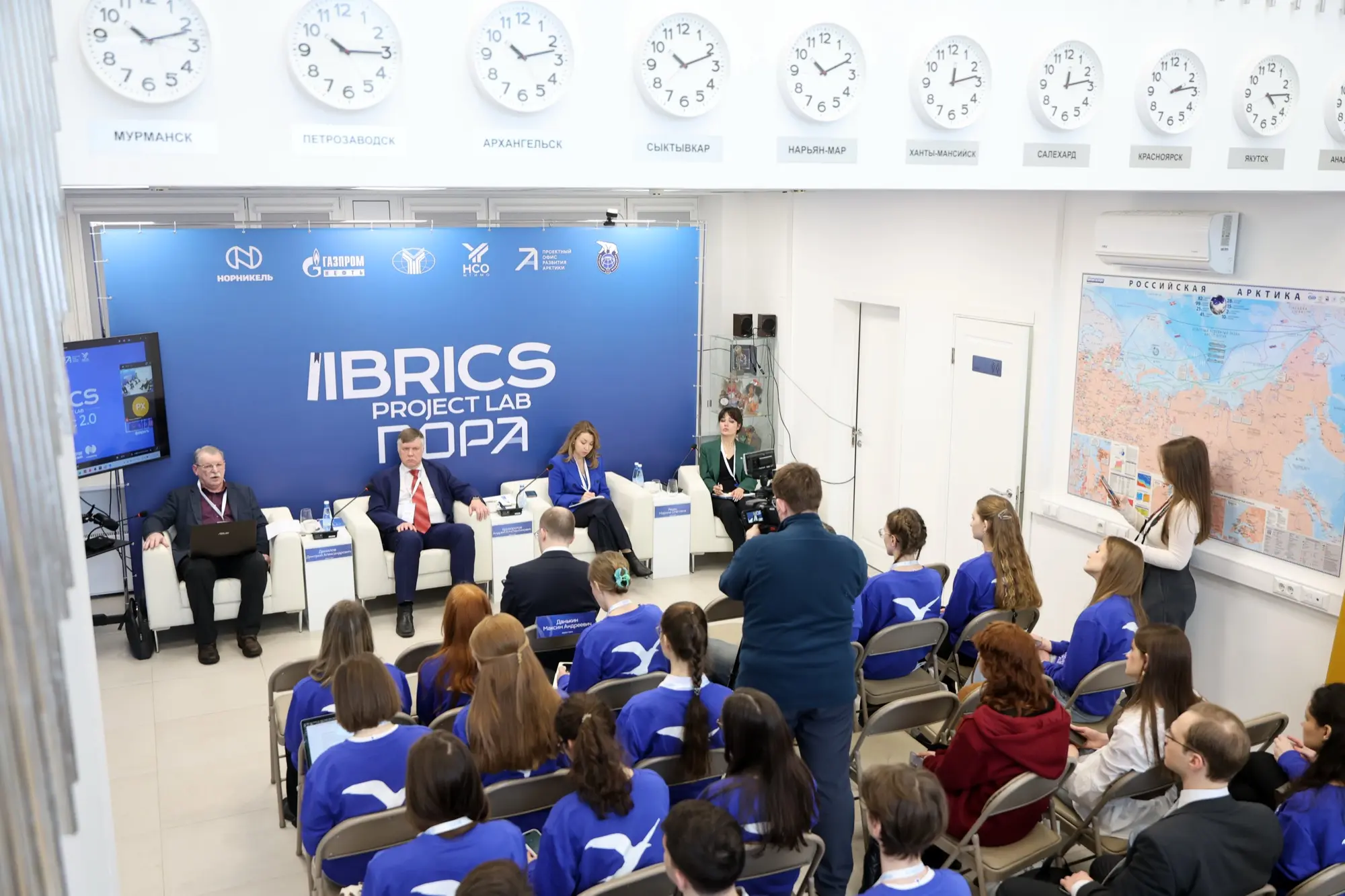
Experts Discuss Transformation of the Arctic Agenda in Russia-NATO Relations
February 27, 2026 Participants of a strategic session discussed current state and challenges of international cooperation in a changing geopolitical environment, as well as issues of security, economic, and regulatory competition in the Arctic region. The session took place on February 25, 2026, at the expert center PORА (Project Office for Arctic Development) as part...
read more
Gazprom Expands Its Arctic Potential: Record Gas Reserve Growth Driven by Arctic Fields
In 2025, Gazprom continued its systematic strengthening of its resource base, achieving its most significant results on shelf fields in the Arctic. This was reported by Chairman of the Management Committee Alexey Miller at the company’s Annual General Meeting of Shareholders. In 2025, the Gazprom Group once again achieved a gas reserve replacement ratio above...
read more