
PORA counts: Is it possible to leave the Arctic and still remain in the North?

When a northerner says they are thinking about moving, people often think of the central or southern regions of the country, where the climate is milder, distances are shorter, and daily logistics are easier. But data shows that not every potential move out of the Arctic means a complete break with the North.
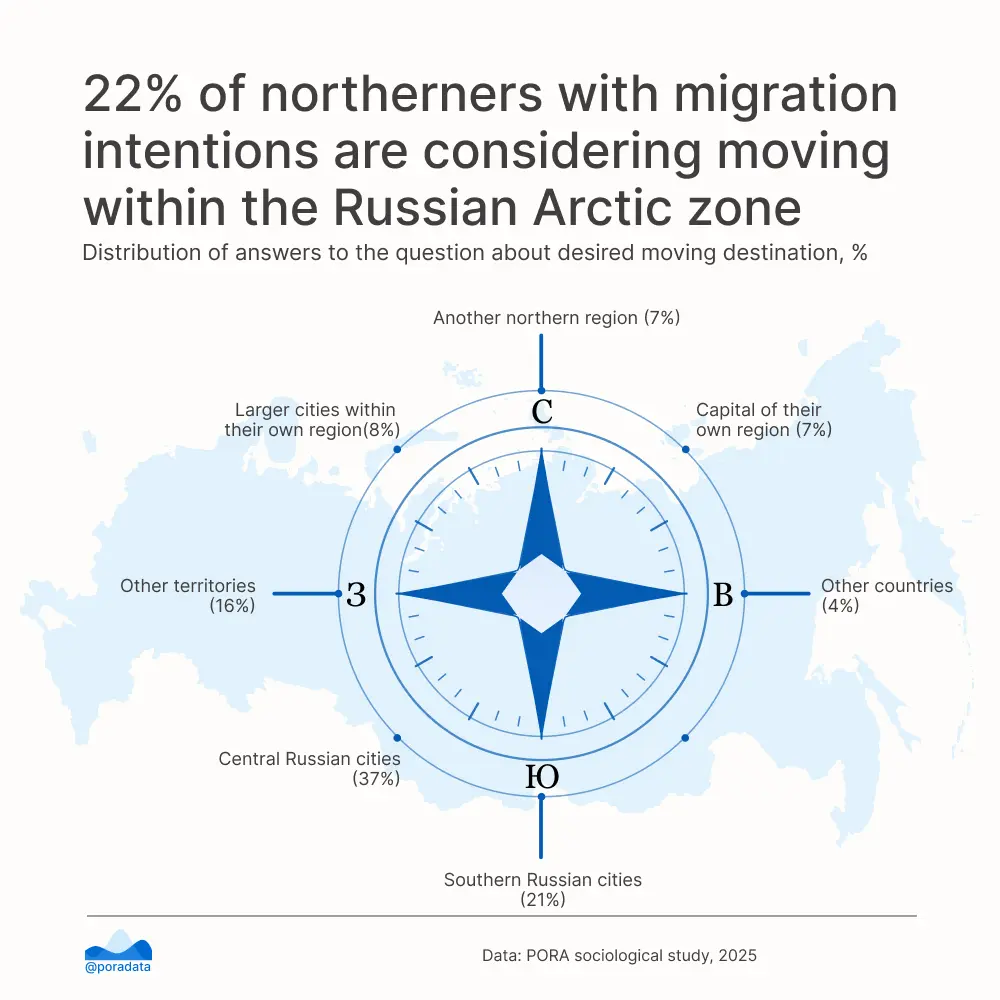
In a sociological study by PORА, respondents with migration intentions were asked where they would like to move.
The most popular destinations are predictable.
– 37.4% named central Russian cities;
– 21.2% — southern Russian cities.
Another 15.6% chose other territories, and 3.9% — another country.
At the same time, 8.2% of respondents are considering a larger city within their own region, 7.2% — the capital of their federal subject, and another 6.6% would like to move to some other northern region. And this is important: as one can easily see, one in five residents of the polar region who are thinking about leaving do not actually want to leave the Far North.
What is behind this?
The main reasons people consider moving are not only related to climate. Often, it’s about everyday living conditions: a lack of specialized medical professionals, high cost of living, salary levels, access to healthcare, and housing conditions. As for the North itself, it suits this category of people just fine.
What does this mean for the Arctic?
The goal is not always to keep a person in a specific town or city at all costs. Sometimes a more realistic approach is to ensure that they do not leave the macro-region entirely. If a northerner is already thinking about moving, it is important that the possible destinations include not only Krasnodar, St. Petersburg, or Moscow, but also polar region centers. From the perspective of regional policy, migration within the Arctic can be a way to preserve the population and human capital of the northern territories.
Оthers Our news
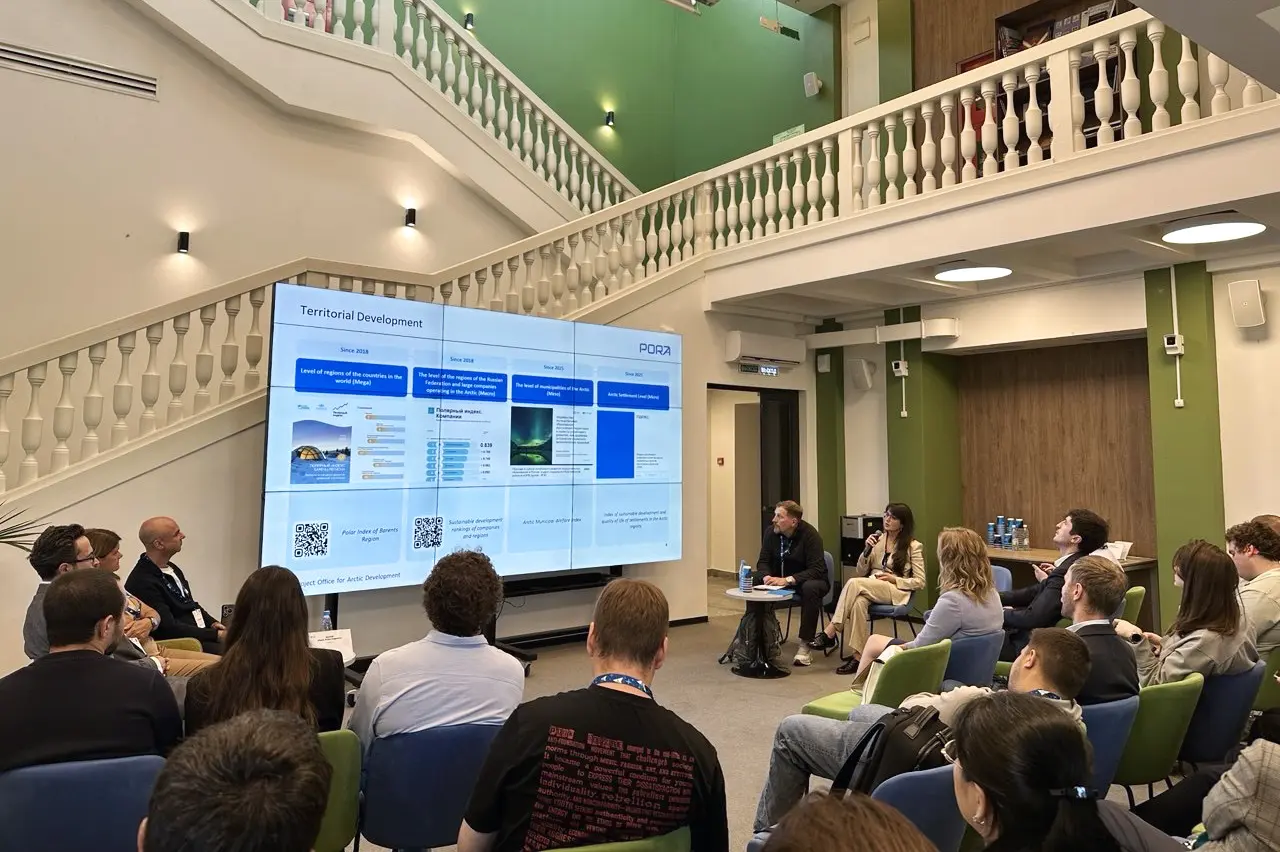
Ekaterina Serova: «The Transarctic Transport Corridor Will Promote Sustainable Network Development of the World»
The task of systematically developing Russia’s Arctic zone and the TTC must be addressed comprehensively On July 20, 2026, Ekaterina Serova, Director of the International Department of the Project Office for Arctic Development (PORA), took part in the International Arctic Scientific Forum in Norilsk. During her speech, she presented PORA’s integrated approach to the development...
read more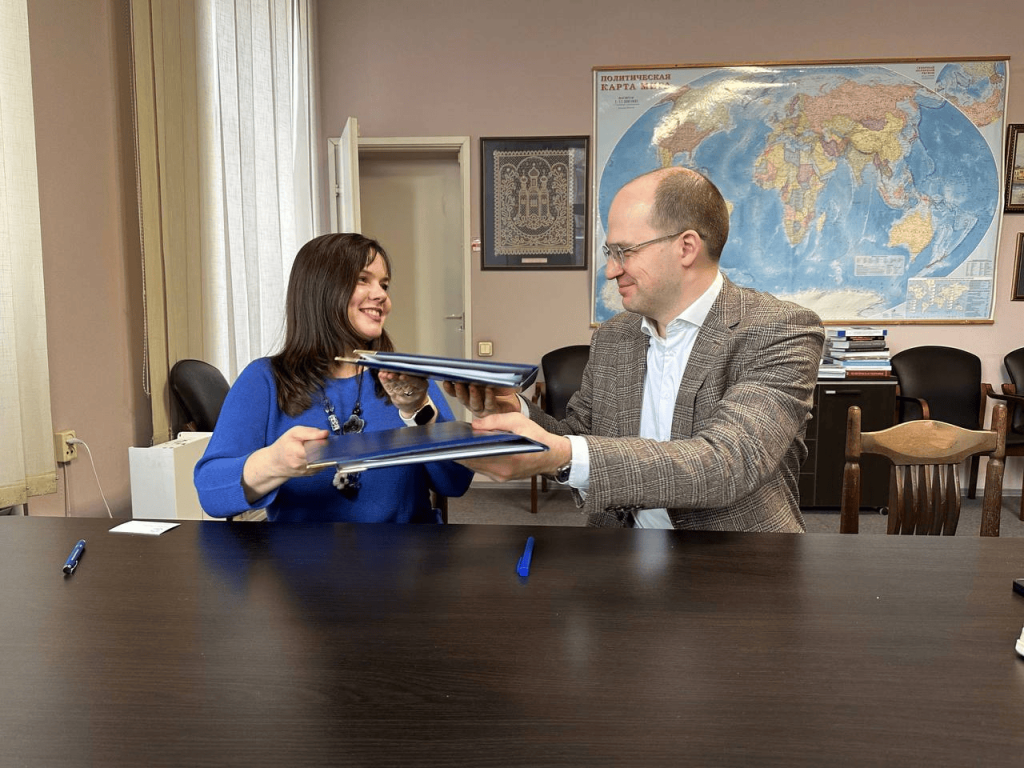
PORA and the Institute for Regional Economic Studies to Examine Arctic Economy
The Project Office for Arctic Development and the Institute for Regional Economic Studies of the Russian Academy of Sciences (IRES RAS) will undertake joint research across multiple areas, focusing on the socio-economic development of the Russian Arctic. This collaboration is formalized in a partnership agreement signed on 2 February 2026. February 3, 2025 The agreement...
read more