
Index of Sustainable Development and Quality of Life in Small Arctic Settlements
The project provides a comparable and regularly updated assessment of living conditions in small settlements across the Russian Arctic. By focusing on individual localities, it enables the analysis of sustainable development at the local level rather than in aggregated regional terms. The Index offers an analytical foundation for identifying territorial disparities, risk areas, and growth points, and for informing the design of targeted support measures.

Description
The project covers 168 small settlements across ten regions of the Russian Arctic. The Index is based on 68 indicators organized into social, infrastructure, environmental, and economic domains. It draws on 14 data sources, including official statistics, municipal and sectoral surveys, geospatial data, a representative sociological survey of 1,827 residents, and an analysis of approximately 60,000 social media comments. Conducted in 2024–2025, the project is intended to be regularly updated to track changes over time.
Results
The project generates a set of comparable profiles for small Arctic settlements, enabling the identification of persistent differences in quality of life, access to basic services, and infrastructure provision. The Index differentiates settlements according to their development trajectories, ranging from territories with relatively balanced living conditions to those experiencing pronounced structural constraints. The accumulation of data across successive periods provides a basis for monitoring change, evaluating the effectiveness of management decisions, and guiding the implementation of more targeted support measures.
Authors

Оthers projects

Municipal Funding Study
PORA conducted a comparative analysis of municipal and community-level funding instruments employed in other Arctic countries.
read more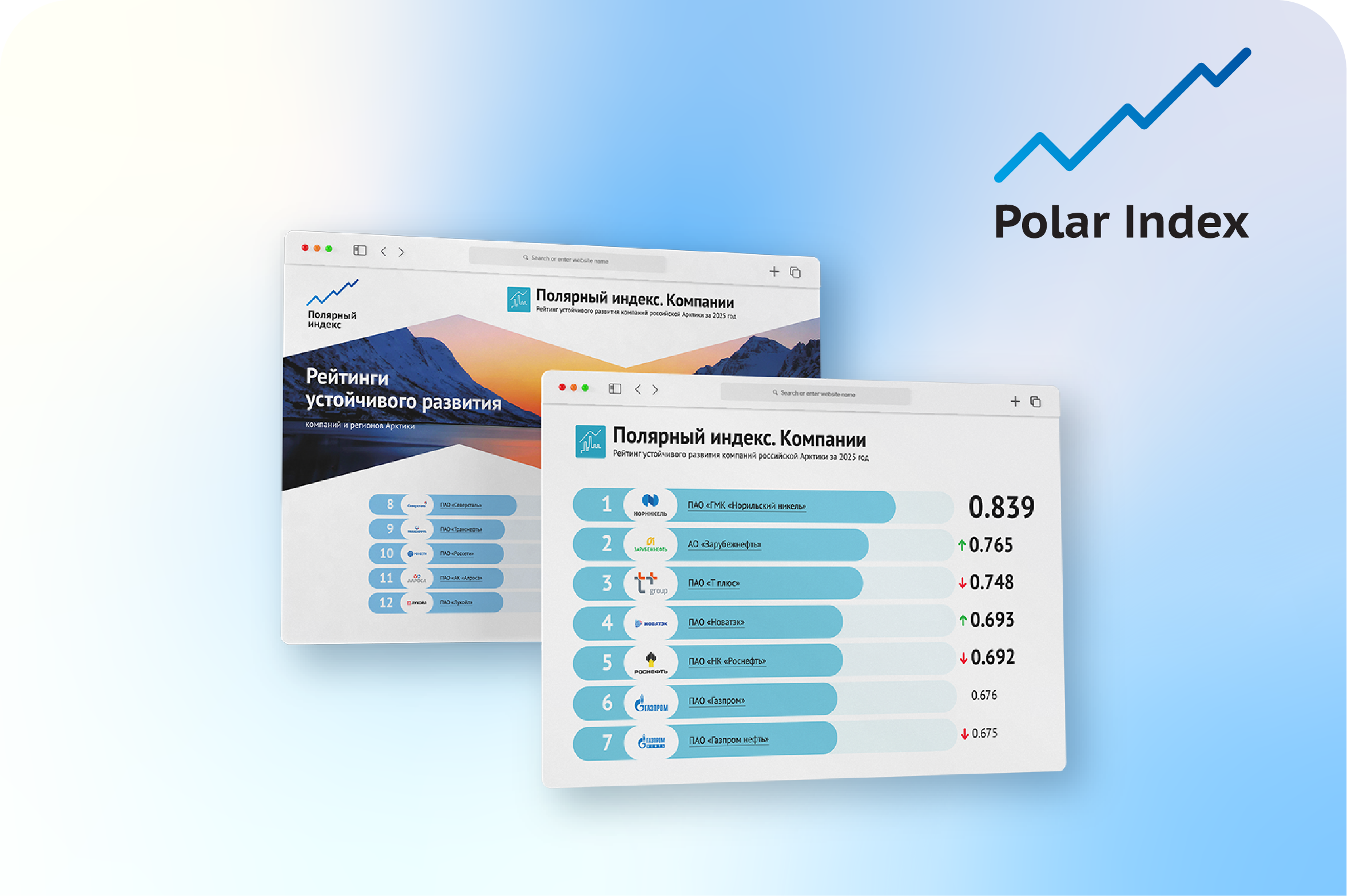
Polar index
The Polar Index is a long-term analytical initiative jointly developed by PORA and the Faculty of Economics at Lomonosov Moscow State University.
read more