
Alexei Tsykarev: How the Cali Fund Will Change Financing for Ecosystem Biodiversity Conservation
Russia’s participation in multilateral financial mechanisms for biodiversity promises additional opportunities for Indigenous peoples but requires critical reflection
From October 19 to 30, 2026, Yerevan will host the 17th Conference of the Parties (COP17) to the UN Convention on Biological Diversity (CBD) – a pivotal political summit aimed at uniting world leaders, ecologists, and experts to assess progress in preserving the global natural heritage. The conference will also address biodiversity in the Arctic, particularly in the context of issues related to the rights and knowledge of Indigenous peoples and the protection of marine and terrestrial ecosystems under the Kunming-Montreal Global Biodiversity Framework (the key international agreement on nature protection adopted at the 15th Conference of the Parties to the UN Convention on Biological Diversity in December 2022).
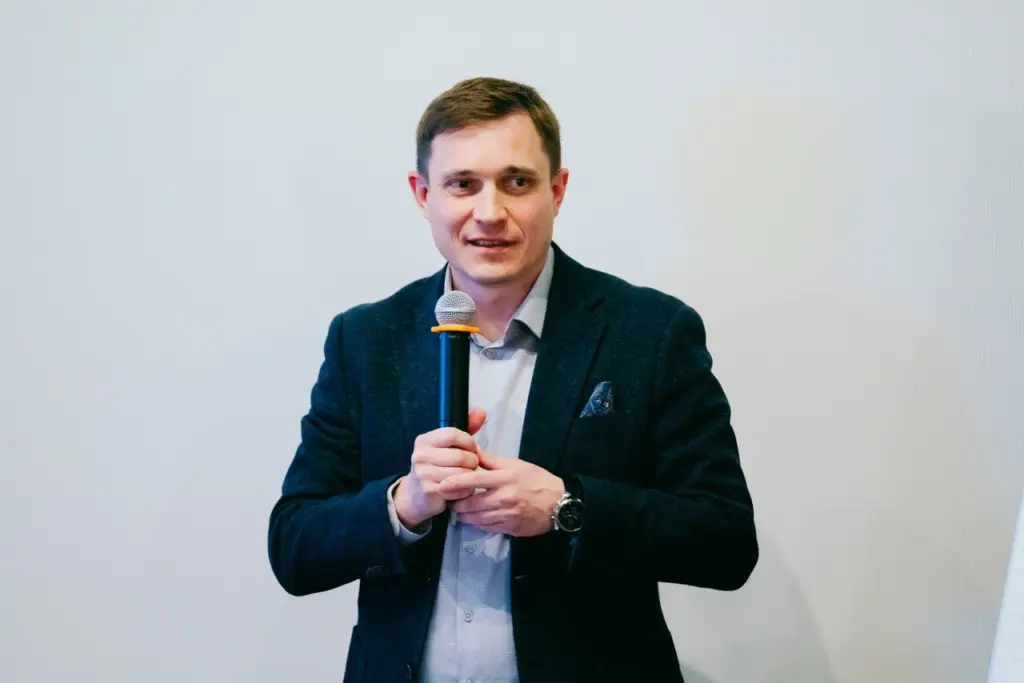
Russia and organizations representing Russia’s Indigenous small-numbered peoples face challenging negotiations within the CBD framework. The upcoming meetings of the Convention’s subsidiary bodies will begin as early as next week at the UN headquarters in Nairobi. Among the central topics of discussion will be the Cali Fund – the first-ever global UN financial mechanism requiring the private sector to pay for the use of digital sequence information on living nature. Up to half of the funds accumulated by the Fund could go to Indigenous peoples as the primary custodians of the planet’s ecosystems. Commenting is Alexei Tsykarev, member of the Cali Fund Steering Committee, advisor to the president of the Association of Indigenous Small-Numbered Peoples of the North, Siberia and the Far East (RAIPON), and chairman of the «Young Karelia» Center for Indigenous Peoples and Public Diplomacy.
In November 2024, at the 16th Conference of the Parties (COP16) to the Convention on Biological Diversity in Colombia, after lengthy negotiations on mobilizing additional resources for the conservation and sustainable use of biological diversity, the Cali Fund was established, named after the city where the decision was made. Russia also participated in the negotiations to create this global financial mechanism, designed for the fair and equitable sharing of benefits arising from the use of digital sequence information on genetic resources.
Contributions to the Fund are expected to be made on a voluntary basis by companies in the food industry, agriculture, cosmetics, and pharmaceuticals, as well as research organizations and manufacturers of relevant equipment that use digital information on genetic resources of living nature. Specifically, companies with assets exceeding $20 million over three years would be asked to contribute 1% of profits or 0.1% of revenue to biodiversity conservation.
The new Fund has direct relevance to Arctic ecosystems and Indigenous peoples.
Indigenous peoples played a significant role in the negotiations, consistently advocating for the consideration of their interests in the distribution of benefits related to traditional knowledge and resources, including ensuring direct access to financing, since their communities make substantial contributions to ecosystem conservation. According to the decisions of COP16, Indigenous peoples will be able to receive up to half of the Fund’s resources in various formats. The other half will go to developing countries and countries with economies in transition. It is also significant that six Indigenous representatives have been included in the Cali Fund Steering Committee and participate in decision-making.
Both Russia and the country’s Indigenous small-numbered peoples can lay claim to their share of the funds raised, including communities of Arctic nomadic reindeer herders. Their activities in preserving fragile northern ecosystems, sustainable natural resource management, monitoring biodiversity restoration, and other initiatives could gain momentum thanks to this new source of funding. This opens up additional opportunities for the effective implementation of national objectives and the priorities of Indigenous small-numbered peoples in the field of biodiversity conservation and sustainable use.
At the same time, when discussing practical access to funds, one cannot ignore the current geopolitical reality. There are legitimate concerns that sanctions imposed by unfriendly foreign states could create technical barriers for Russian organizations to receive funding. Whether the Cali Fund will be shielded from such politicization and selective approaches remains an open question. Furthermore, the very mechanism for receiving and distributing funds must be clear and approved by the CBD Conference of the Parties. Among the most debated issues are whether Indigenous organizations will be able to receive funding directly from the Fund or through state structures and/or with their participation/consent, what types of organizations these would be, whether they have experience managing financial resources and implementing projects, and whether states will play a regulatory role (and to what extent).
These and many other issues are being discussed within the Cali Fund Steering Committee, preparations are underway for its full-scale launch, and new decisions are expected at COP17 to the Convention on Biological Diversity in Yerevan this October. In my view, it is critically important for Russia and the country’s Indigenous small-numbered peoples to defend their interests and actively participate in shaping all documents and decisions. Therefore, it is entirely justified that the possibilities of Russia’s participation in the Cali Fund, both as a beneficiary and as a donor, have already been discussed on multiple occasions at the level of interdepartmental working and expert groups led by the Russian President’s Special Representative on Climate Issues, Ruslan Edelgeriyev.
In the Russian Arctic, there are certainly companies that meet the criteria and could contribute to the Fund. However, before motivating them to do so, it is necessary to ensure the transparency, predictability, and truly multilateral nature of this new institution, as well as to understand the potential benefits for companies. On the one hand, voluntary business contributions are not merely a financial burden but a potential indicator of social responsibility. On the other hand, as with any new mechanism, it is important to understand the rules of the game before participating. We must be assured that the Fund will genuinely allow all states and Indigenous peoples of all countries – without politicization or selective approaches – to have access to the financing that is so widely discussed at the UN and on environmental platforms.
It is important to bear in mind that the creation of the Cali Fund is largely an initiative of the Global South, including Russia’s partners in the BRICS association. The second point to consider is that participation in the Fund is voluntary; however, contributions to the Fund will most likely begin to be taken into account, at a minimum, in corporate ratings on social responsibility and human rights criteria, as well as in the implementation of due diligence principles. At a certain stage, participation in the Fund could also become an additional factor for enhancing companies’ competitiveness. For Global South countries, engagement with companies contributing to the Cali Fund will likely be more preferable.
Russia and organizations of the Indigenous small-numbered peoples of the Russian Federation face challenging negotiations within the CBD framework. The upcoming meetings of the Convention’s subsidiary bodies will begin as early as next week at the UN headquarters in Nairobi, followed by the Conference of the Parties in Yerevan in October 2026. The Cali Fund is among the central topics of discussion.
The Project Office for Arctic Development and the editorial board of GoArctic.ru do not necessarily share the opinions expressed by experts.
For media representatives: we welcome the republication of comments provided that an active link to the original source is given and the columnist’s status as an expert of the Project Office for Arctic Development is indicated.
Оthers Our comments
Irina Strelnikova: The XVIII BRICS Summit and the Development of Cooperation in the Arctic
The bet is on the gradual accumulation of institutional mass, and the Arctic remains in the strategic focus of the association’s member countries On 12–13 September 2026, the XVIII BRICS Summit was held in New Delhi (India), timed to coincide with the 20th anniversary of the association, when in September 2006 the foreign ministers of...
read more
Sergey Nikonorov: The Legal Regulation of Arctic Shipping Is Becoming Increasingly Complex
Issues extending beyond the Northern Sea Route permit regime and implementation of the Polar Code now include sanctions-related risks, marine insurance, environmental requirements for fuels and emissions, and the need to regulate the Trans-Arctic Transport Corridor as a single integrated system Today’s Arctic is a region where the interests of global trade, energy, environmental protection,...
read more