
Maksim Dankin: Heading North. The Arctic as a New Driver of Russian-Indian Partnership
CEO of the PORA Expert Center — on the prospects of Russian-Indian relations with a focus on the Arctic
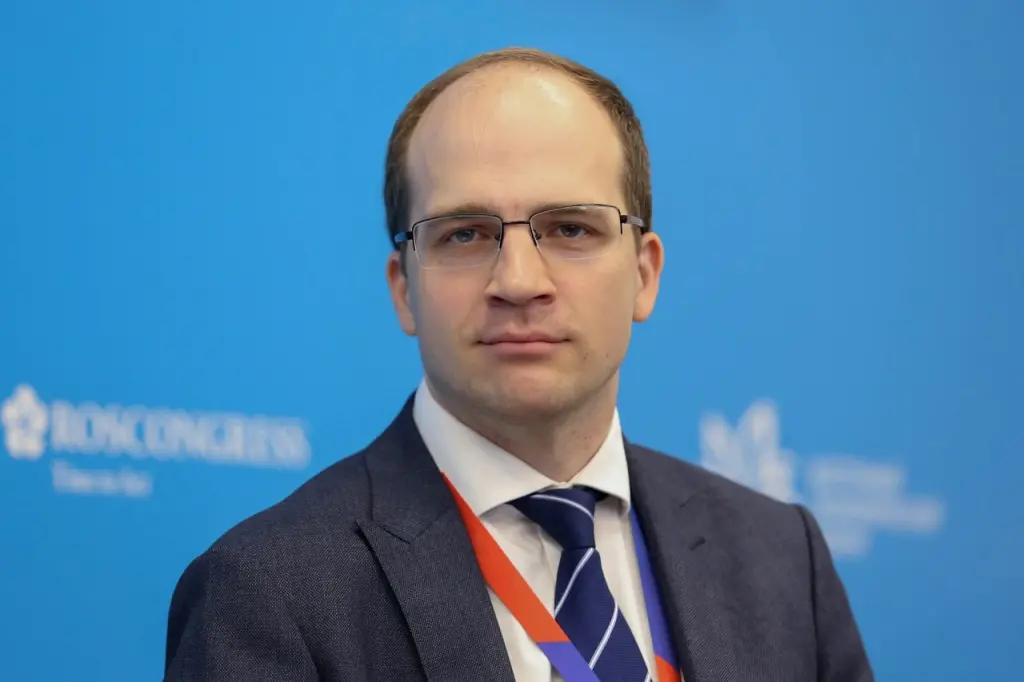
From September 12–13, 2026, the 18th BRICS Summit will be held in New Delhi, India. On the eve of this globally significant event, Maksim Dankin, CEO of the Expert Center PORА, has prepared an article on Russian-Indian relations with a focus on the Arctic. The material was published on the website of the Russian International Affairs Council (RIAC), and we are republishing it for our readers.
Indians are taking an increasingly close interest in the Russian Arctic. At the «Arctic — Regions» forum, held in Arkhangelsk on August 13–14, 2026, a full-fledged Indian delegation participated for the first time. Represented were the Ministry of Ports, Shipping and Waterways, the Chennai Port Authority, the Directorate General of Shipping, and the Secretariat of the National Security Council. This is a reason to discuss the main challenges of Russian-Indian cooperation and its prospects in the Polar region.
Challenges to Dialogue
For decades, relations between Moscow and New Delhi remained a benchmark of political stability. Indian Prime Minister Narendra Modi even compared them to the guiding North Star, undimmed by global crises and upheavals. In 2022, the stable political relations were augmented by rapidly developing economic ties. While total trade turnover between the two countries stood at about $13 billion at the end of 2021, by 2025 it had surpassed $60 billion, propelling Russia from 25th to 4th place on India’s list of major trading partners. Both countries decided not to rest on their laurels, agreeing to boost mutual trade to $100 billion by 2030.
Solving this task will be difficult without addressing three major structural gaps characteristic of Russian-Indian economic partnership.
First, it is no secret that the sharp increase in trade figures was largely driven by Western sanctions against the Russian economy imposed in 2022. India, maintaining a benevolent neutrality, assumed the role of a hub for reselling a range of Russian strategic goods (primarily crude oil and refined products) on the global market. In effect, India earns dividends from this intermediation, capitalizing on its neutral status and reaping a kind of «neutrality rent.» But what happens if the need for such intermediation disappears for some reason? What will Russian-Indian economic relations be built upon then, and won’t they slide back to their original positions?
Second, as a result of the sharp increase in trade volumes, India has become a net importer. The numbers speak for themselves: in 2022, Indian imports from Russia surged to $45.9 billion, and forecasts for 2026 put them at over $67.4 billion. At the same time, Indian exports to Russia have only grown to $5.1 billion. This state of affairs does not suit the Indians: in their view, by 2030 annual supplies to the Russian Federation should at least grow to $20 billion.
Third, today economic cooperation is predominantly represented by trade. There are joint investment projects, and notable ones (Indians participate in the Sakhalin-1 and Vankor cluster projects; Russia is building nuclear power plants in India, etc.), but these are clearly insufficient.
A Focal Point — The Northern Sea Route?
Overcoming these challenges within the current paradigm, which is largely trade-intermediary in nature, is impossible. A mega-project is needed, one capable of giving our relations a new quality and binding the economies of the two countries more closely at a structural level.
Such a mega-project, or rather a series of interconnected projects, could be implemented within the framework of launching the Trans-Arctic Transport Corridor (TATC), based on the Northern Sea Route (NSR). The TATC could become not just a transit route, but an infrastructural axis around which joint initiatives in Arctic mining, oil refining, shipbuilding, port modernization, and comprehensive digitalization would be consolidated.
Indian investors, contractors, and counterparties could lay claim to a significant role in the development of the TATC in all its aspects, provided that New Delhi makes a fundamental decision to deepen partnership with our country.
Transit, Ports, and Vessels
India’s participation in the development of the TATC could take several forms, primarily in the form of its direct use as a transport corridor.
At a time when international crises threaten to block maritime traffic around the Horn of Africa and the Suez Canal, India is seriously eyeing the TATC as an alternative. In 2027, the country is expected to send a vessel on a trial voyage through the NSR, thereby becoming the third foreign country (after China and South Korea) to «test run» this route. According to S. Venkatesapati, a representative of India’s Ministry of Ports, Shipping and Waterways, India «sees enormous opportunities here for itself.»
But Indian participation in the development of the TATC could be even more extensive. Currently on the agenda is the reconstruction and modernization of NSR ports and the construction of associated transport hubs. A striking example here is the Arkhangelsk region. The region plans to invest up to 600 billion rubles in the development of port infrastructure, 466 billion of which will go toward building a deep-water port. For second-tier Indian companies that do not have major assets in the West and are therefore less vulnerable to secondary sanctions, this is an attractive market. Indians could well enter this and similar projects. Potential niches include dredging, construction and operation of port infrastructure, and (co-)investment.
There is also room for breakthroughs in shipbuilding. In 2025, the Indian government allocated about $8.4 billion to revive the national shipbuilding ecosystem. Indian shipyards and shipbuilding enterprises could fulfill part of Russian orders for the construction of ice-class vessels needed on the NSR, and provide maintenance and repair services. There is already a foundation — for instance, Indians are potential contractors for the construction of four non-nuclear icebreakers for Rosatom. I would add that expanding the practice of involving Indian shipbuilders in domestic projects would help reduce the imbalance in our mutual trade.
Oil and Gas Cooperation
It would be wise to take Russian-Indian oil business, which has already achieved obvious success, to a new level. India is a major oil refining hub: it produces about 258 million tons of petroleum products annually, with prospects of growth up to 450 million tons. Against the backdrop of capacity shortages and growing risks facing Russian refineries, Indian experts propose the following scheme — to build oil refining complexes along the TATC route with Indian technology, labor, and capital. In this case, Russia would gain new production projects, while India would gain access to resources with on-site refining and the ability to deliver refined products via the TATC.
The Indians acknowledge (and this was openly stated at the forum in Arkhangelsk) that Russia’s LNG potential has still been «insufficiently studied» by India. Meanwhile, the real prospects for cooperation in natural gas production and LNG supplies are enormous. According to conservative forecasts, by 2030 gas consumption in India will grow to 103 billion cubic meters, of which about 65 billion cubic meters (or 48 million tons of LNG) will have to be imported. Incidentally, this demand will materialize around the same time as Russian natural gas is expected to exit the EU market, which opens a window of opportunity for both sides.
Rare Earths and «New» Energy
The world is on the threshold of another technological revolution that will affect a number of areas, especially energy. Therefore, both countries need to start preparing for the transition in advance, thinking through forms of production cooperation.
According to Indian estimates, for the period 2025–2070, India’s total demand will be 66 million tons of copper, 46 million tons of graphite, 19.5 million tons of silicon, 16.7 million tons of phosphorus, and 11.5 million tons of nickel. At the same time, the country is 100% dependent on imports of nickel, lithium, cobalt, and a number of rare earth metals that are in demand in innovative industries and «new» energy.
Russia, possessing a unique resource base in the Arctic and Siberia, is capable of meeting a significant portion of these needs through its promising projects. These include the development of the Pavlovsk lead-zinc and Kolmozerskoye lithium deposits, the development of Tomtor, which holds the largest deposits of niobium and rare earths, the Angara-Yenisei cluster for deep metal processing, and others. I would note that all these projects fit organically into the logic of the TATC, which offers a sustainable transport framework for building supply and delivery chains.
A Financial Circuit as an Antidote to Sanctions
Scaling up cooperation on a macro-regional scale also implies creating a financial «binding» for joint projects that protects them from hostile actions.
Measures already taken by India and Russia create a foundation for further deepening bilateral settlements in national currencies. In India, the integration of the Mir-RuPay payment systems is being discussed. And the next step could be the creation of an isolated settlement mechanism, implemented through a specialized Russian-Indian financial institution focused on servicing the trade and economic relations of the parties and operating through channels alternative to Western ones (above all, SWIFT). A model for this could be China’s Bank of Kunlun, which services China’s trade with Iran. The successful launch of such a mechanism would not only minimize the negative impact of sanctions on joint initiatives but also promote the de-dollarization of the new economic segment.
TATC or «Neutrality Rent»?
Russian-Indian relations are at an important crossroads in their development. In fact, in the near future, India will have to make a choice between maintaining the current paradigm, which involves «skimming the cream» off intermediation in trade in Russian oil and refined products, and deepening partnership with Russia in the Arctic.
The first option implies further low-risk intermediation on terms generally dictated by the West: «simple» transactions with minimal penetration into the Russian economy. The key feature of the «neutrality rent» is that it does not require India to directly participate in Russia’s economic life and the development of the Arctic, nor does it require long-term commitments or an explicit foreign policy choice. It is opportunistic and completely reversible. At the same time, if the current format of interaction ceases, India would suffer significant economic losses.
The second option means India’s entry into a complex industrial-technological and financial cooperation implemented around the development of the Russian Arctic and the associated TATC. This implies at least partial engagement in Russian affairs and a commensurate degree of deviation from a neutral foreign policy course. But the advantages for India would be undeniable: it would gain access to a unique resource base that would guarantee its further development for decades to come, opening prospects in the fields of «new» energy and innovative industrialization.
If Moscow and New Delhi manage to bring the concept of the Trans-Arctic Transport Corridor to life, building around it extractive, industrial, and financial infrastructure, this would form a new geoeconomic pole of Eurasia, resilient to external pressure.
Whether India is ready for this today is an open question. Understanding of the prospects for Arctic cooperation is taking deeper root in the country’s expert community, as was shown, among other things, by the forum in Arkhangelsk. But practical steps at the corporate and state levels are also needed.
For media representatives: we welcome the republication of comments provided that an active link to the original source is given and the columnist’s status as an expert of the Project Office for Arctic Development is indicated.
Оthers Our comments
Trans-Arctic Transport Corridor May Offer Alternative to European Waterways?
Trans-Arctic Transport Corridor is to facilitate the supply of Russian products to countries in the Global South. This initiative aims to identify and cultivate novel market opportunities for Russia, particularly in light of existing international sanctions.
read more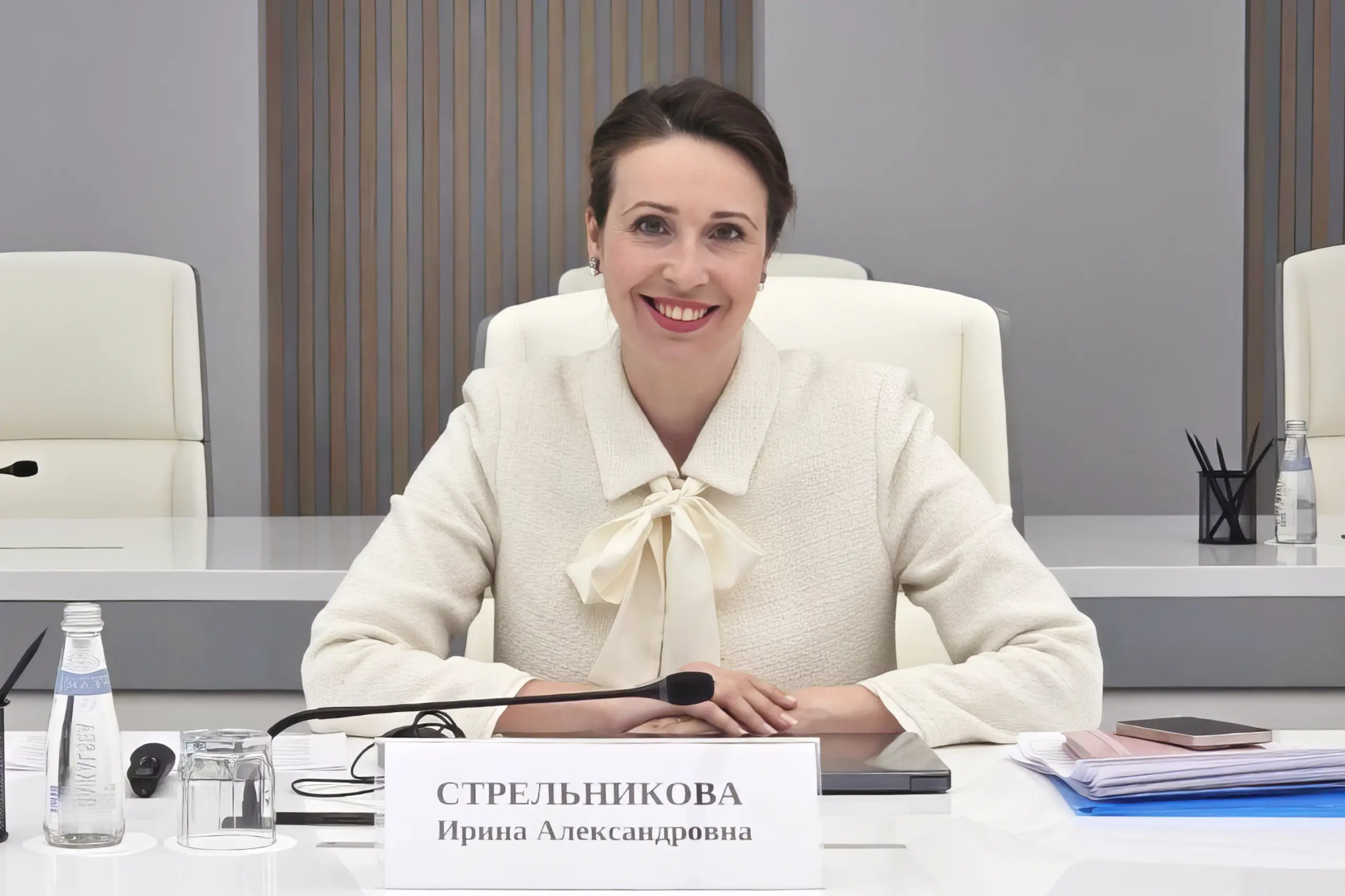
Irina Strelnikova – The Arctic as a Factor of Strength and a Strategic Region in Sweden’s New Arctic Strategy
The document identifies Russia as the most serious threat to Sweden’s national security emanating from the Arctic region; China is described as a state with clear ambitions to become a great power in the polar regions On June 1, 2026, Swedish Minister for Foreign Affairs Maria Malmer Stenergard presented the country’s new Arctic strategy. The...
read more