
Vyacheslav Maracha: The Transit Potential of the Transarctic Transport Corridor Must Become the Main Growth Driver
The TTC – from a potential alternative to the Suez Canal route to a strategic necessity for global logistics
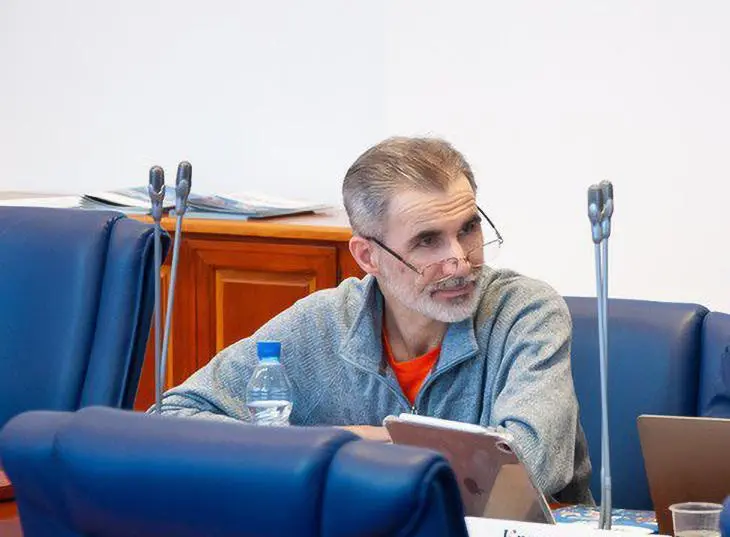
The thesis that the Transarctic Transport Corridor (TTC) could become an alternative to the Suez Canal route for some Asian countries by reducing distance and shipping costs between Asia and Europe is commented on by Vyacheslav Maracha, a member of the Expert Council of POR, Associate Professor at the RANEPA under the President of the Russian Federation and the Financial University under the Government of the Russian Federation, and Vice-President of the National Guild of Professional Consultants.
According to incoming data, traffic through the Bab-el-Mandeb Strait, a key link in the Suez Canal route, has more than halved over the past week. The threat of the strait being closed has vividly confirmed the validity of the thesis that the TTC could become an alternative to the Suez Canal route for some Asian countries by reducing distance and shipping costs between Asia and Europe. This turns the question of reliable alternatives from a theoretical one into a critically important issue for global trade, which needs diversification and resilience.
While the Houthis formally claim they are not closing the strait to everyone, their naval blockade of vessels linked to Saudi Arabia and attacks on Saudi Aramco’s infrastructure have created a domino effect. The main blow has fallen on Saudi fuel exports, which had been rerouted into the Red Sea to bypass the Strait of Hormuz. Thus, two key «chokepoints» of global energy trade find themselves under the threat of simultaneous destabilization. This clearly demonstrates that relying on narrow, geopolitically unstable routes is a bet on high risk, which can materialize at any moment into colossal losses and supply chain disruptions.
In this context, the TTC becomes a strategic necessity. Its key advantage lies not only in reducing distance and transit time between Asia and Europe but also in the fact that it runs through waters under Russian jurisdiction, making it resilient to political shocks like the one currently unfolding in the Red Sea.
This understanding is already taking shape in the market. As Murmansk Oblast Governor Andrey Chibis noted, interest in the TTC is being shown not only by Russia’s traditional partners but also by countries we classify as unfriendly. Business is pragmatic and seeks stability. The effective closure of Bab-el-Mandeb serves as a powerful catalyst, forcing even those who were skeptical of the Arctic route to reconsider their calculations.
However, the TTC’s potential will only be realized once a certain «threshold barrier» in infrastructure development is crossed: icebreaker fleets, high-ice-class vessels (Arc5, Arc7), port capacities, and emergency response facilities.
An important nuance here is that, at present, the bulk of cargo traffic along the Northern Sea Route (the TTC’s key segment) consists of Russian exports and domestic cabotage shipments. Transit, although growing (in 2025 it increased by 8%), still accounts for a relatively small share. We are at a point where it is precisely the TTC’s transit potential that must become the main growth driver.
The current crisis creates the conditions for overcoming this threshold barrier. Once transit cargo flows rerouted from the Suez Canal begin to arrive steadily, this will create an economic incentive for accelerated development of all supporting infrastructure—from digital navigation systems to service centers in the anchor cities of the Russian Arctic. Crossing this barrier will trigger a positive feedback loop: growth in the cargo base will attract investment, and infrastructure development will attract new clients.
Russia’s task is not to miss the moment and to ensure the attainment of that very «threshold barrier,» after which the TTC will enter a phase of sustainable and stable growth, becoming a fully fledged and reliable artery of global trade.
The Project Office for Arctic Development and the editorial board of GoArctic.ru do not necessarily share the opinions expressed by experts.
For media representatives: we welcome the republication of comments provided that an active link to the original source is given and the columnist’s status as an expert of the Project Office for Arctic Development is indicated.
Оthers Our comments
Ekaterina Serova on Russian-Indian Partnership in Arctic Resource Development amid the Middle East Crisis
The Arctic Could Become a Magnet for Indian Business While India acknowledges areas of potential collaboration with Russia in the Arctic region, it does not currently prioritize this domain. This is due to the fact that a substantial proportion of the minerals crucial to India’s development, such as coal, metals, diamonds, and ores, are primarily...
read more
Sergey Nikonorov. ECG Instead of ESG: Russia Is Forming Its Own System for Assessing Responsible Business
Through the ECG rating, the state gains a tool that allows it to incentivize socially responsible behavior by companies and link support measures to specific business reputation criteria The updated national standard GOST R 71198–2026 «Business Reputation Index of Business Entities (ECG Rating)» comes into force on June 13, 2026. The expanded methodology aims to...
read more