
Sergey Nikonorov: Arctic cities are becoming drivers of a new economy
The Arctic could become a powerful macro-region with a sustainable economy and high quality of life, provided that its resource orientation is balanced with investments in human capital, technology, and ecology
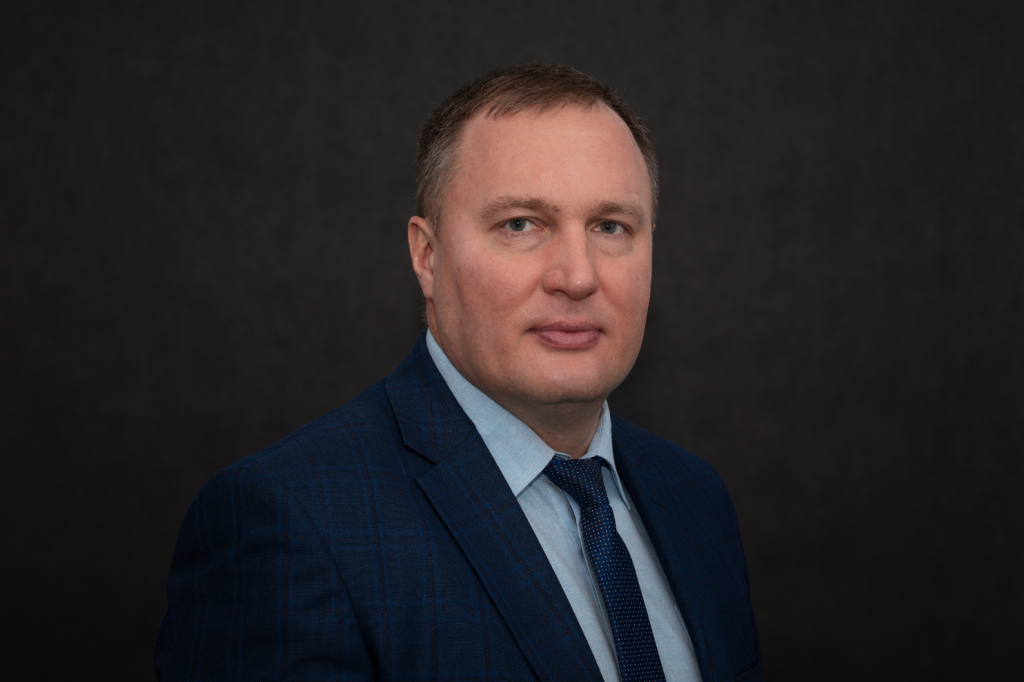
The Arctic is an outpost, a space where the technologies of the future are born. It is here, in the polar cities, that solutions are created which are then scaled up across the entire country. But for this potential to be fully realized, we need to answer the question: what hinders the development of Arctic cities, and what could become a real driver of their growth? This is the view of Sergey Nikonorov, an expert at PORTA (Project Office for the Development of the Arctic), Doctor of Economics, Professor at the Department of Sustainable Development Economics and Natural Resource Management, and Director of the Centre for Research on Economic Problems of Arctic Development at the Faculty of Economics of Moscow State University.
The term «outpost» in relation to Arctic cities is a figurative expression. It refers to settlements that have become strategic bridgeheads. They serve as bases for developing harsh territories, control key routes, or support large-scale industrial and infrastructure projects. In 2023, a list of key settlements in the Russian Arctic Zone was approved and later amended. It includes Murmansk, Arkhangelsk, Norilsk, Dudinka, Pevek, Anadyr, Dikson, Khatanga, and others. Each has its own specialisation, but in general, «outposts» are cities that control strategic transport arteries, serve as bases for major industrial projects, act as logistics hubs for vast and hard-to-reach areas, and are important for ensuring national security in the Arctic. Comprehensive development plans are currently being drawn up for such settlements: the state provides systemic support to consolidate their role as bridgeheads for further Arctic exploration.
Unique technologies are born in extreme conditions
The harsh conditions of the Arctic drive the creation of highly specific solutions, and some of them do indeed eventually make their way beyond the region. Arctic cities act as «testing grounds» or «living laboratories» where complex technologies are tested in extreme environments. If a solution proves effective, resilient, and economically viable, it begins to be adapted for wider application.
Take permafrost monitoring. In Norilsk, a sensor system has been installed that tracks ground temperatures and building deformations. This makes it possible to detect risks in time and prevent structural failures. At the same time, wave-based monitoring technology—a non-destructive method—is being developed to assess foundation conditions and detect hidden deformations.
Or hybrid energy. To reduce dependence on expensive imported fuel, hybrid solar-diesel power systems are being introduced in Yakutia and Chukotka. This experience is gradually being adopted by other northern and remote territories.
Then there is Arctic medicine. Due to vast distances and staff shortages in remote locations, mobile medical units and telemedicine solutions have come into active use. In Yakutia, for example, multidisciplinary mobile teams with equipment for medical check-ups and preventive screenings are deployed. In Chukotka, a remote monitoring system has been developed: special blood pressure monitors and glucometers transmit data to doctors in real time. The Yakut system of mobile teams and connecting remote settlements to digital services has indeed been taken as a model for other regions of the Russian Arctic Zone.
What holds development back?
For all this potential, Arctic cities face systemic problems that hinder their sustainable development. The challenges of Arctic cities stem from harsh natural conditions, economic characteristics, and social issues.
First – mono‑industry economies. Many cities depend on one or two enterprises. Fluctuations in natural resource prices, resource depletion, or technological shifts create serious risks for the stability of such economies.
Second – transport isolation and infrastructure deficits. Cities are often remote from each other and from major economic centers. This complicates logistics, raises costs, and limits economic ties.
Third – demographic problems. There is an outflow of population, especially young people. Reasons include limited opportunities for education and personal fulfilment, a shortage of jobs in diversified sectors, and social factors. This, in turn, exacerbates the shortage of qualified personnel, especially in healthcare and education.
Fourth – environmental problems. Industrial activities lead to pollution of air, water bodies, and soils. At the same time, the Arctic environment is very fragile: natural self‑purification processes are slow.
Finally, there are difficulties in coordinating the interests of stakeholders. The interests of regional authorities, local administrations, large businesses, indigenous peoples, and residents themselves do not always align, which creates conflicts and complicates decision‑making.
Tools for sustainable development
Ensuring sustainable development requires a comprehensive approach with the involvement of all key players.
Regional authorities and local administrations need to be fully engaged in drafting master plans for key settlements. These plans should include not only job creation but also the modernization of social, municipal, and transport infrastructure. It is important to actively involve local residents in the planning process: hold public consultations, use participatory budgeting mechanisms, and create platforms for dialogue. This helps to identify real needs more accurately and enhances the legitimacy of decisions.
Corporations operating in the region should follow ESG principles: combining economic efficiency with environmental responsibility and contributions to local community development. It is important not to limit themselves to a paternalistic model («the company provides everything»), but to strive for employment diversification: create not only direct but also indirect jobs, support small businesses in the supply chain, and actively engage with authorities and residents by signing social partnership agreements, investing in local projects, and taking into account the interests of indigenous peoples.
In addition, advanced technologies—digital twins, predictive analytics, and satellite monitoring—should be introduced to reduce risks and improve efficiency. This should become not an «extra bonus» but a mandatory standard for Arctic cities.
Drivers, risks, and prospects
The development prospects of the Arctic can be described as a combination of great opportunities and serious challenges. On the one hand, the region has enormous resource, logistical, and scientific potential. On the other, harsh climatic conditions, high development costs, and external risks pose significant barriers.
The main driver is the development of the Northern Sea Route (NSR), and the key prospect here is turning it into a fully operational year-round international transport corridor. Plans include increasing capacity, modernizing ports, building an icebreaker fleet and emergency rescue centers. In the longer term, this could become part of the Trans-Arctic Transport Corridor (from St. Petersburg to Vladivostok), which would enhance regional connectivity.
The next driver is the development of the resource base. The extraction of oil, gas, and metals will continue. An important trend is not just extraction but creating clusters with deep processing of raw materials right in the region to maximize added value.
Third – preferential regimes. Special economic zones with tax breaks, administrative preferences, and infrastructure subsidies stimulate private investment inflows. It is important that incentives are not uniform but tailored to each specific territory.
Fourth – social and demographic measures. Programs such as the «Arctic Mortgage» (preferential rate), incentives for rental housing construction, relocation from dilapidated housing, support for local communities, and staff attraction (for example, the «Course to the North» program in the Murmansk Region) all give people a reason to stay or come.
But risks remain. A shortage of qualified personnel, high construction costs in permafrost conditions, and geopolitical constraints could all slow development. Success will depend on the ability of the state, business, and society to work in unison, flexibly adapting to changing conditions.
Overall, if resource orientation is balanced with investments in human capital, technology, and ecology, the Arctic could, in the long term, become a powerful macro-region with a sustainable economy and high quality of life. The outposts we are talking about are our foundation for decades to come.
The Project Office for Arctic Development and the editorial board of GoArctic.ru do not necessarily share the opinions expressed by experts.
For media representatives: we welcome the republication of comments provided that an active link to the original source is given and the columnist’s status as an expert of the Project Office for Arctic Development is indicated.
Оthers Our comments
Anneta-Bakh Tsakhilaeva: What the UN Commission’s Decision on the Continental Shelf Means for Russia
The next, and no less challenging, stage will be negotiating maritime boundaries with other states and advancing the practical development of the Arctic region The United Nations Commission on the Limits of the Continental Shelf (CLCS) has recognized the scientific basis of Russia’s claim to approximately 1.7 million square kilometers of the Arctic seabed. The...
read more
Russia-China Partnership Is More Complex Than It Seems
Since the 1970s, American diplomats have expressed concerns regarding whether the partnership between Russia and China is merely a pragmatic alliance or one of a more strategic nature. The 2024 Pentagon Arctic Strategy, a policy document developed under the Biden administration and currently in effect, designates the Arctic region as critical for homeland defense and...
read more