
Irina Strelnikova – on Japan’s motivation in the Arctic
The country is looking toward the Far North, striving to ensure energy security, driven by logistical interest in using the Northern Sea Route, and showing scientific attention to climate and bioresources
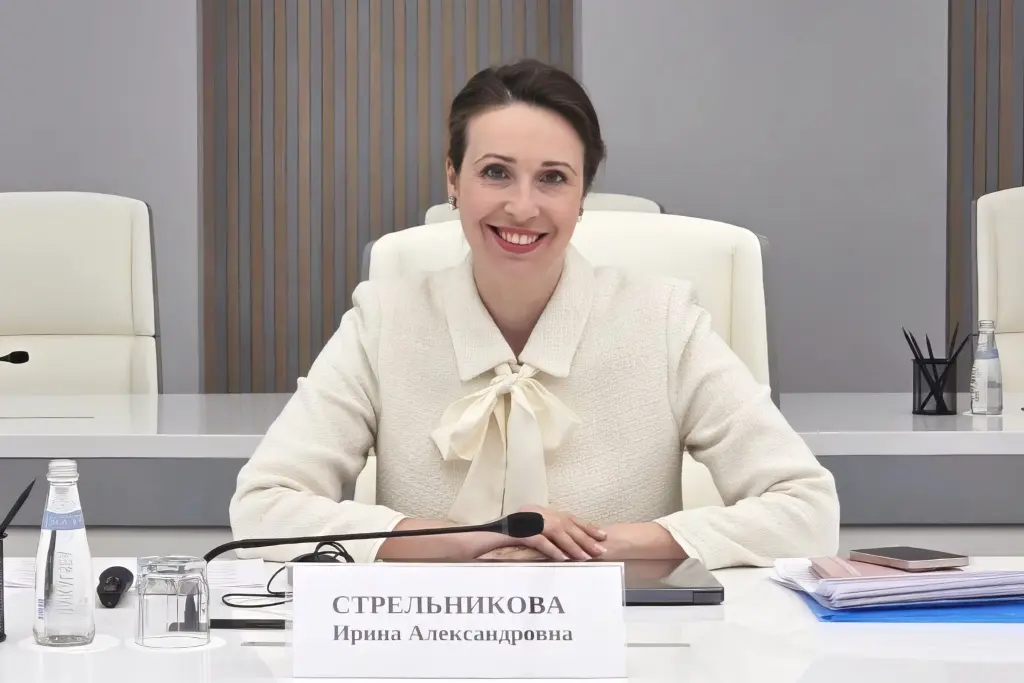
Japan has built an icebreaker for researching the Arctic Ocean. As early as December 2026, the first research icebreaker Mirai II, intended for specialized study of the Arctic Ocean, will be handed over for operation, TASS reports, citing Japan’s Ministry of Education, Culture, Sports, Science and Technology. Commentary is provided by POORA expert Irina Strelnikova, director of the Center for Interdisciplinary Arctic Studies at HSE University, associate professor in the Department of Foreign Regional Studies at HSE University, and senior research fellow at the Institute of China and Contemporary Asia of the Russian Academy of Sciences.
For Tokyo, the Arctic is not a geopolitical field for demonstrating its ambitions, but an extremely important mechanism for solving two main tasks of the Japanese economy: complete dependence on imported energy resources and the vulnerability of global logistics schemes. Japan’s interest is extremely pragmatic and economically conditioned, while science diplomacy serves as a «soft power» tool for legitimizing its presence in the region without direct military or territorial pressure.
The completion of construction of the first research icebreaker Mirai II, which is intended for studying the Arctic Ocean, will allow Japan to consolidate its positions in the Arctic, and here the issue is not military presence or territorial claims, but rather a scientific and partly technological effect. For Tokyo, the new vessel will not become an opportunity to declare itself a serious participant in the Arctic agenda, but will serve as an instrument of «soft power.»
Japanese cooperation in the Arctic has historically developed mainly through the prism of scientific research. Since the end of the 20th century, the state has step by step built up its participation in the study of the North. In the 1990s, under the auspices of the National Institute of Polar Research, a specialized center was created, and a research station was opened on the Svalbard archipelago. This allowed Tokyo to obtain the status of permanent observer in the Arctic Council and strengthen its positions in the region.
At the legislative level, the Arctic topic was first reflected in 2013 in the General Maritime Plan, and in 2015 a separate Arctic Policy of Japan was adopted. The document focused on three key areas: international cooperation, the development of scientific research, and the study of the potential use of Arctic routes.
To understand Japan’s motivation in the Arctic, it is necessary to examine the hierarchy of national interests reflected in official documents and marked by real investments.
First of all, this is energy security. Japan is an island state with extremely limited energy resources of its own, purchases more than 90% of the energy it consumes, and is the largest importer of LNG. The country is highly interested in diversifying energy supplies, and the Arctic plays a significant role in the development of Japan’s economy precisely through this diversification. For example, in the Arctic LNG 2 project, a consortium of Japanese companies Mitsui & Co and JOGMEC (Japan Arctic LNG) acts as a partner, owning 10% of the shares. Despite the sanctions announced in 2023–2024, they did not withdraw from the project. In the sphere of international energy cooperation, Japan is at the stage of negotiations on the Alaska LNG project, which intensified in 2025-2026, showing Japan’s desire to vary not only suppliers but also the formats of cooperation in Arctic energy projects.
Secondly, there is logistical interest in using the Northern Sea Route (NSR). In Japan’s 2015 Arctic Policy, the use of the NSR is regarded as one of three key priorities. The Northern Sea Route is assessed not as an alternative to the Suez Canal, but as a commercial fallback option. At the same time, it is important to understand the specificity of the Japanese approach, which is characterized by a high degree of pragmatism and caution. Tokyo will not put cargo at risk until the ice conditions for vessel passage become predictable. It is precisely to reduce such risks that the icebreaker Mirai II is being built and funds are being invested in financing a satellite constellation. Japanese specialists from the National Institute of Polar Research study the dynamics of ice fields to determine optimal and safe navigation routes. For Japan, the NSR will become a commercial alternative only under conditions of profitability (lower insurance premiums) and safety (predictability of ice conditions). At the same time, the optimal model will be «hybrid use» of routes: in summer the NSR is used, and in winter the Suez Canal.
Thirdly, there is scientific interest in climate and bioresources. The study of Arctic climatic conditions finds direct application in Japan for forecasting typhoons and protecting the islands.
When, after 2022, Japan took an unfriendly position toward Russia by supporting sanctions, dialogue on Arctic issues was frozen, while its key economic interests (the need for LNG) remained unchanged. This is also confirmed by the fact that Japan intends to maintain participation in energy projects on Sakhalin. To solve the tasks facing Tokyo regarding the modernization of the NSR and the implementation of energy projects, it is critically important for Japan to cooperate with Arctic states and primarily with Russia.
Japan in the Arctic behaves like a calculating consumer and sees in it exclusively economic potential. By investing in icebreakers and science, Japan intends to establish itself in the region in order to gain guaranteed access to energy resources and transport corridors in the future.
Japan’s Arctic policy serves as a clear example of pragmatic resource diplomacy, in which scientific activity serves as a means of ensuring national security.
The Project Office for Arctic Development and the editorial board of GoArctic.ru do not necessarily share the opinions expressed by experts.
For media representatives: we welcome the republication of comments provided that an active link to the original source is given and the columnist’s status as an expert of the Project Office for Arctic Development is indicated.
Оthers Our comments

Milena Milich: Climate Agenda as a Driver of Regional Resilience
From the Sakhalin experiment to an Arctic model of low-carbon development; regional climate policy can be not declarative, but managerially coherent and economically meaningful The 2nd International Forum «Islands of Sustainable Development: Climate and Ecology,» held on Sakhalin at the end of July 2026, reaffirmed once again that the climate agenda in Russia today is...
read more
Interpreting the Spitsbergen Treaty: Some Historical Sensitivities
Five years into its second century, the Paris Treaty on Spitsbergen remains an important building block of international Arctic law and a strong foundation for Russia’s continued presence in the islands.
read more