
Andrey Krivorotov – On Sweden’s New Arctic Strategy
The Swedish government perceives Russia’s activities in the Arctic as a direct threat and monitors China’s activities with wariness
June 4, 2026
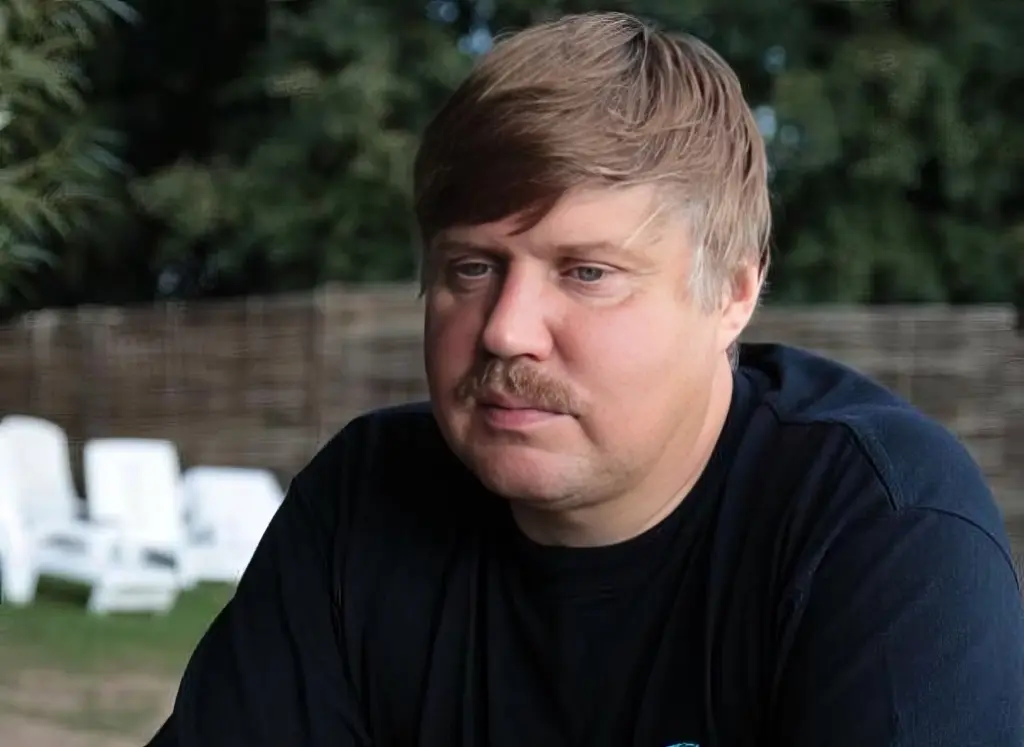
On June 1, 2026, the Swedish government submitted to the Riksdag (parliament) an official communication entitled «Sweden’s Strategy for a Peaceful, Secure and Sustainable Arctic.» That same day, the strategy was publicly presented by Minister for Foreign Affairs Maria Malmer Stenergard, speaking at the Defence Museum in the city of Boden in northern Sweden before local civilian and military leaders. Commentary is provided by PORA expert Andrey Krivorotov, Doctor of Economic Sciences, Acting Head of a Department at MGIMO University, and Leading Research Fellow at the Institute of China and Contemporary Asia of the Russian Academy of Sciences. In 2024, Krivorotov defended his doctoral dissertation on national Arctic strategies.
The previous version – «Sweden’s Strategy for the Arctic Region» – was adopted in 2020 (the original text mistakenly states 1920). The new document records the profound changes in the Arctic that have occurred over the past six years: the crisis in Russia’s relations with the West, the «freezing» of pan-Arctic cooperation, Sweden’s accession to NATO, and the accelerated militarization of the North, as well as a certain softening of the EU’s position regarding the development of Arctic resources (explained primarily by Europeans’ rejection of Russian oil and gas).
At the same time, the text of the new strategy is significantly longer in volume and broader in thematic scope than the 2020 version (which, frankly, resembled a token document intended mainly to remind the world that Sweden is an Arctic state). Clearly, the Swedes’ approach to the region’s problems has become more meaningful and far-reaching, although the main thing remains unchanged: the Arctic, including their own polar region, is of interest to Stockholm not so much in itself but primarily as an element of broad foreign policy positioning.
In the 2020 strategy, the country’s priorities in the Arctic were structured as follows: international cooperation (primarily within the Arctic Council), security, climate and environment, polar research and environmental monitoring, sustainable economic development, and improving the well-being of northerners. The dominant interests were peaceful cooperation and climate. For example, the economic development of northern Sweden was permitted only within the framework of a low-carbon transition and was of little interest to the government, which drew criticism for this from northern businesspeople themselves.
In the 2026 document, the emphasis is placed quite differently. First place is given to «Peace, Security and Stability,» and this section deals primarily with Sweden’s military buildup and that of its newly acquired allies. The country welcomes the involvement of the Arctic in the activities of NATO, the Nordic Defence Cooperation (NORDEFCO), the European Union, and the UK-led Joint Expeditionary Force. Russia’s activities in the Arctic are perceived as a direct threat, while China’s activities are viewed with wariness.
The second priority is «Economy and Trade,» about which the government speaks much more sympathetically than before, as the strategy text directly considers them as factors of national military and economic security. The greatest prospects are seen in sectors such as mining (noting Sweden’s role in supplying Europe with valuable minerals), forestry, energy, cold-climate technology testing, space, and tourism. For the first time, the authorities propose specific mechanisms for state support of business. Interestingly, the 2020 strategy, like the European Union as a whole, called for a gradual phase-out of oil and gas extraction in the Arctic. This requirement has now been removed, although in northern Sweden itself, the strategy proposes implementing solutions that are «fossil-free.»
Climate and environment (the theme least affected by military-political issues) have retained third place. At the same time, while emphasizing the importance of climate policy, especially for the Arctic, the government does not specify concrete deadlines for Sweden, including its northern regions, to achieve carbon neutrality. It expresses a desire to expand the circle of protected Arctic territories where economic activity will be restricted.
The fourth priority is the preservation of (ecologically) sustainable and viable – now also referred to as «resilient» – settlements in the North, and this task is directly seen as stemming from the complex military-political and climatic situation. «The viability of Sweden’s Arctic region,» the strategy states, «is a matter of security policy: local and regional development, its attractiveness for living and the sustainable development of Sweden’s significant natural resources contribute to its security, stability, economy and welfare.» To this end, the government intends to develop local entrepreneurship, digitalization, and provide targeted assistance to various groups of northerners – women, youth, and the Sámi.
Finally, the fifth, very specific priority is called «Strategic Resources.» It combines diverse areas and tasks of activity in the Arctic that are seen as most promising or significant: polar research, icebreaker capacity building, transport connectivity, and space exploration (in the latter point, of course, special mention is made of the Esrange spaceport and satellite tracking station near Kiruna in northern Sweden).
Issues of international cooperation – which, recall, were in first place in 2020 – have formally been placed outside the framework of priority policy areas. A separate, fifth chapter of the strategy is devoted to them, and the order of Sweden’s partners is striking: NATO, Nordic and Scandinavian-Baltic cooperation (known for its anti-Russian orientation, reaffirmed in late May in joint statements on the sidelines of the NATO meeting in Stockholm), the European Union, the Arctic Council, contacts with non-Arctic states, and parliamentary cooperation.
Russia is mentioned here several times, but only in the context that interaction with it in various formats has been suspended since 2022.
Cooperation with non-regional states is quite permissible on the basis of existing international law, provided that they recognize the status and rights of Arctic countries. The government intends to increase the country’s foreign policy competencies and «weight» in the Arctic, including, among other things, organizing a major international conference in Sweden, something not observed before.
Overall, analyzing the new strategy, one can conclude that Stockholm’s attention to the Arctic has noticeably increased, along with a deeper awareness of national interests. Moreover, all of them are viewed through the prism of global military-political rivalry, where the polar region is merely one of the arenas enhancing Sweden’s role within NATO and the EU. The country sees no real prospects for cooperation with Russia and, evidently, has no intention of seeking them.
It is interesting that the positions of Sweden and neighboring Norway, so different in previous versions of their Arctic strategies, have noticeably converged. The Norwegians’ view of the Arctic, previously very comprehensive and multi-vector, as we noted in 2025, has narrowed to confrontation with Russia and the development of their own North under the banner of militarization. The Swedes, on the contrary, are moving «from the other end,» having abandoned their traditional neutrality and acquired, even from a national security perspective, a lively interest in promoting the socio-economic development of the region. Taken together, the new strategies of the two Scandinavian countries cement an ideological divide in the European and global Arctic. This phenomenon, in our conviction, is unfavorable for all stakeholders, but must, alas, be taken into account in the long-term development plans of the Russian Arctic Zone.
Editor’s note: In December 2024, the PORA Expert Center analyzed international Arctic development strategies – the expert note on this issue can be accessed here.
The Project Office for Arctic Development and the editorial board of GoArctic.ru do not necessarily share the opinions expressed by experts.
Оthers Our comments
Alexey Fadeev: «New Arctic Shelf Borders Must Be Fairly Approved in Favor of Russia»
The UN Commission’s recognition of Russia’s claims to the Arctic shelf is an important step in strengthening the Russian Federation’s geographic sovereignty in the Arctic. The UN Commission on the Limits of the Continental Shelf has recognized Russia’s claims to 1.7 million square kilometers of seabed in the Arctic as justified. The UN recommendations on...
read more
Sergey Nikonorov: Arctic cities are becoming drivers of a new economy
The Arctic could become a powerful macro-region with a sustainable economy and high quality of life, provided that its resource orientation is balanced with investments in human capital, technology, and ecology The Arctic is an outpost, a space where the technologies of the future are born. It is here, in the polar cities, that solutions...
read more