
Proxy Governance Model for Greenland: An Option for the U.S. Foreign Policy?
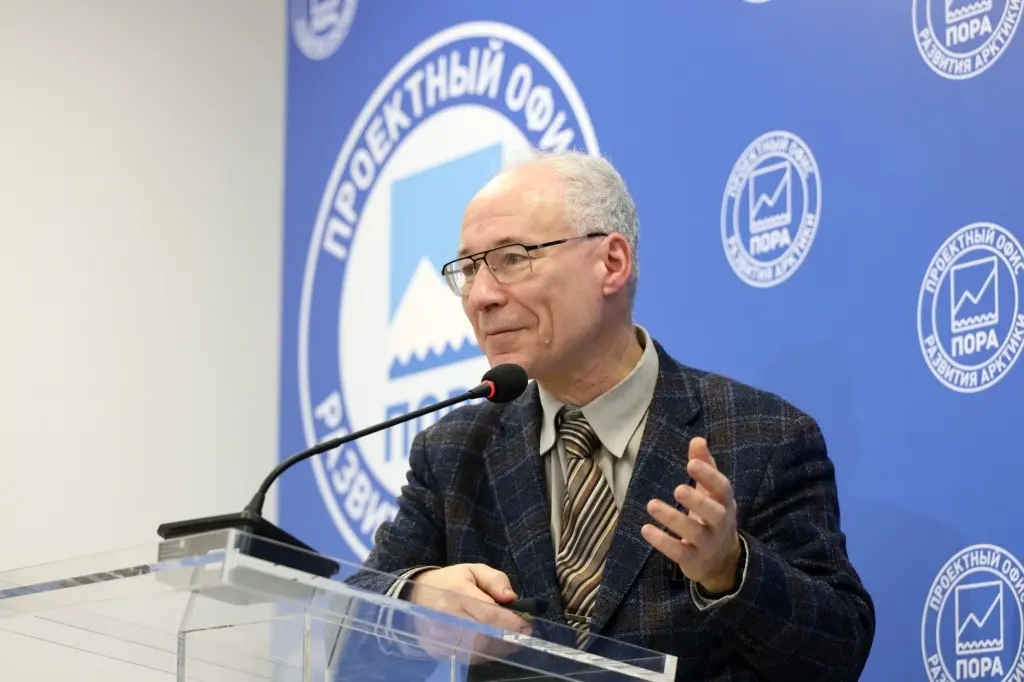
Alexander Pilyasov, Doctor of Science (Geography) and Professor at Lomonosov Moscow State University, proposes that Donald Trump could leverage proxy organizations to manage economic activities and resources in Greenland.
Drawing on historical precedents such as the Hudson’s Bay Company, the East India Company, and the Tennessee Valley Corporation, Dr. Pilyasov highlights the effectiveness of this approach. He emphasizes that these proxy entities are typically established through presidential decree, granting them exceptional authority to conduct economic operations within a designated territory.
Dr. Pilyasov cites President Roosevelt’s creation of the Tennessee Valley Corporation as an example. This organization unified seven economically disadvantaged states and harnessed hydroelectric power for their collective benefit. He suggests that a similar proxy structure could be employed by Mr. Trump in his pursuit of Greenland, echoing colonial practices dating back to the 16th century.
He also emphasizes that the development of Arctic regions has consistently been intertwined with global events. As an example, he cites the impact of the Great Depression on the Soviet Union’s industrialization. The resulting increase in gold prices, combined with a decrease in the cost of machinery essential for Soviet manufacturing, spurred development in the Arctic and the mining sector of Russia’s northeast.
This commentary is part of a series of historical lectures by PORA Expert Center focused on the history of Arctic exploration and the Northern Sea Route.
Further information is available on YouTube:
A Hundred Years of Change: Global Lessons from the Development of the Russian Arctic. A Lecture by Alexander Pilyasov (in Russian)
The Project Office for Arctic Development does not always share the opinions expressed by experts.
For media representatives: we welcome republication of comments provided that an active link to the original source and the columnist’s status as an expert of the Arctic Development Project Office are indicated.
Authors

Оthers Our comments

Annetta-Bakh Tsakhilaeva – on the Creation of the US National Energy Dominance Council
This move will entail a strengthening of NATO’s naval presence in high latitudes, which for Russia means the need to expand its icebreaker fleet and coastal defense systems This is not merely an administrative reform, but a tectonic shift in the global paradigm. While previous administrations relied on the «green transition» as a tool for...
read more
Russia-China Partnership Is More Complex Than It Seems
Since the 1970s, American diplomats have expressed concerns regarding whether the partnership between Russia and China is merely a pragmatic alliance or one of a more strategic nature. The 2024 Pentagon Arctic Strategy, a policy document developed under the Biden administration and currently in effect, designates the Arctic region as critical for homeland defense and...
read more