
Interpreting the Spitsbergen Treaty: Some Historical Sensitivities
Five years into its second century, the Paris Treaty on Spitsbergen remains an important building block of international Arctic law and a strong foundation for Russia’s continued presence in the islands.
While the treaty acknowledges Norway’s ‘full and absolute’ sovereignty over Spitsbergen archipelago, it also provides citizens and companies from all signatory nations full rights to visit the islands freely and pursue any business operations there on non-discriminatory basis. This unique legal status has over years given rise to numerous political and academic discussions.
In Spitsbergen, as in the Arctic at large, Norway strategically balances its narrow national interests with its dual roles as a key NATO ally in the North and a centuries-long neighbor to Russia. This complex geopolitical positioning necessitates careful consideration of various perspectives.
The Legal History of Spitsbergen
While Norway signed the Treaty on Spitsbergen in 1920, it did not raise its flag there until 1925. There was a vivid debate within Norway whether Spitsbergen should be considered its integral part or just an overseas dependency akin to Bouvet Island or Peter the Great Island in Antarctica.
The influential stance of among other Fridtjof Nansen, the eminent Norwegian polar explorer and diplomat, ultimately led to Spitsbergen being declared part of the Kingdom of Norway in the belief that future generations would resolve sovereignty issues.The name Svalbard, meaning ‘land of cold shores’ in Old Norse, was also allegedly proposed by Nansen as a step to ‘Norwegianize’ the islands..
After the Great Depression, the coal companies that had initially shown great interest and established presence in Spitsbergen, ceased their operations. From the early 1930s, only Norwegian and Russian miners remained on the archipelago. There was also a small Polish research station located in its southern part , plus predominantly seasonal visits of researchers and cruise vessels from other countries.
The Soviet Union conducted coal mining through the Severoles (since 1925) and Arktikugol (since 1931) trusts. For many years, the area remained de facto peaceful, with Norwegian and Soviet miners living in separate communities and cooperating as good neighbors.
However, since 1974, Norway has actively promoted a policy of expanding its sovereignty over Spitsbergen. The gradual extension of Norwegian law to the archipelago was announced.
This raised concerns in the Soviet Union, particularly in the 1970s, when questions related to the law of the sea arose.
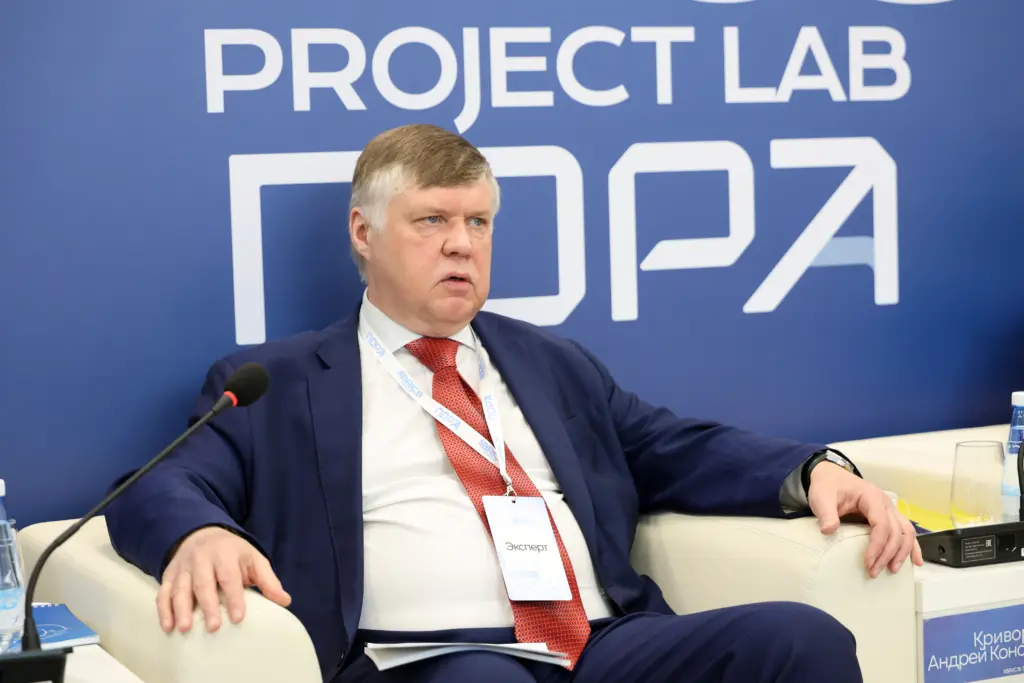
«The Soviet Union argued that the limitations of Norwegian sovereignty over Spitsbergen as per the Paris Treaty apply to both the waters and the continental shelf surrounding the archipelago in the entire treaty area. Norway has, however, insisted that the limitations are only valid within the territorial waters around Spitsbergen, which now extend 12 nautical miles.. Norway also views the seabed around Spitsbergen as an extension of the continental shelf of Norway far to the north, encircling the archipelago and stretching further toward the North Pole,»
- Dr. Andrey Krivorotov said
These issues have gained increased relevance over the recent years, as the growing international interest in the Arctic attracts many outside countries to Spitsbergen, with their citizens and research stations operating there and fishermen trawling its waters. Authorities and experts from among other the EU and some of its member nations have challenged the Norwegian interpretation of the Spitsbergen Treaty both onshore and offshore. There are also issues on regulating research activities, as the treaty Article 5, which declares that a special international conventions shall be concluded to this end, has until now not been implemented.
When President Donald Trump demanded in 2025 that Denmark should sell Greenland to the U.S., Norwegian experts wondered if Spitsbergen would be his next goal. So far, the U.S. officials have denied that. As a paradox, the open international status of the archipelago, while an overall concern for Norwegian authorities, may protect it against American unilateral acquisition attempts.
Russia Remains Committed
Russia asserts a strong and principled stance regarding Spitsbergen, which is reflected in key governmental documents outlining its Arctic and maritime policies.
The country is commited to maintaining a significant presence in the archipelago based on equal win-win cooperation with Norway and other signatory nations to the Paris Treaty.
A dedicated Government Commission for Ensuring the Russian Presence on the Spitsbergen Archipelago was established in 2007 and continues to meet regularly, as evidenced by its latest session on November 14, 2025.
Despite growing pressure from the Norwegian authorities, Trust Arktikugol has over the recent years pursued an active development of tourism, among other re-opening the previously abandoned Soviet mining settlement of Pyramiden. A Russian Arctic Research Expedition in the archipelago was also established in 2016.
In May 2025, the Russian Ministry of Foreign Affairs expressed concern about Norway’s growing militarization of Spitsbergen, including visits of NATO officials and military, and operations of dual use installations, contrary to the treaty Article 9. Norwegian officials deny that, although they seek to avoid direct consultations on contested issues either with Russia or with other parties.
Potential Interests of Global South Countries in Spitsbergen
Several BRICS members, partners and candidate nations already participate in this treaty, granting them rights to conduct activities on Spitsbergen. Turkey and Argentina, signatories to the Spitsbergen Treaty, have also sought BRICS membership, expert noted.
«This treaty is open to signature by any interested country, and in this sense, Spitsbergen is an ideal entry point for non-Arctic countries looking to enter the Arctic. Simply join the treaty, ratify it, and your citizens, researchers and commercial companies will have unimpeded access,»
- the expert concluded
At its November 14, 2025 session, the said governmental Commission reviewed a Concept of establishing an International Research and Education Center in Spitsbergen, to be eventually located in Pyramiden. We hope this will be attractive for researchers and students from various countries, providing them with hands-on experience and knowledge of the polar regions.
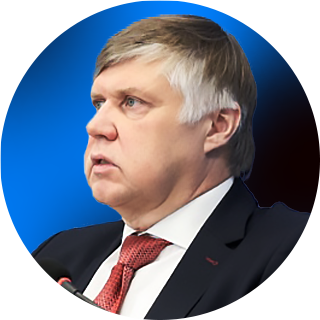
Dr. Andrey Krivorotov, a distinguished expert in international relations and Arctic affairs, Head of the Department of Innovation Management at MGIMO University, Senior Research Fellow at the Institute of China and Contemporary Asia, RAS, delivered a presentation on the ongoing relevance and future prospects of the Spitsbergen Treaty during a BRICS Project Lab Arctic 2.0 hosted by the PORA Expert Center. His analysis also examined the complex dynamics between Russia and Norway in the context of shared interests and responsibilities in the Arctic region.
The Project Office for Arctic Development does not always share the opinions expressed by experts.
For media representatives: we welcome republication of comments provided that an active link to the original source and the columnist’s status as an expert of the Arctic Development Project Office are indicated.
Authors
Оthers Our comments
Sergey Nikonorov: The Legal Regulation of Arctic Shipping Is Becoming Increasingly Complex
Issues extending beyond the Northern Sea Route permit regime and implementation of the Polar Code now include sanctions-related risks, marine insurance, environmental requirements for fuels and emissions, and the need to regulate the Trans-Arctic Transport Corridor as a single integrated system Today’s Arctic is a region where the interests of global trade, energy, environmental protection,...
read more
Anna Romanovskaya – On the Russian Carbon Units Market and Its Arctic Specifics
Methodologies for climate projects in the Arctic Zone are beginning to emerge in Russia; the idea of creating an independent Arctic Carbon Registry is promising On June 5, World Environment Day, we asked Anna Romanovskaya, Director of the Yu.A. Izrael Institute of Global Climate and Ecology, Corresponding Member of the Russian Academy of Sciences, to...
read more