
Pavel Devyatkin Analyzes Historical Dynamics of the Russia-USA-China Triangle
Issues of mutual trust within the Russia–USA–China triangle were raised in a lecture by Pavel Devyatkin, Senior Fellow at The Arctic Institute (USA), Non-resident Fellow at the Quincy Institute (USA), and Visiting Lecturer at HSE University.
Since the 1970s, the ideologues and practitioners of American «realpolitik» have pondered the nature of the relationship between Russia and China: whether the Russia-China partnership is an «alliance of convenience» or whether these relations aspire to be a comprehensive partnership and strategic coordination. This question takes on particular significance in the context of the implementation of Russia’s state policy in the Arctic and key projects in the region, including those with international participation.
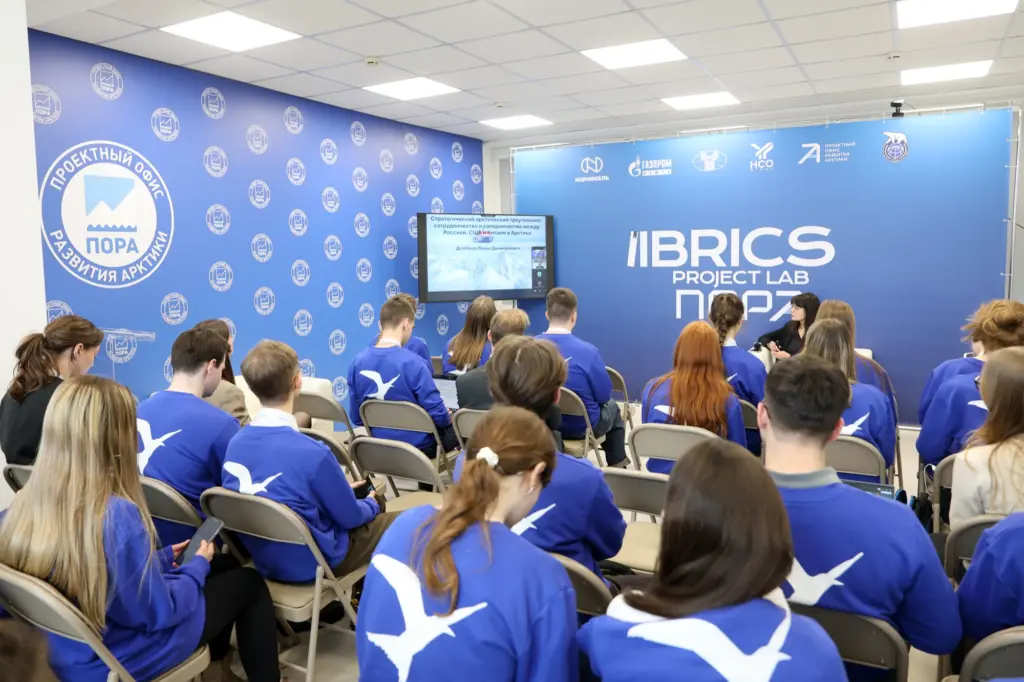
On February 26, 2026, a discussion was held at the PORА Expert Center platform on issues of mutual trust within the Russia–USA–China triangle, potential forms and directions for regional cooperation, as well as factors hindering full-fledged work among all interested stakeholders in the Arctic under current conditions. The lecture for participants of the international project laboratory BRICS LAB 2.0 was delivered by Pavel Devyatkin, Senior Fellow at The Arctic Institute (USA), Non-resident Fellow at the Quincy Institute (USA), and Visiting Lecturer at HSE University.
The expert spoke about the dynamics of relations within the strategic Russia–USA–China triangle, which have been characterized by alternating periods of increased and decreased tension since the late 1950s. These dynamics have influenced the security policies, foreign economic priorities, and spheres of influence of states in various regions of the world.
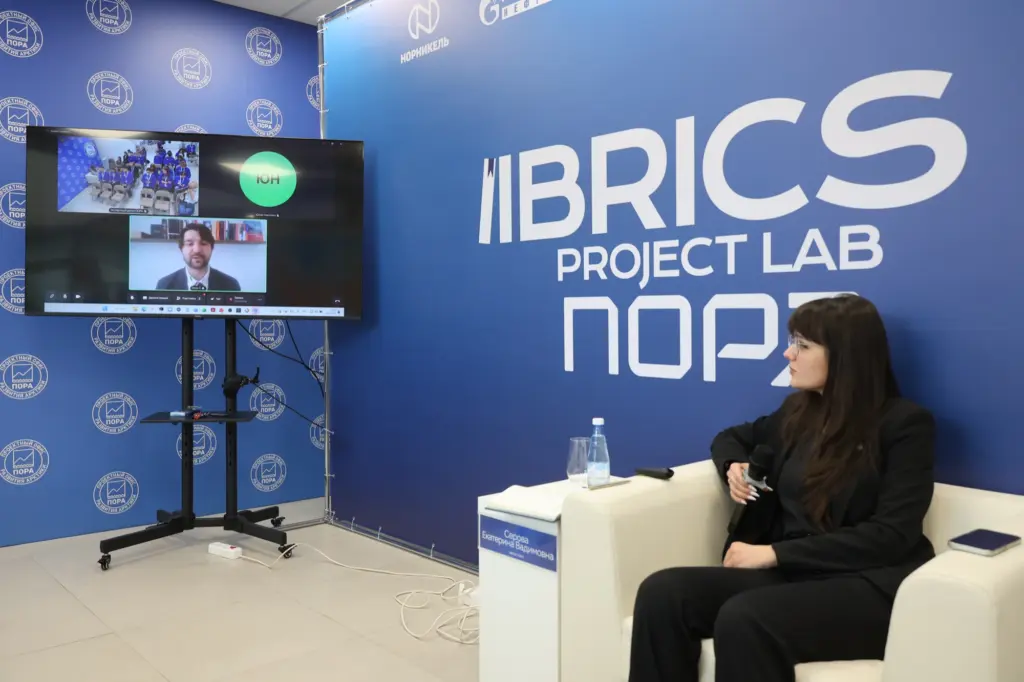
«China’s Arctic ambitions are closely tied to its broader foreign policy. The ‘Polar Silk Road’ initiative and the expanding ambition of the Belt and Road into the Far North align with Russia’s efforts to develop commercial navigation along the Northern Sea Route. Chinese investments in Russian Arctic liquefied natural gas projects have been significant, and China has steadily expanded its participation in the Arctic Council as an observer state,» Devyatkin noted.
In a certain sense, Arctic policy serves as a litmus test for current international processes, demonstrating that the idea of «Arctic exceptionalism» has never hindered the pursuit and protection of national interests, including through the buildup of military presence in the region.
According to the expert, the United States has always been a «difficult partner» on the international stage, and the current tariff policies and territorial claims of the sitting US administration could potentially contribute to a rapprochement between Russia and China.
However, «the Russia-China partnership is more complex than it seems,» the expert added.
Objectives related to the development of the Northern Sea Route (NSR) and the Trans-Arctic Transport Corridor could simultaneously create opportunities for expanding bilateral cooperation, but could also expose existing disagreements regarding the status and permissible uses of Arctic maritime corridors. For instance, China interprets the NSR as an international shipping route, while Russia positions it as an internal transport artery and considers it part of its national heritage.
The Project Office for Arctic Development does not always share the opinions expressed by experts.
For media representatives: we welcome republication of comments provided that an active link to the original source and the columnist’s status as an expert of the Arctic Development Project Office are indicated.
Оthers Our comments
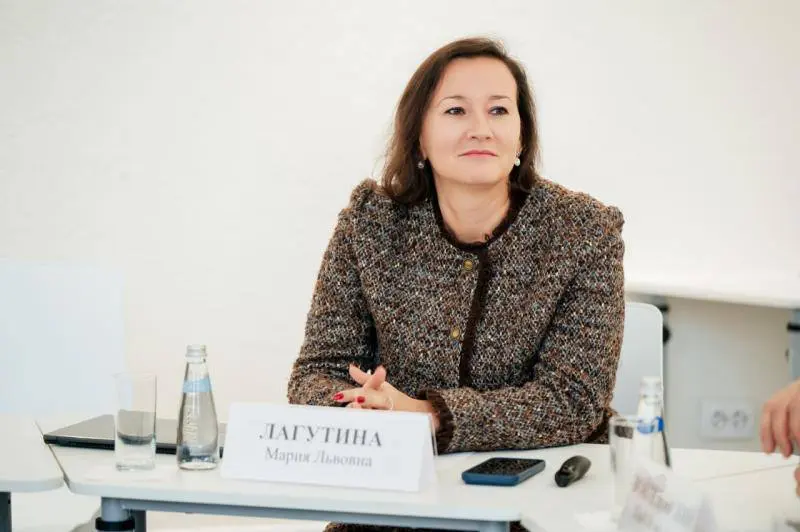
Maria Lagutina: The European Arctic Summit in Rovaniemi and the Formation of a New EU Arctic Strategy
A securitization of European Arctic policy is taking place; whereas previously it was built around issues of climate change, sustainable development, scientific cooperation, and environmental protection, today security issues are increasingly coming to the fore On September 13–14, 2026, an informal Arctic Summit of European Union countries was held in Rovaniemi, Finland. The meeting was...
read more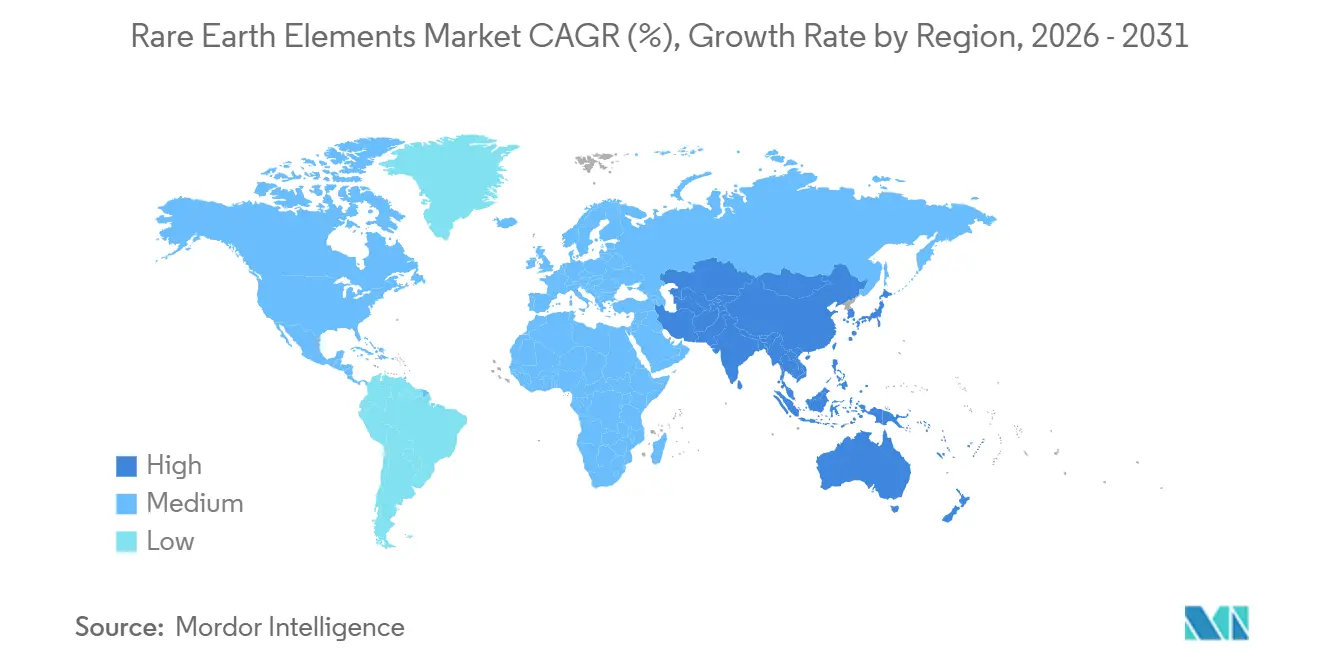
Central Asia and the Arctic: Russia’s Global REM-Project
On February 4–5, 2026, the second international B5+1 business forum was held in the capital of Kyrgyzstan, Bishkek, bringing together business and government representatives from Kazakhstan, Kyrgyzstan, Tajikistan, Turkmenistan, and Uzbekistan, as well as the United States. The B5+1 forum format grew out of the C5+1 forum, which was founded in 2015 to advance US...
read more