
Achieving Arctic Development Targets by 2026 — A Foundation for a New Stage of Social and Economic Growth
February 27, 2026
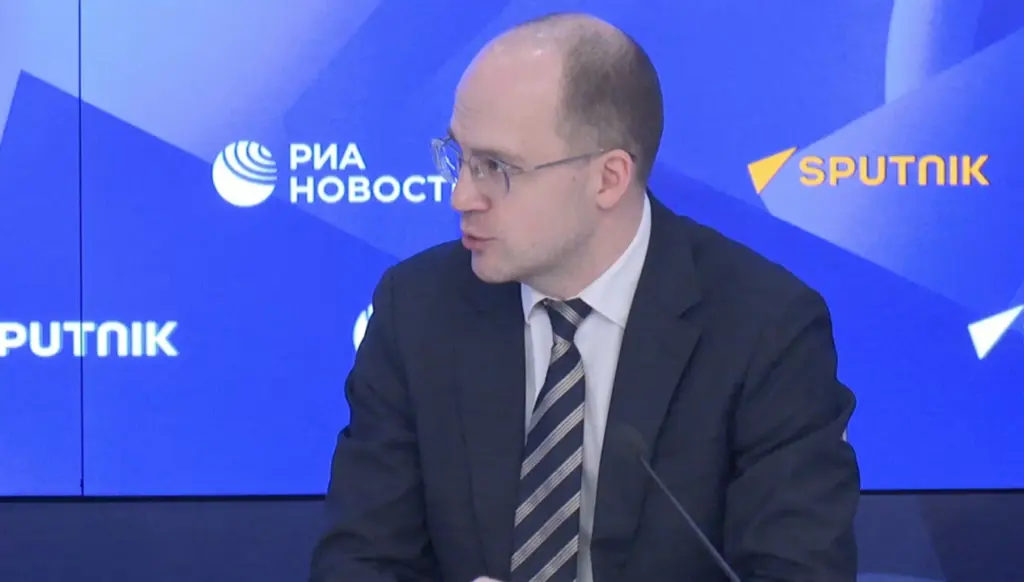
In the run-up to Arctic Day, the Director General of the PORA Expert Center, Maksim Dankin, assessed the results of the social and economic development of the Russian Arctic over the past five years.
Speaking at the round table devoted to the strategic priorities for the development of the Russian Arctic Zone of Russia he recalled that in 2020, presidential decrees approved two fundamental documents – the Fundamentals of State Policy in the Arctic and the Strategy for the Development of the Arctic Zone and Ensuring National Security. Based on these, a unified action plan with specific targets was adopted.
According to Dankin, results in the short and medium term must be assessed by whether these established indicators are achieved.
«Fourteen indicators were set. It’s always important, when discussing the outcome of any work, to base it on the indicators – whether we achieved them or not. Most of the indicators were indeed met, and some were significantly exceeded,»
- he emphasised
While indicators demonstrate progress, they reflect tangible transformations occurring within the region. Dankin highlighted a shift in migration patterns as a significant development. He noted that, prior to the implementation of Arctic policies, migration trends were negative. By 2025, the end of the first stage of policy enactment, these trends reversed and became positive. This achievement underscores the effectiveness of the policies implemented in the Arctic region.
Discussing investment support mechanisms, the expert reminded that the Russian Arctic is home to the world’s largest special economic zone and is developing territories of advanced development.
According to an expert, a total of 1,096 new state-supported projects have been initiated. These projects are projected to attract 2.7 trillion rubles in investments, with over 900 billion rubles already invested. Furthermore, 358 of these projects have been successfully launched, resulting in the creation of over 21,000 jobs.
16 federal laws affecting the socio-economic situation of the Arctic zone regions were adopted over five years.
«Today, the Arctic contributes 6.2 percent of our country’s GDP and over 10 percent of its exports. The revenues of the Arctic budgets of the Russian Federation subjects have grown by 69% over these 5 years, reaching 1.5 trillion rubles, and the average salary has increased by 54%,»
- the expert noted
At the same time, he emphasised that some indicators were not fully achieved due to objective reasons related to the changing international situation, the pandemic, and sanctions pressure. However, the overall dynamics of the Arctic region remain stable, forming the basis for new development projects and the establishment of the Arctic as a key economic and political outpost of the country.
Authors

Оthers Our comments
Yakutia Is Supposed to Remain a Donor of Oxygen for the Global Community
Six regions of Russia, including the Arkhangelsk Oblast, Yakutia, and Komi (which are partially located in the Russian Arctic Zone), must become carbon neutral starting in 2026. This scales up the experience of Sakhalin, which managed to achieve a balance between greenhouse gas emissions and absorption in 2025. Commenting is Mikhail Cherosov, Director of the...
read more
Maksim Dankin: The Future of the Arctic is Being Decided in Greenland
January 22, 2026 The Greenland case transcends a local storyline and becomes a focal point where key questions about the Arctic’s future converge. US President Donald Trump has repeatedly and in various contexts stated his intention to establish control over Greenland. Why the US wants to take the island, and how this situation could benefit...
read more