
Yakutia Is Supposed to Remain a Donor of Oxygen for the Global Community
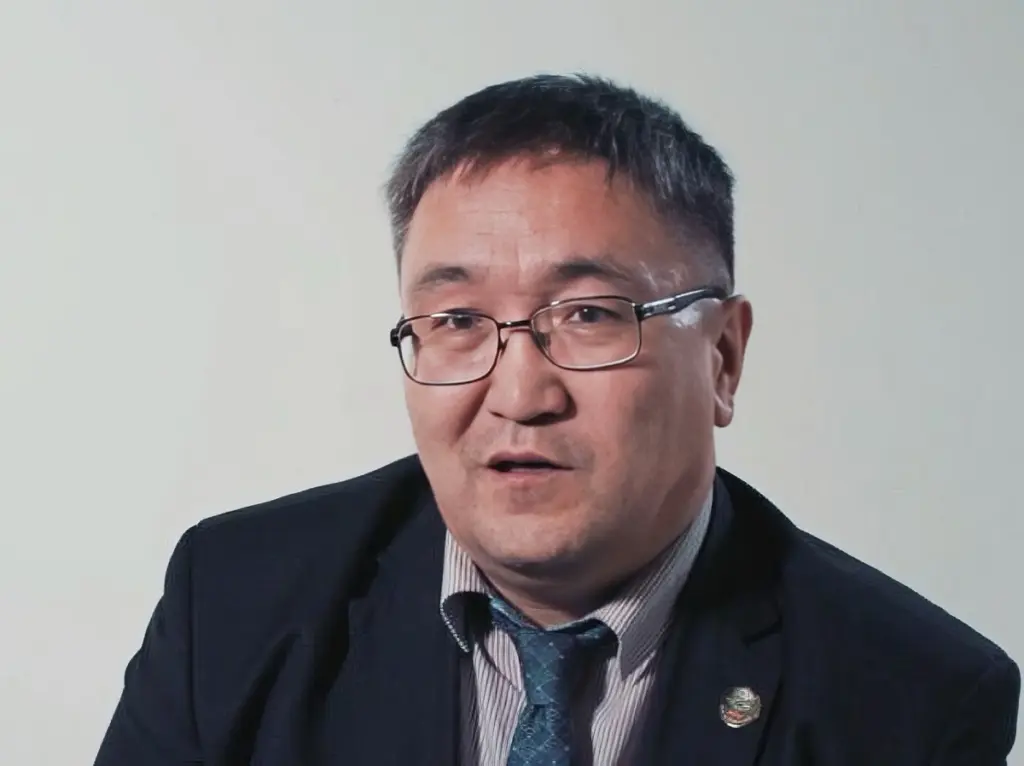
Six regions of Russia, including the Arkhangelsk Oblast, Yakutia, and Komi (which are partially located in the Russian Arctic Zone), must become carbon neutral starting in 2026. This scales up the experience of Sakhalin, which managed to achieve a balance between greenhouse gas emissions and absorption in 2025. Commenting is Mikhail Cherosov, Director of the Yakut Scientific Research Institute of Agriculture – a separate division of the Federal Research Centre «Yakut Scientific Centre of the Siberian Branch of the Russian Academy of Sciences», Doctor of Agricultural Sciences.
February 24, 2026
In Yakutia, with funding from the federal budget provided by the Ministry of Science and Higher Education of the Russian Federation, as well as through various grants (especially international ones), enormous scientific work has been carried out over the past 30–35 years to study the carbon dioxide cycle across different natural zones of Yakutia.
There is a whole network of climate research stations, united into the SakhaFlux network, overseen by the Institute for Biological Problems of the Cryolithozone SB RAS (part of the FRC YSC SB RAS). This network has made it possible to study and identify the emission of various gases, and the data obtained can be considered standard and representative for various landscapes and natural zones of Northern Eurasia. These studies are widely recognized in both global and Russian science.
«It can be argued, considering the vast territory of the republic – over 3.1 million square kilometers, a large part of which is covered by forest communities (although not as productive as those in the south of the country), as well as the relative lack of human disturbance of nature – that Yakutia has been and will remain a donor of oxygen for the global community. Greenhouse gas emissions from human activities will be completely balanced by their absorption in nature – and moreover, absorption will exceed emissions»
- expert noted
The experience of Sakhalin will certainly be useful, as such «donorship» will become even more significant. Therefore, conducting research on the balance of greenhouse and other gases in nature, as well as practical work, will be very important for ecology as a whole.
The Project Office for Arctic Development does not always share the opinions expressed by experts.
For media representatives: we welcome republication of comments provided that an active link to the original source and the columnist’s status as an expert of the Arctic Development Project Office are indicated.
Оthers Our comments
How Yakutia Can Achieve Carbon Neutrality
The Sakhalin experiment proved the effectiveness of certain approaches. Now, its results need to be adapted for a vast region, comparable in area to India or Europe, with its unique ecosystems and economic structure. February 24, 2026 Russia has mandated that six of its regions, encompassing territories of Arkhangelsk region, Yakutia, and Komi, to achieve...
read more
Yulia Alferova. The Creative Arctic: How to Turn the Uniqueness of a Territory into an Economic Resource
Which areas of the Creative Economy Development Strategy require special attention in the Arctic regions, and why a universal model for the entire Arctic does not exist Russia’s current Creative Economy Development Strategy through 2036 sets a framework for the regions: by 2030, the contribution of creative industries to the country’s economy must grow to...
read more