
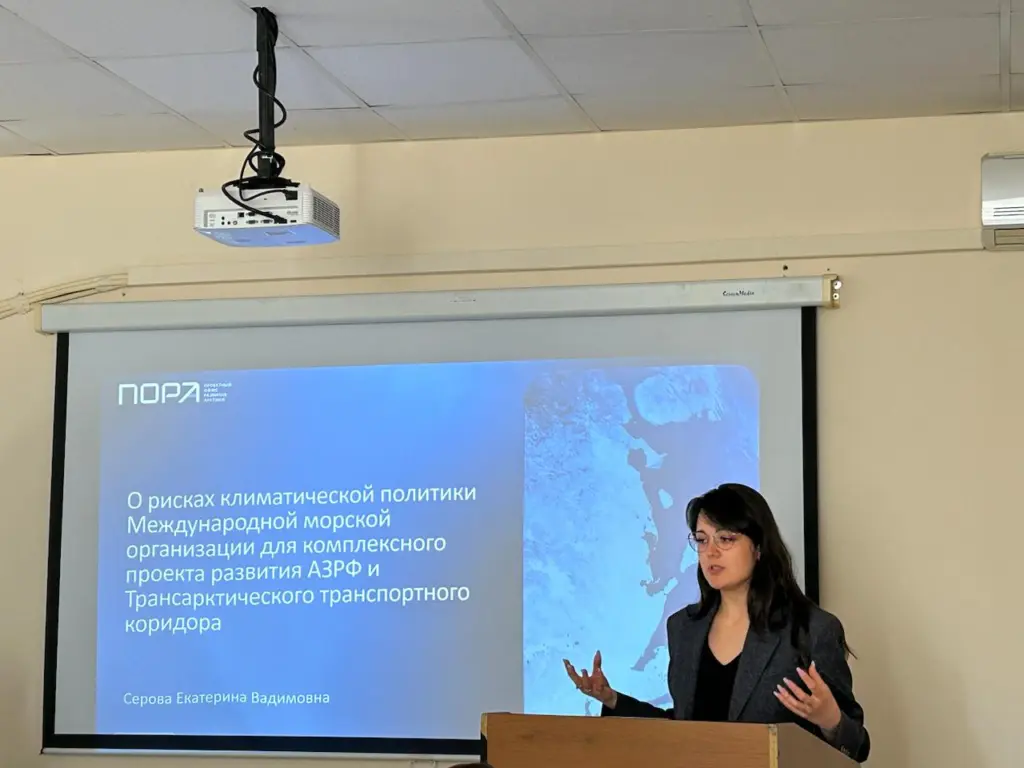
The expert center PORA assessed the risks of IMO climate policy for the development of the Transit Transport Corridor at an international legal conference in Saint Petersburg
April 28, 2026
On April 27, 2026, the North-West Institute of Management of RANEPA hosted an international scientific conference «International Legal Problems of the Arctic: History and Modernity,» which brought together leading experts from Russia and Asia-Pacific countries in the fields of legal regulation of maritime commercial shipping, issues of Russian-American relations concerning the delimitation of maritime spaces and the continental shelf, Russia’s participation in the rule-making activities of UN institutions and specialized committees on marine environment protection, and research into the specifics of working with non-Arctic countries among Russia’s partners in East and Southeast Asia that demonstrate a readiness for cooperation in the Arctic.
The conference coincided with the opening of the 84th session of the Marine Environment Protection Committee of the International Maritime Organization (IMO) in London – a global body whose mission is to create a universally enforceable regulatory framework for the shipping industry.
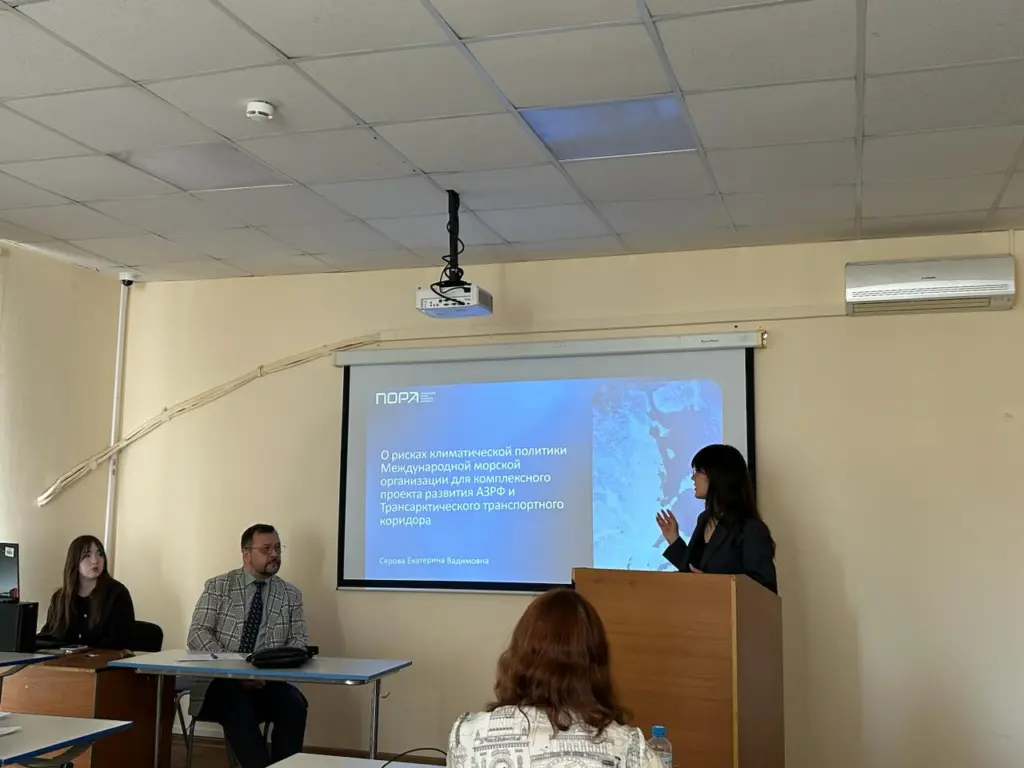
«At the IMO platform, Russia consistently advocates for moving away from unjustified and unrealistic goals, given the shipping industry’s modest contribution to total anthropogenic emissions. Russia opposes the adoption of requirements that are politicized in nature and aimed at creating additional obstacles to the progressive development of Arctic shipping and the transformation of the Northern Sea Route into an international transit corridor,» said Ekaterina Serova.
Currently, the IMO is developing new international standards for the decarbonization of commercial shipping. In particular, the adoption of the «IMO Net-Zero Framework» zero-emission program is under discussion, which involves introducing mandatory levies on greenhouse gas emissions from marine vessels into a dedicated IMO fund, the expert noted.
Describing the divergent positions of member states on the stated agenda, the expert emphasized that the new market mechanism for collecting and distributing emission revenues is not acceptable to Russia, Saudi Arabia, the UAE, Argentina, as well as Japan and the United States. According to preliminary estimates, if approved, its annual revenue would amount to $10–12 billion USD.
In conclusion, it was noted that Russian oil and gas companies have begun to more actively use fuel with a lower carbon footprint in their extraction projects, demonstrating the integration of Russian business into the global environmental agenda. The environmental initiative itself, under otherwise favorable conditions, has the potential to provide a stable market for sales.
Authors

Оthers Our news
PORA Experts Joined MGIMO Meeting with Students
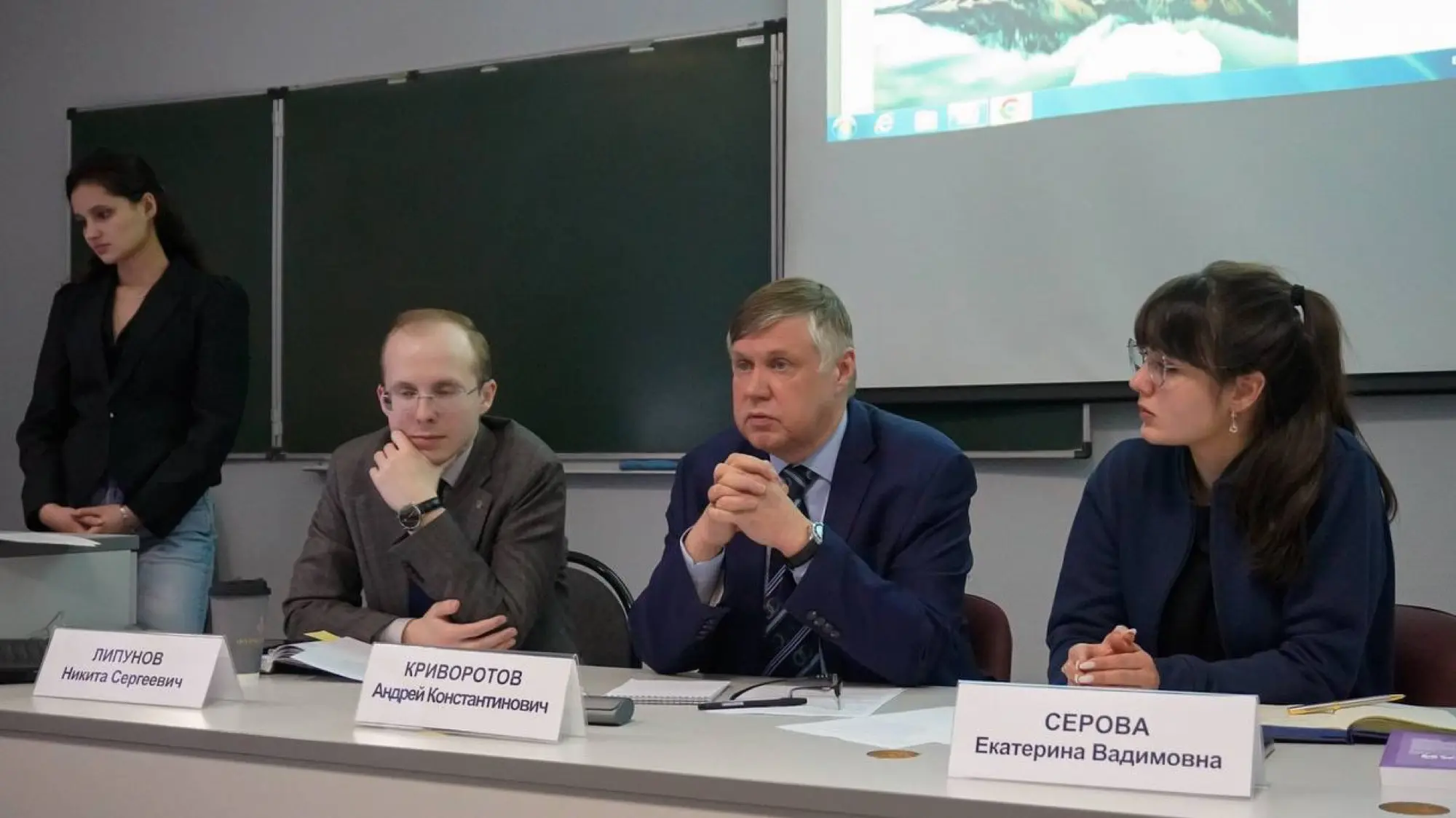
March 04, 2026 On March 3, 2026, Ekaterina Serova, Director of the Department International Affairs at the PORA Expert Center, met with students of the International Institute of Energy Policy and Diplomacy at MGIMO University. During the meeting of the Arctic student club, participants examined the historical-political, legal, and economic aspects of Greenlandic autonomy, the...
read more
PORA and China’s Leading State Laboratory Launch Platform for Experience Exchange in Permafrost Construction
The parties will promote research into advanced scientific developments to protect transport infrastructure under conditions of thawing permafrost PORA’s Expert Center and China’s State Key Laboratory of Durability and Safety of Road Infrastructure in Special Conditions have signed a cooperation agreement in the field of permafrost construction. The parties have agreed to develop expert dialogue,...
read more