
Key limitations and development prospects of Arctic tourism discussed by experts at PORА platform
Participants of the discussion club of the Project Office for Arctic Development proposed new approaches to the development of tourism infrastructure, personnel training and state support for the industry.

A meeting of the discussion club on the topic: «Arctic Tourism: Possible Limitations and Development Prospects under Current Economic Policy» was held on October 27, 2026 in an online format. The organizer was the PORА Expert Center. Participants discussed transport, infrastructure, economic and environmental barriers hindering the development of tourism in the Russian Arctic, as well as possible mechanisms for overcoming them.
Alexandra Nikanorova, Candidate of Geological and Mineralogical Sciences, Associate Professor, Deputy Head of the Department of Recreational Geography and Tourism of the Faculty of Geography of Lomonosov Moscow State University, drew attention to long-term risks for the industry. According to her, permafrost degradation, changing ice conditions and growing unpredictability of weather conditions require a revision of approaches to the construction of tourism facilities and route planning. At the same time, climate adaptation mechanisms are not yet sufficiently integrated into tourism business practice.
Olga Gorelova, Chair of the Board of the Arkhangelsk Regional Tourism Association (ARTA), named personnel shortages and insufficient support for small businesses as the main barriers to the development of the industry. She emphasized that tourism enterprises have to compete for specialists with industrial companies, and educational programs do not always meet market needs. As a successful example of personnel training, Gorelova cited the ARTA educational project, under which about 300 guides have been trained. She paid separate attention to the need to improve tax and financial measures to support tourism enterprises amid rising costs and declining consumer demand.
Alexey Tsykarev, a PORА expert, advisor to the President of the Association of Indigenous Peoples of the North, Siberia and the Far East (KMNS SiDV), Chairman of the Center for Support of Indigenous Peoples and Public Diplomacy «Young Karelia,» examined the role of indigenous peoples in the development of ethnographic tourism. He emphasized the need to protect traditional culture from distortions and disrespectful commercial use. Among the proposed measures, the expert named the development of voluntary standards for responsible tourism with the participation of indigenous peoples themselves, support for tourism enterprises owned by them, improvement of grant mechanisms and expansion of educational programs.
Veronika Tarbaeva, Doctor of Biological Sciences, Professor, Chair of the Commission on Agro-Industrial Complex and Ecology of the Public Chamber of Leningrad Oblast, a PORА expert, examined the prospects for ecological tourism in specially protected natural areas. Among the main problems, she identified insufficient development of routes, personnel shortages, seasonality and weak promotion of tourism products. Using the examples of the national parks «Russian Arctic» and «Yugyd Va,» the expert demonstrated the opportunities for developing expeditionary and scientific-educational tourism, provided that natural complexes are preserved and the interests of local residents are taken into account.
Tatiana Krasnikova, Candidate of Economic Sciences, Executive Director of LLC «Scientific Developments,» presented the prospects for tourism development in Dikson, drawing on the experience of developing a master plan for the settlement. She noted that extreme weather conditions, difficulties with air communication, the absence of hotel infrastructure and high operating costs require an integrated approach. In her opinion, tourism facilities must be designed with consideration for year-round operation, the needs of business travelers and climate risks. If the relevant measures are implemented, the tourist flow to Dikson could grow from the current approximately 300 to 3,000 people per year within a decade.
Elena Lavrenova, a practitioner in the field of ecological tourism who participated in the creation of the «Taiga» school of ecological tourism, spoke about the need to professionalize the tourism business. She noted that the development of ecological tourism is constrained by insufficient coordination between tour operators, the scientific community and specially protected natural areas. Among the proposed solutions were the organization of practice-oriented training for entrepreneurs, the creation of professional communities and the legislative consolidation of the concept of ecological tourism.
Valeria Gulimova, a PORА expert, member of the Council on the Development of the Far East, the Arctic and Antarctica under the Federation Council, member of the State Council Commission on Environmental Well-Being, advocated for the allocation of Arctic tourism as an independent area of state support. She emphasized that existing mechanisms are mainly oriented toward territories with relatively favorable conditions, whereas the most hard-to-reach areas require special attention. The expert proposed considering tourism development not only from the point of view of commercial payback, but also as a tool for preserving human potential, creating jobs and enhancing the sustainability of Arctic settlements.
Alexander Zaletsky, a member of the PORА Expert Council, lecturer at the Department of Land Management and Cadastre of the Moscow State University of Geodesy and Cartography (MIIGAiK), devoted his presentation to the use of unmanned aircraft systems in Arctic tourism. He spoke about the possibilities of aerial photography of natural sites and expedition routes, as well as the related limitations. Particular attention was paid to legal requirements, rules for transporting batteries, risks of electronic jamming and the need to adapt drones to low temperatures.
Anatoly Fedorov, a member of the PORА Expert Council, builder, designer and patent holder, presented technology for quickly erected mobile buildings for Arctic territories. According to him, such energy-efficient structures make it possible to create year-round tourism infrastructure in hard-to-reach areas and, if necessary, relocate facilities to other sites.
Vyacheslav Maracha, Candidate of Philosophical Sciences, Associate Professor at the Institute of Social Sciences of RANEPA, the Financial University and MEPhI, highlighted the prospects for expeditionary, cruise, ethnographic, industrial and scientific-educational tourism. Among the necessary support measures, he named the development of transport and energy infrastructure, compensation for northern cost increases and an individual approach to tourism projects.
Summing up the meeting, the moderator of the discussion, Alexander Vorotnikov, coordinator of the PORА Expert Council, Associate Professor at the Institute of Social Sciences of the Presidential Academy, noted that the development of Arctic tourism requires not only financial investments, but also systematic personnel training, infrastructure improvement and the building of effective interaction between the state and business. In particular, he proposed more actively using public-private partnership mechanisms and offset contracts for organizing energy supply to remote tourism facilities and producing necessary equipment and gear. In his opinion, such instruments can contribute to the development of tourism infrastructure taking into account the specifics of individual Arctic territories.
Оthers Our news

Maria Lagutina: The Arctic Has Become a Prestigious Arena of Global Influence for BRICS Countries
Non-Arctic members of the grouping are actively engaging with the Arctic agenda through climate and scientific cooperation, while collaboration is advancing through depoliticized research projects and working groups May 15, 2026 According to Maria Lagutina, the main challenge facing Arctic cooperation within BRICS stems from the differing «polar identities» of its member states. Russia is...
read more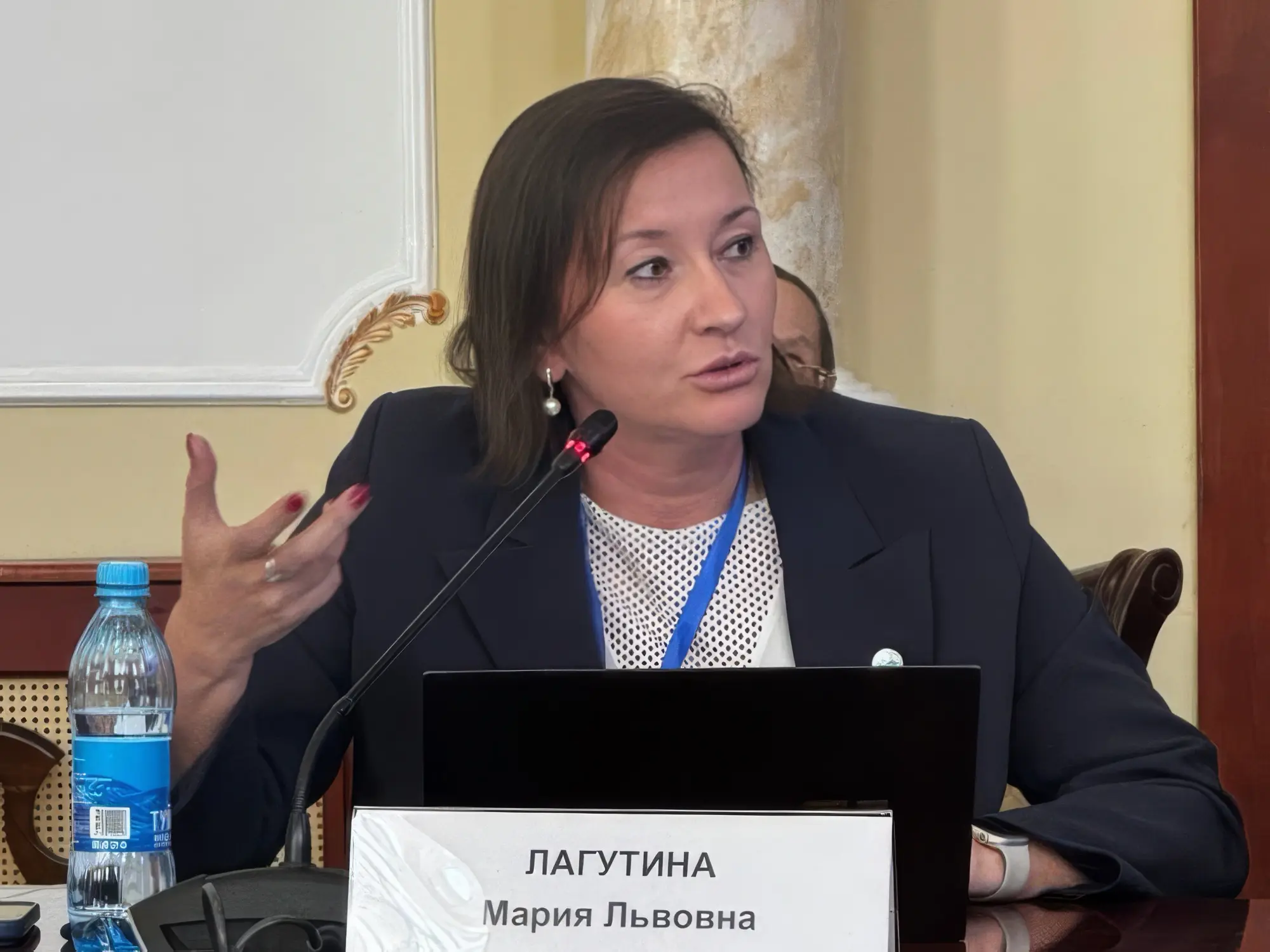
Northern Forum Could Become a Project Platform for Russia-China Arctic Cooperation
Building a potential model for the participation of Chinese partners can be based on the principle of ‘membership through a project-based agenda The Northern Forum could fill an existing institutional gap in Russia-China Arctic cooperation by providing a permanent platform for direct interaction between regions, said Maria Lagutina, editor-in-chief of Arctic 2035 Journal and representative...
read more