
PORA Study Identifies Key Factors Positively Influencing Arctic Demographics
April 3, 2026
PORA Expert Center has published a report titled: «Quality of Life, Migration Intentions, and Perceptions of Public Policy in the Arctic.» The report analyzes the results of a sociological survey conducted in 2024. It involved more than 10,000 respondents from regions within the Arctic zone of the Russian Federation.
Main findings:
• The Arctic has a stable demographic core represented by several population categories. The leaders in optimistic attitudes are young people and migrants from the «mainland» who have lived in the Arctic zone of the Russian Federation for less than one year. The study showed that men are more inclined to continue living in the Far North than women. Meanwhile, the anchor category of residents in the Polar region is families with one child: among this group, the highest territorial loyalty to their region of residence was recorded.
• Quality of life is an important tool for retaining people in the North. The existing risks of population outflow from the Arctic region are associated not only with the climate or remoteness of northern regions but also with specific, solvable problems: accessibility of healthcare, housing, and working conditions. The Arctic needs a unified social standard that sets a common benchmark for quality of life across all territories and serves as a guide for targeted support of the most vulnerable groups.
• The financial well-being of a region significantly affects the migration intentions of its residents. The study revealed a correlation between the budget capacity of subjects in the Arctic region and the migration stability of families with children. This means that launching large-scale projects in the Polar region will work not only for the economy but also for retaining the population.
Maxim Tsygankov, Head of the PORA Analytical Department:
«The study presented to your attention is notable for its scale. Our respondents comprised approximately 0.4% of all residents of the Arctic zone of the Russian Federation, which indicates the significant relevance of the results obtained — and the conclusions based on them. The PORA team hopes that our report will help government, business, and analytical centers monitor social and demographic situation across the Russian Arctic Zone from a new angle.»
The report is available for download here.
Further information about the study.
Оthers Our news
Over 650 People Apply for BRICS Project Lab Arctic 2.0
February 11, 2026 The application period for the BRICS Project Lab Arctic 2.0 youth project laboratory has closed. A total of 656 applications were received, confirming high interest in the project among students and young professionals from Russia and other countries. The competition’s geography spanned over 20 countries, including Belarus, Egypt, India, Indonesia, Iran, Kazakhstan,...
read more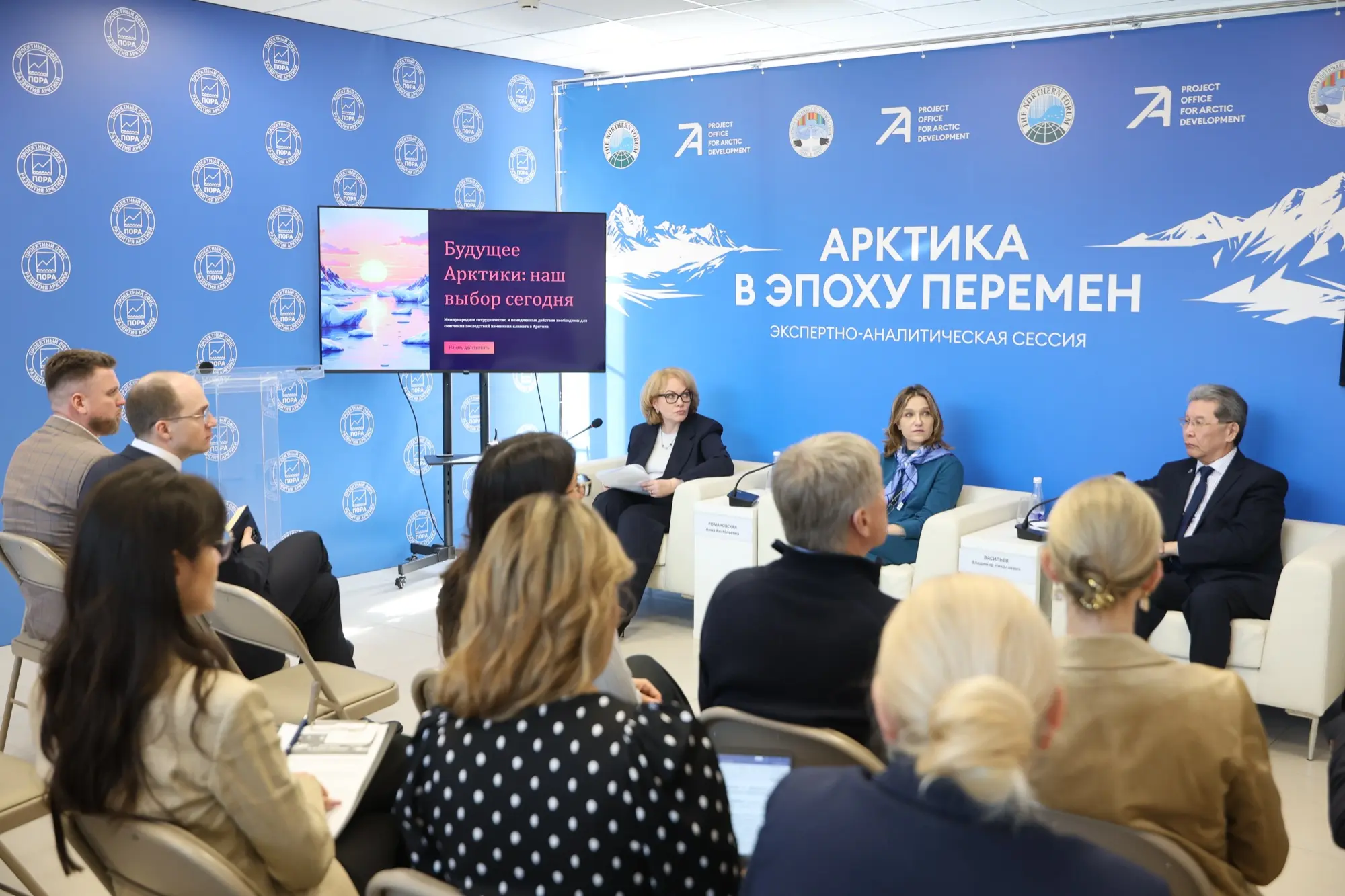
Experts Discuss Climate Change in the Arctic and Preparation for COP31
Climate Change Costs Yakutia 2 Billion Rubles a Year March 14, 2026 At the conference «The Arctic in an Era of Change,» co-organized by PORA and the Northern Forum, a session was held titled «Climate Change in the Arctic. Challenges and Adaptation Measures. A Look Ahead to COP31 (the UN Climate Change Conference).» The moderator...
read more