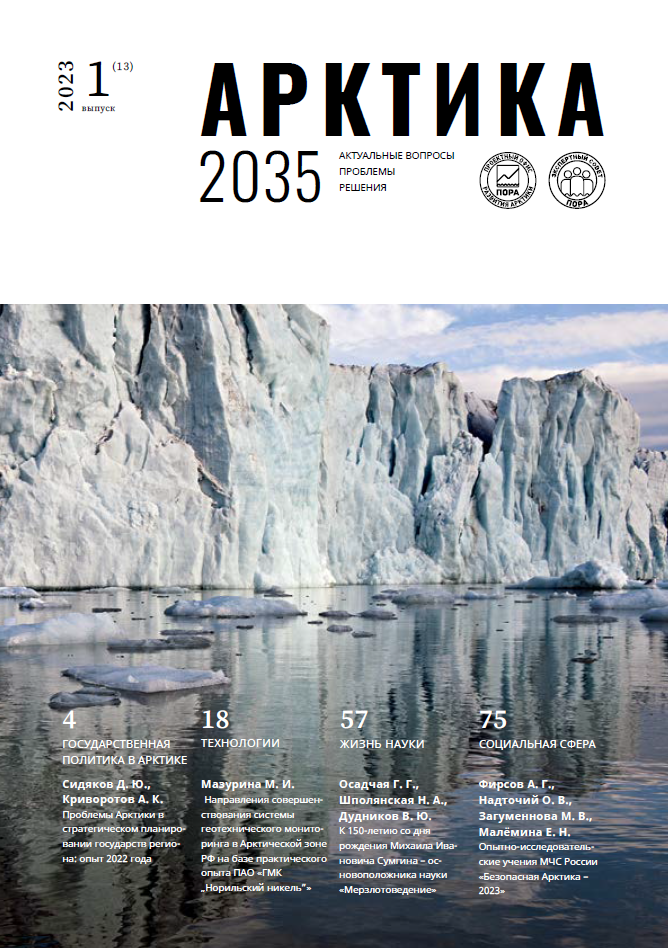
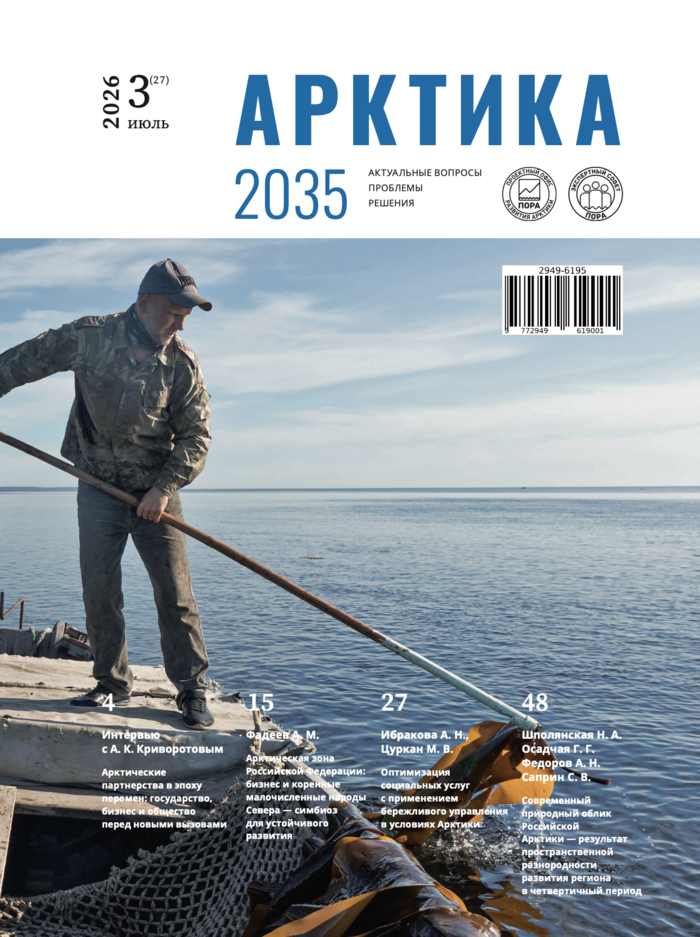
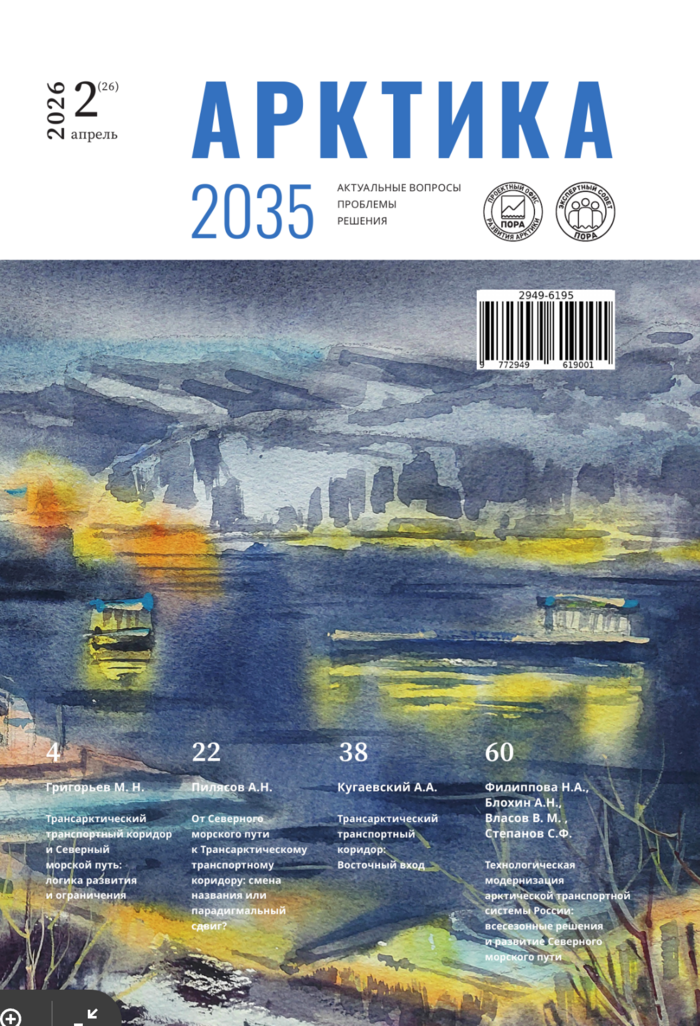
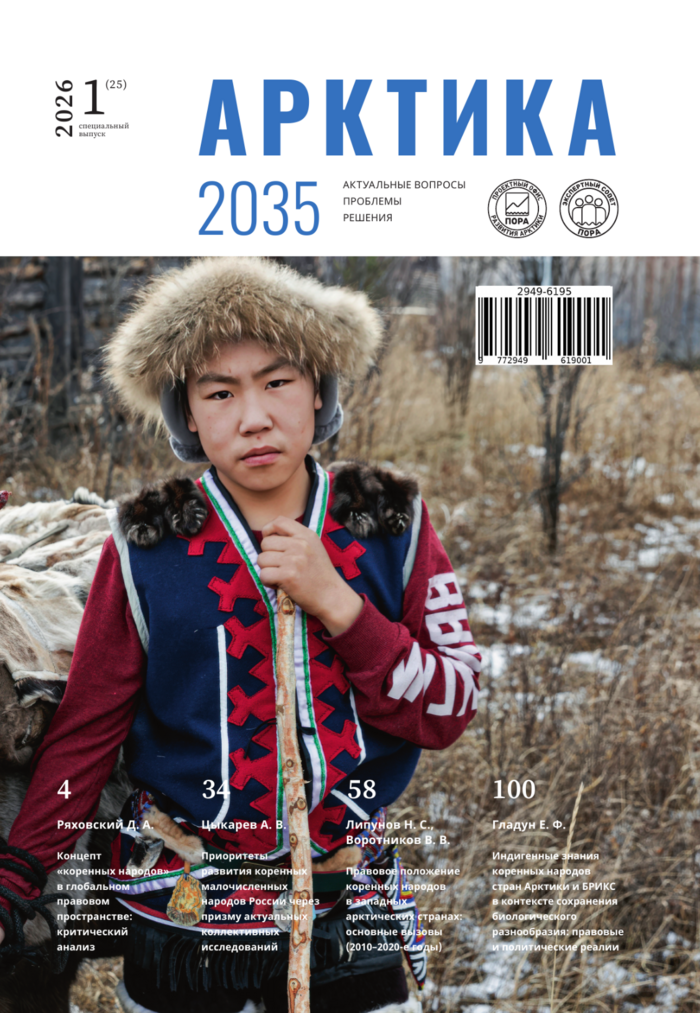
This issue’s foundation consists of articles dedicated to science and technology. In today’s world, it is science that has become the primary driver of development — especially when it comes to such unique and interesting territories as the Arctic.
The article reviews the recent Danish Foreign and Security Policy Strategy (adopted in January 2022) and the U.S. National Strategy for the Arctic Region (October 2022). We demonstrate that Denmark strives to promote its national interests, including notably an active positioning in the Arctic, under rather rigid domestic and foreign policy constraints. It faces, on the one hand, rise of secessionist moods in the Greenlandic autonomy and, on the other, a growing U.S. – China rivalry over influence on Greenland. Under the circumstances, in its new strategy Denmark declares a desire to develop broad regional cooperation within the Arctic Council, while also highlighting the importance of its increased defense capabilities in the North as well as maintaining the alliance with the U.S. and NATO. The Atlantic solidarity is clearly predominant: under the increased international tensions in 2022, Denmark stalled the Arctic Council activities together with other Western nations. Prospects of Greenlandic economic development and of adopting the expected new edition of the national Arctic strategy remain unclear.
President Joe Biden’s Administration in its new American Arctic strategy largely follows the path set by Barak Obama in his first version of 2013, with the priority attained to national security and foreign policy interests, ensuring U.S. leadership in the region. But the overall tone of the strategy is much more offensive, stressing confrontation with Russia and China. Besides, it reinforces the Arctic policy with two new pillars: the climate and, rather strange for the U.S. Democrats, Alaskan economic development (although still within a rather selective and unsure approach).
Both documents share a common negative trend of an outspoken desire to involve NATO in the Arctic, while excluding Russia from resolving the common regional problems. Russia will have to reflect this in implementing its own Arctic strategy.
In recent years, carbon trading systems have been actively developing, created as a result of reducing greenhouse gas emissions through the implementation of climate projects. The article considers the relevance of this issue to achieve carbon neutrality of the Arctic region of the Russian Federation.
IPCC’s and Roshydromet’s climate forecasts consistently indicate trend for climate warming. Most rapid rates of warming are observed in Arctic and the Taimyr Peninsula in particular. Climate warming has a negative impact on the state of permafrost, reducing its bearing capacity, causing risks for safety of population, industrial and infrastructure facilities, and ecosystems in Arctic. Aware of these risks, PJSC “MMC “Norilsk Nickel” is undertaking active efforts to establish geotechnical monitoring system for buildings and structures under the company’s area of responsibility. Nornickel’s experience with launching and exploiting such tool for managing physical risks related to climate change has allowed the company to identify a number of system-wide bottlenecks that are critical to be eliminated quickly in order to ensure a reliable risk management practices and ability to make high-quality management decisions based on real-time big data analysis in order to track condition of at least critical objects in Arctic.
Features of mesotidal estuaries of the rivers in the Arctic zone of Russia during the conditions of summer low water (on the example of the Indiga River in the Barents Sea)
The features of the marginal filter of the mesotidal mouth of the river in the western sector of the Russian Arctic are considered on the example of the estuary Indiga in the Barents Sea. The length of the zone of mixing of sea and river waters here reaches 30 km. It was revealed that in the presence of an open shallow estuarine seashore of the river in the estuary in the summer low water, only gravity and coagulation-sorption stages are located. The biological stage is displaced beyond the estuarine object into the sea, where a decrease in the velocities of tidal currents and a weakening of the processes of hydrodynamic resuspension of bottom sediments are observed. At the same time, within the estuary, increased biological productivity is observed in lagoon lakes located on coastal water meadows. There is a high biodiversity of halophyte vegetation and avifauna. These estuarine areas are the most vulnerable zones in relation to accidental oil spills, which must be taken into account when developing environmental measures for the projected seaport on the border of the Indiga and Cheshskaya bays.
The paper represents the results of bird surveys of island forests located in the tundra zone, namely fragments of forest habitats surrounded by tundra biocenoses, in the area of the Drozdovka Bay of the Kola Peninsula in June 2022. Such island forests have turned out to be attractive habitats for a group of boreal bird species forming there quite dense settlements.
Repeated survey of the Arctic fox (Vulpes lagopus) dens described in 1933 on the Kola Peninsula (Murmansk region, Russia) using remote sensing approaches
The main milestones in the life and creative path of Sumgin Mikhail Ivanovich are briefly outlined. M. I. Sumgin made a fundamental contribution to the formation of permafrost as an independent branch of knowledge, is the world’s first author of a monograph and a textbook on permafrost, initiated the creation of specialized scientific organizations and expeditions for the comprehensive study of permafrost.
USING THE IUCN RED LIST CRITERIA IN THE RED BOOK OF THE RUSSIAN FEDERATION ARCTIC ZONE AS A NATIONAL COMPONENT OF ARCTIC CIRCUMPOLAR FLORA AND FAUNA RED BOOK
В статье предлагается использование критериев Красного списка МСОП в Красной книге Арктической зоны Российской Федерации как национального компонента Красной книги циркумполярной флоры и фауны Арктики параллельно с традиционно используемыми критериями. Создание Красной книги циркумполярной флоры и фауны Арктики предлагается осуществлять в рамках рабочей группы по сохранению арктической флоры и фауны (CAFF) Арктического совета. Красная книга Арктической зоны Российской Федерации как национальный компонент международного проекта станет вкладом в него Российской Федерации.
Family policy of the Russian Arctic in the conditions of a Special Military Operation: how military families are supported in the Arctic (on the example of the Murmansk Region)
State measures to support families with children in the Russian Federation are comprehensively developed and voluminous. At the state level, a large number of measures to support families of various categories are being implemented. In a period of non-standard external and internal political situation, the state is especially attentive to citizens who perform tasks in the zone of the Special Military Operation (SMO). Support for the families of military personnel, mobilized and participants in the SMO is carried out not only at the national level, but also at the regional level. This paper considers the innovative measures of social support for families on the example of the Murmansk region.
Among the important tasks for Russia in the Arctic is the development of the sphere of prevention and elimination of emergency situations. Russia is actively working to identify and analyze the risks of natural and manmade emergencies, develop ways to prevent them, and improve measures to protect the population and territories from emergencies and fires. The article discusses the results of the experimental research exercises of the Russian Emergencies Ministry “Safe Arctic - 2023”.
The article discusses the unique position of the Arctic. The Arctic has a huge economic potential combined with unique natural and climatic features. The world’s energy companies have been developing Arctic deposits for several decades in order to have reserve reserves of hydrocarbons by the time the already known oil and gas fields are depleted. At the same time, the geopolitical importance of the Arctic is fixed at the legislative level of states and the combination of this factor with the political and legal uncertainty of the Arctic Ocean makes the Arctic an important region for further study within the oil and gas industry. The issue of the Arctic future, combined with the interest in the energy industry on the scale of the world economy, create prerequisites for various scientific and practical research.