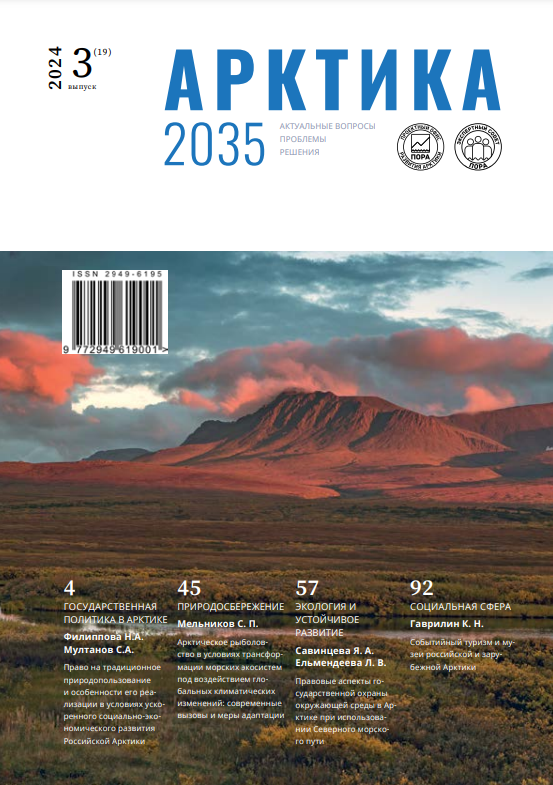
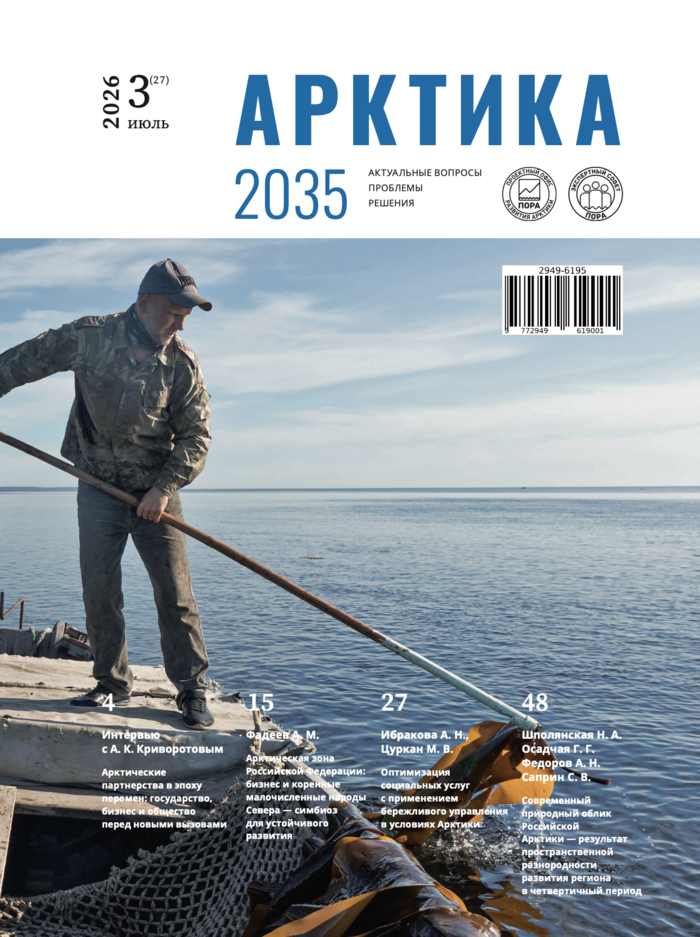
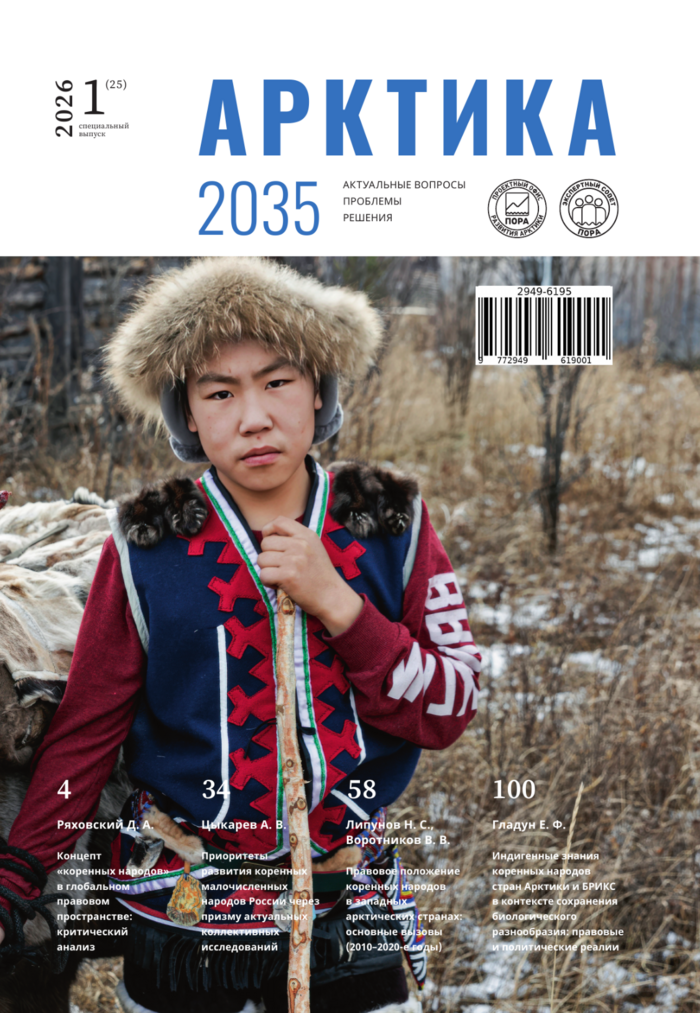
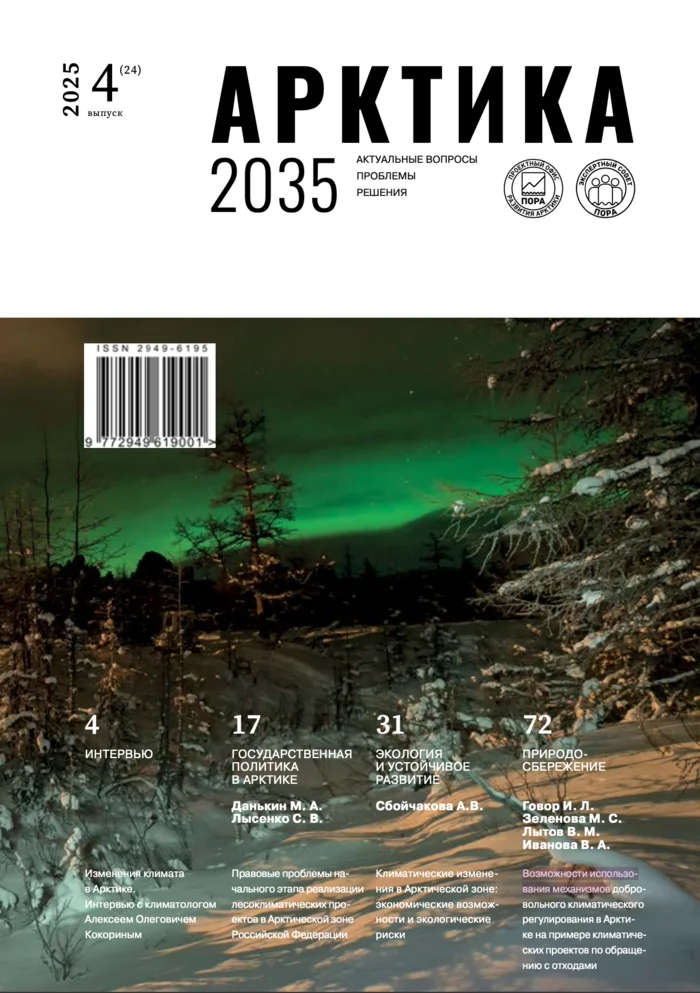
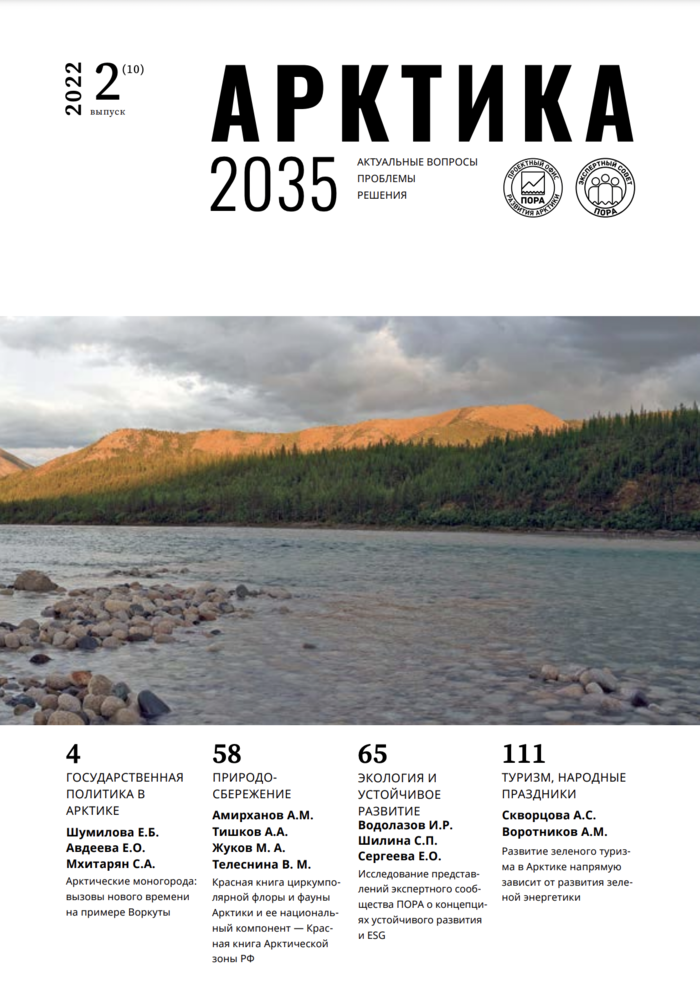
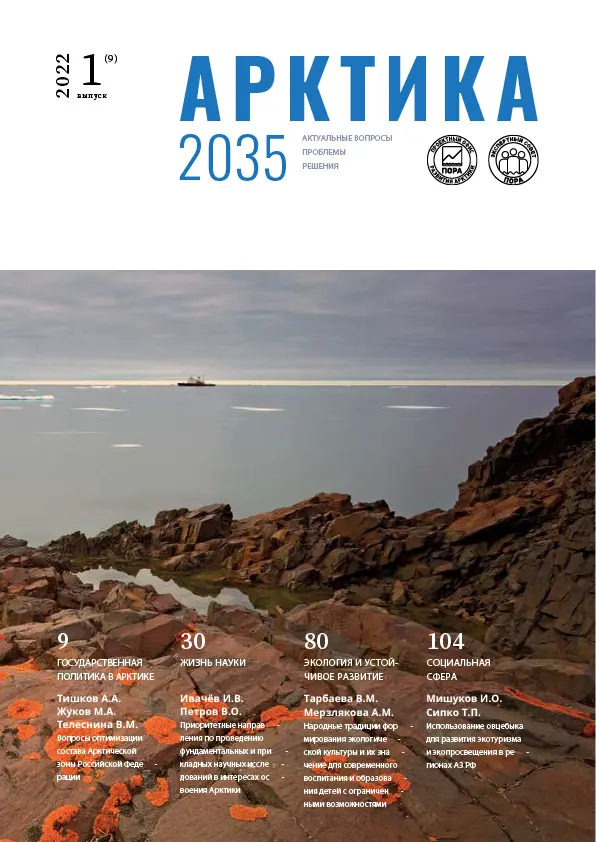
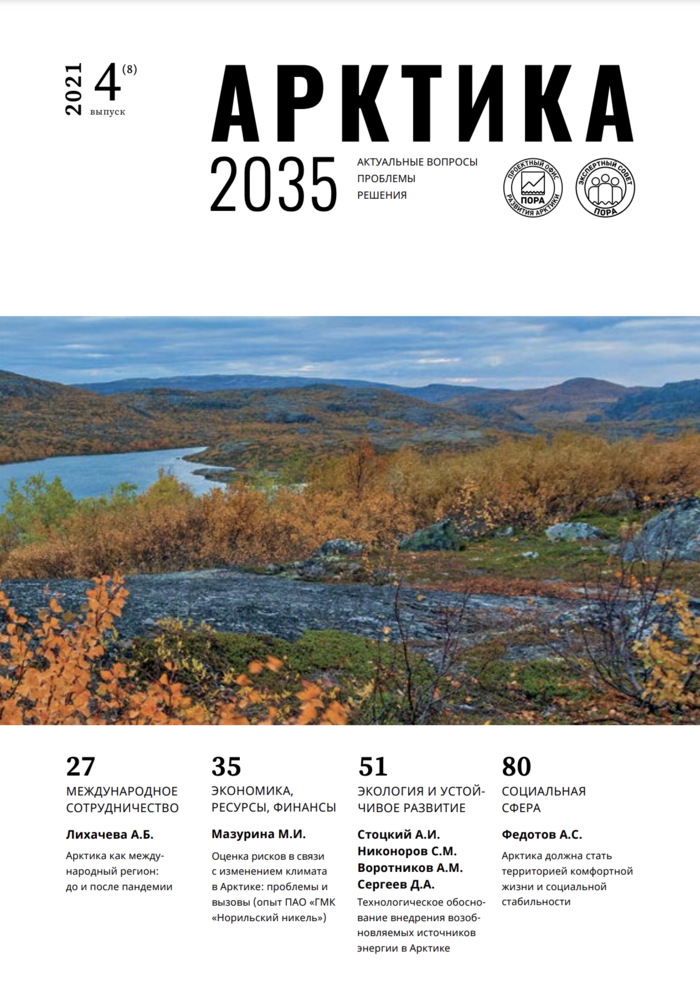
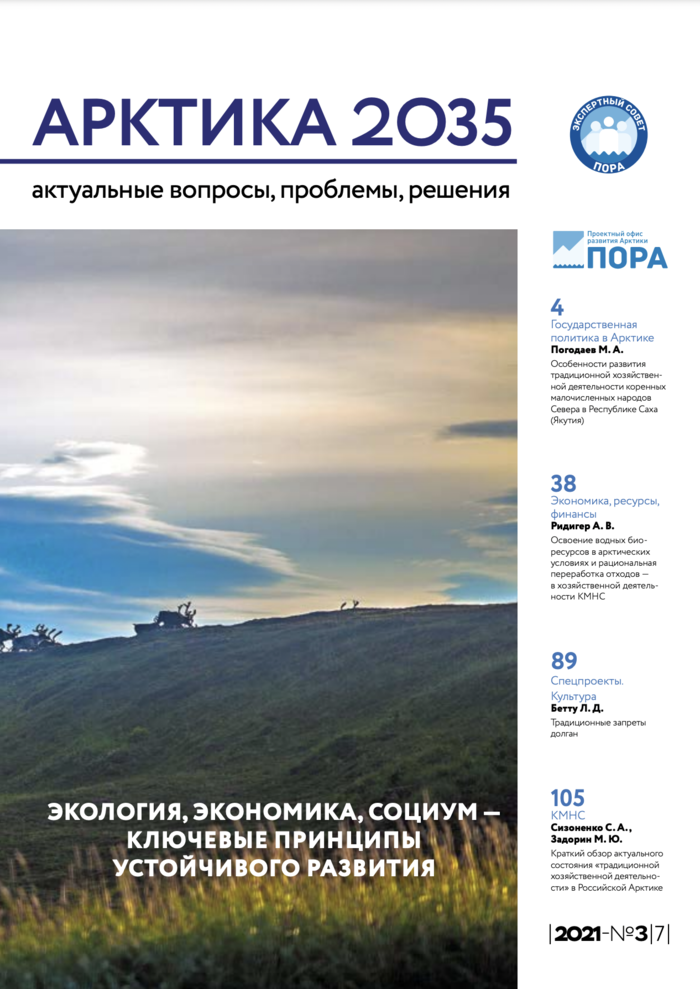
In this issue of the journal, we have sought to select the best articles on Arctic topics for you. Under one cover, we have managed to bring together not only texts that provide highly qualified analysis of rigorous and complex subjects—such as the specifics of implementing the right to traditional nature use amidst the accelerated socio-economic development of the Russian Arctic — but also materials that are undoubtedly useful to a very wide range of readers, including pieces on event tourism and Arctic museums.
THE RIGHT TO TRADITIONAL ENVIRONMENTAL MANAGEMENT AND THE SPECIFICS OF ITSIMPLEMENTATION IN THE CONTEXT OF ACCELERATED SOCIO-ECONOMIC DEVELOPMENT OF THE RUSSIAN ARCTIC
The article reveals the legal aspects of the realization of the right to traditional environmental management of indigenous small-numbered peoples of the Russian Federation, a comparative analysis of places of traditional residence and traditional economicactivity of such peoples, on the one hand, and territories of traditional environmental management, on the other, the legal foundations and features of the realization of the right to traditional nature management of indigenous small-numbered peoples of the North in the Arctic zone of Russia are determined.
The article provides a brief over view of the dissertation research [1] devoted to the problem of spatial organization of the Arctic and northern territories of Russia. The purpose of the work was to develop the principles and provisions of the concept of the settlement system of the northern and Arctic territories on the example of the territory of the Northern Latitudinal Transport Corridor (NSTC). The object of the study was the settlement system of the northern and Arctic territories, including in the zone of the NSTC. The subject of the study is the peculiarities of the organization of the settlement system of the northern and Arctic territories. Research methods include comprehensive territorial and system analysis, classification, typology and experimental design, systematization and structural analysis of data accumulated by international experience in the development of the northern Arctic territories. The theoretical and practical significance is the development of urban planning in the field of development of the northern and Arctic territories. The field of application is the development of state and regional strategic development programs, the preparation of regional and local standards for urban planning and the development of practical urban planning solutions for the conditions of the North and the Arctic.
Due to unfavorable natural conditions, food supply of the northern and arctic territories depends on the import of food products. The need to ensure equalrights to the availability, accessibility, quality and stability of food are provided for in strategic planning documents, including the Doctrine of Food Security of the Russian Federation. According to the Strategy for the Development of the Arctic Zone of the Russian Federation and Ensuring National Security for the Period up to 2035, documents regulating the northern deliveryand mechanisms of it's state support have been adopted. The purpose of this article is to identify key areas for improving the food security system in these areas. The work is based on the analysis of official statistics, the current federal legal framework on food security. The author studies the potential for using quantitative and qualitative parameters of the species composition of trade infrastructure in the context of arctic and rural municipal areas using the example of the northern and arctic region - the Republic of Sakha (Yakutia). The article provides a description of the factors influencing food security in the region. Conclusions are made on the need to expand the range of scientific research in certain areas (including the impact of physical availability of food on the health of the population) in order to improve the regulatory framework. Proposals are made on the priorities of food securityin the country.
ARCTIC FISHERIES IN THE CONTEXT OF TRANSFORMATION OF MARINE ECOSYSTEMS UNDER THE IMPACT OF GLOBAL CLIMATE CHANGE: CURRENT CHALLENGES AND ADAPTATION MEASURES
The analysis of physical and biological processes in the atmosphere and hydrosphere of the Earth during the present period of global climatic change indicates that an intensive transformation of the Arctic marine ecosystems has begun, affecting almost all of it's abiotic and biotic components. The shift of the ranges of a number of boreal and arcto-boreal fish species to high latitudes encourages the formation of a sustainable resource base and promising fishing grounds in the Arctic Ocean. The potential impact of climate change on Arctic fisheries will vary significantly by region and fish population. Along with the observed positive effects of global warming on fisheries development, the risks associated with the high vulnerability of Arctic marine ecosystems are also increasing significantly. Measures to adapt Arctic fisheries to climate impacts and increasing anthropogenic load must take into account the potential interactions between fisheries, the environment and economic activity in the region.
The Arcticis attractive on a global scale as a region with rich reserves of oil, gas and other natural resources. Global warming has increased access to its natural resources. The increased use of the Northern Sea Route poses serious threats to the ecosystems of this region. It is necessary to improve legal mechanisms to minimize potential negative consequences for the environment. The status of the Northern Sea Route causes international disagreements, while the position on freedom of navigation for all countries is put forward. The Northern Sea Route occupiesa key place in the Russian strategy for the development of the Arctic zone. Legal mechanisms for environmental protection that Russia can use will reduce the negative impact of the use of the Northern Sea Route on the environment.
The article presents the results of a study aimed at identifying elements of global sustainable development initiatives adopted by mining companies in the Murmansk region and assessing their impact on local communities. The results show that the local community is a weak link in the “business-region-local community” system in the Arctic. They are not ready (not trained) to solve the problems of transition to sustainable development and to act accordingly. Local interests had not formulated in the perspective of sustainable development as same as the vision of a sustainable future.
The article examines the role of energy service contracts in the development of hard-to-reach territories, especially in the Arctic. A special role is given to the problems of remote areas of Russia, energy production in their territory, their positionon energy service contracts, and technological solutions. The current state of affairs with energy production in these territories is also considered. The prospects for the development of energy service contracts in the Arctic are studied, related to innovative technologies, integration with renewable energy sources, and the development of digital solutions.
The article examines the role of event tourism in the development of the northern regions of Russia and foreign countries, analyzes its impact on the economy, the formation of creative industries and the preservation of the cultural heritage of the regions. It is noteworthy that museums play a key role in this process, turning into centers of attraction for the urban community for organizing workshops and clubs, implementing educational and exhibition projects, as well as holding various cultural events aimed at developing event tourism. Numerous festivals, exhibitions, fairs, music and dance shows, as well as other cultural events not only attract a steady flow of tourists, but also contribute to the development of infrastructure, job creation and strengthening the cultural identity of the regions. Event tourism also helps to form global cultural ties, attracting the attention of international institutions and opening up opportunities for international cooperation.
The paper presents and describes the main risks of Arctic projects, their consequences and mitigation measures. The main Russian projects in the Arctic, their features, risks and risk management are presented.
The development of ESG banking in the Arctic opens up unique prospects for banks, allowing them not only to contribute to the sustainable development of the region, but also to strengthen their market positions, improving their reputation and attracting new customers. The introduction of ERP principles into banking practice will help create more responsible and sustainable financial systems that are ready to adapt to future challenges and support strategic initiatives in the Arctic region. The Arctic needs investment and support, and banks can play a key role in this process, upholding the principles of sustainable development and contributing to the economic and social progress of the region.