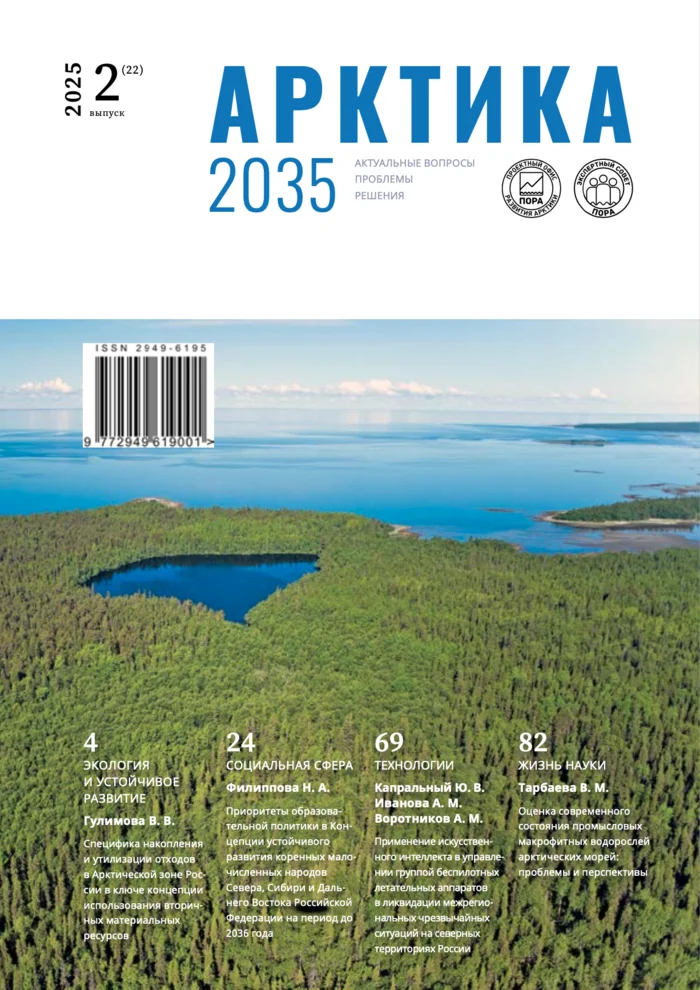
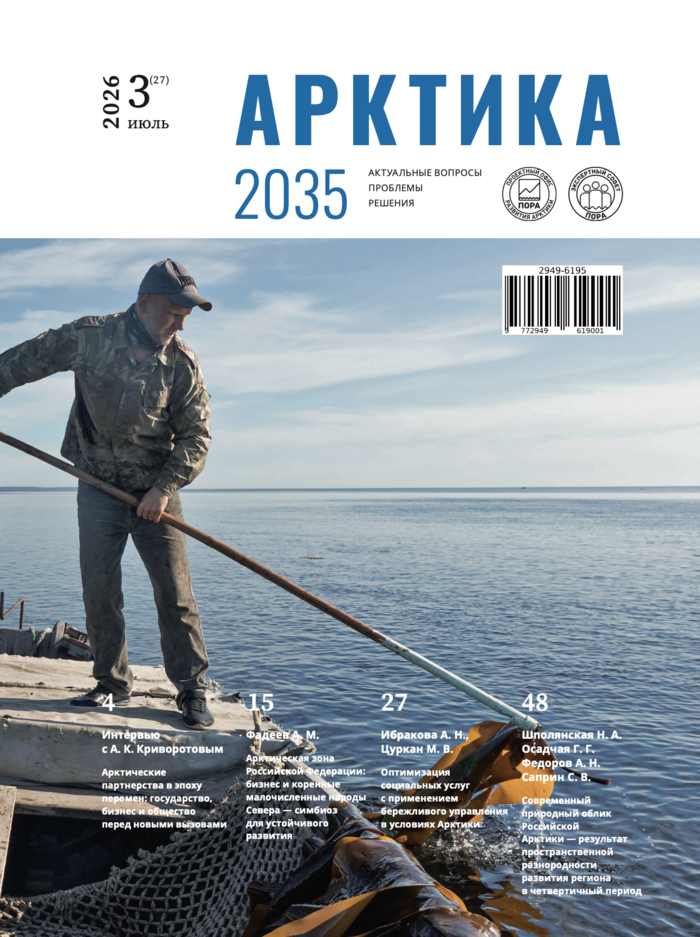
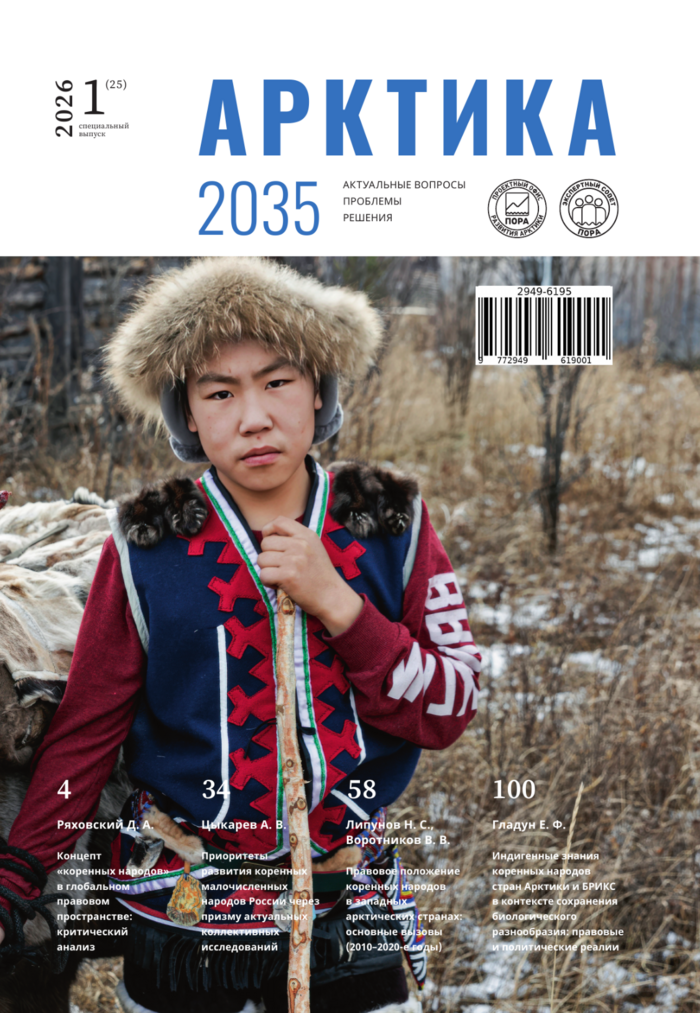
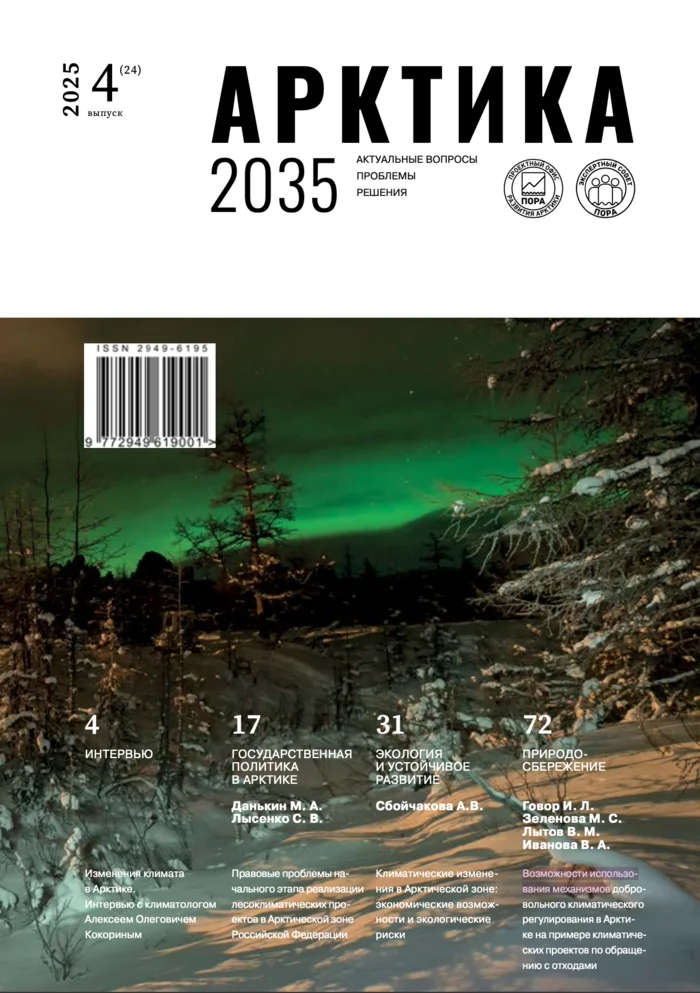
In this issue, we tried to focus on the environmental and social aspects of Arctic development. Both of these are, first and foremost, the key to sustainable development, true harmony between man and nature, and, as a result, the foundation for a comfortable and happy human life in the harsh Arctic land.
The Arctic zone of the Russian Federation (AZRF) is one of the priority territories of the country’s development. In this article, the authors of the work consider issues related to the interaction of the state and business in the development of the natural resources of the Russian Arctic, as well as the most promising areas of this interaction.
The article examines the experience of the Sakhalin region in implementing carbon experiment (2022–2025) aimed at achieving carbon neutrality and analyzes its potential for adaptation in the Arctic regions of Russia. The authors explore the project’s key achievements, including the reduction of net greenhouse gas emissions alongside growth in gross regional product, the development of a carbon unit market, and the adoption of innovative technologies. The authors emphasize the importance of balancing ecological and economic objectives, proposing a «moderate» scenario for carbon regulation. They highlight the need to align environmental and economic goals through gradual regulatory changes and the engagement of science and business. Based on Sakhalin’s experience, recommendations are formulated for the Arctic. The study concludes that climate policy can become a driver of growth if it relies on scientific research, flexible regulation, and nature-based solutions. The article advocates for the development of a Russian model of low-carbon development, avoiding blind imitation of foreign practices and rejecting the denial of anthropogenic influence on climate change and ecological well-being.
The article examines the problems and prospects of transition to a green economy in small settlements of the Arctic zone of the Republic of Sakha (Yakutia). The authors analyze the possibilities of introducing sustainable development models against the background of a deep systemic crisis in the housing and utilities sector of the region. Particular attention is paid to three key aspects: the main sources of anthropogenic load on the environment, the potential of renewable energy sources and modern waste management technologies in the conditions of the Far North.
PRIORITIES OF EDUCATIONAL POLICY IN THE CONCEPT OF SUSTAINABLE DEVELOPMENT OF INDIGENOUS PEOPLES OF THE NORTH, SIBERIA AND THE FAR EAST OF THE RUSSIAN FEDERATION FOR THE PERIOD UP TO 2036
The article systematizes the formal and substantive features of the Concept of Sustainable Development of indigenous minorities of the North, Siberia and the Far East of the Russian Federation until 2036 in the field of educational policy, identifies novelties in the formulation of the goals and objectives of such a policy in comparison with the previously adopted Concept, substantiates the priorities of educational policy in the implementation of general and vocational education of indigenous minorities of the North, Siberia and the Far East of the Russian Federation.
Arctic
Educational policy
Indigenous peoples of the North
Siberia and the Far East of the Russian Federation
Concept of resilient development of indigenous peoples of the North
Siberia and the Far East of the Russian Federation
A study of healthcare policy in two Arctic regions of Russia — the Yamalo-Nenets Autonomous Okrug (Yamalo-Nenets Autonomous District) and the Arkhangelsk region — is of particular scientific inter- est in the context of studying regional approaches to the organization of medical care in a harsh climate and territorial extent. The study is based on a compara- tive analysis of organizational structures, implementation tools and policy directions in the field of healthcare in regions.
MOTHER TONGUE PROFICIENCY AMONG REPRESENTATIVES OF SMALL INDIGENOUS MINORITIES OF OLENEK DISTRICT OF THE REPUBLIC OF SAKHA (YAKUTIA): SOCIOLOGICAL ANALYSIS
The language situation is a dynamic, multidimensional and socially conditioned phenomenon influenced by various factors. The use of native language is a key condition for preserving ethno-cultural identity, as many elements of ethno-culture (oral folk art, folklore, national literature), as well as traditional customs and rituals — function due to its active use.
In the conditions of modern urbanization and intensification of inter-ethnic integration processes, there is an acute problem of loss and displacement of languages of small-numbered peoples. The Evenki language, one of the indigenous languages of the peoples of the North living in the territory of the Republic of Sakha (Yakutia), is facing a number of serious challenges, including a decline in the number of speakers, a diminishing role in everyday communication and insufficient support from the state language policy. In this regard, the issues of preserving and developing the native language are of particular relevance for Evenks.
This article discusses demographic, sociolinguistic and legal aspects of the problem of preserving the Evenki language, as well as the results of a sociological survey in 2024 on the study of native language proficiency among representatives of small indigenous minorities of Olenek district of the Republic of Sakha (Yakutia). The conducted research has shown the depth of modern tendencies of its functioning in the conditions of multilingualism and assimilation processes. The results of the survey indicate the loss of communicative functions of native languages of ethnic minorities both in everyday life and in a broad social context. It was found that these languages have lost their significance in the process of ethnic identity formation. At the same time, the respondents’ need to master their native languages and their willingness to participate in activities to preserve them have been revealed.
The article is devoted to cooperation between the state and business in the IT sphere using the example of a successful region in this sphere, the Republic of Sakha (Yakutia). The article identifies the features of state regulation of the IT sphere in this region, describes examples of state support measures, and provides the results of this cooperation. The article also provides recommendations for optimizing interaction between the state and business in the Republic of Sakha and other regions.
The article examines the development trends of Russian law regulating public relations in the Arctic and legal support for the sustainable development of indigenous peoples. The article raises issues of interaction between the activities of public authorities, business and the peoples of the North in the field of sustainable development. Proposals for the Plan for the implementation of the Concept of Sustainable Development of Indigenous Peoples for the period up to 2036 dated May 8, 2025 No. 1161-r are substantiated.
THE USE OF ARTIFICIAL INTELLIGENCE IN THE MANAGEMENT OF A GROUP OF UNMANNED AERIAL VEHICLES IN THE ELIMINATION OF INTERREGIONAL EMERGENCIES IN THE NORTHERN TERRITORIES OF RUSSIA
The article discusses modern approaches to the integration of artificial intelligence and unmanned aerial vehicles into the emergency response system of natural and man-made nature, including cross-border and interregional disasters, in the northern territories of Russia. Key technologies and international cases of AI and UAV applications are analyzed, regulatory, technical and ethical issues are identified, and prospects for the development of digital infrastructure in the field of emergency situations are outlined.
The article provides information about macrophyte algae in the context of their use as aquatic biological resources. An assessment of their current state, the influence of natural changes and anthropogenic influences is given. Problems and solutions are identified, as well as the prospects for their use.
The article is devoted to the analysis of the level of the tariff component in the transportation of coal. The current issues of coal pricing during export transportation with a link between Kuzbass and the Murmansk transport hub are considered. The advantages of the Taimyr deposits in the organization of export transportation are shown.