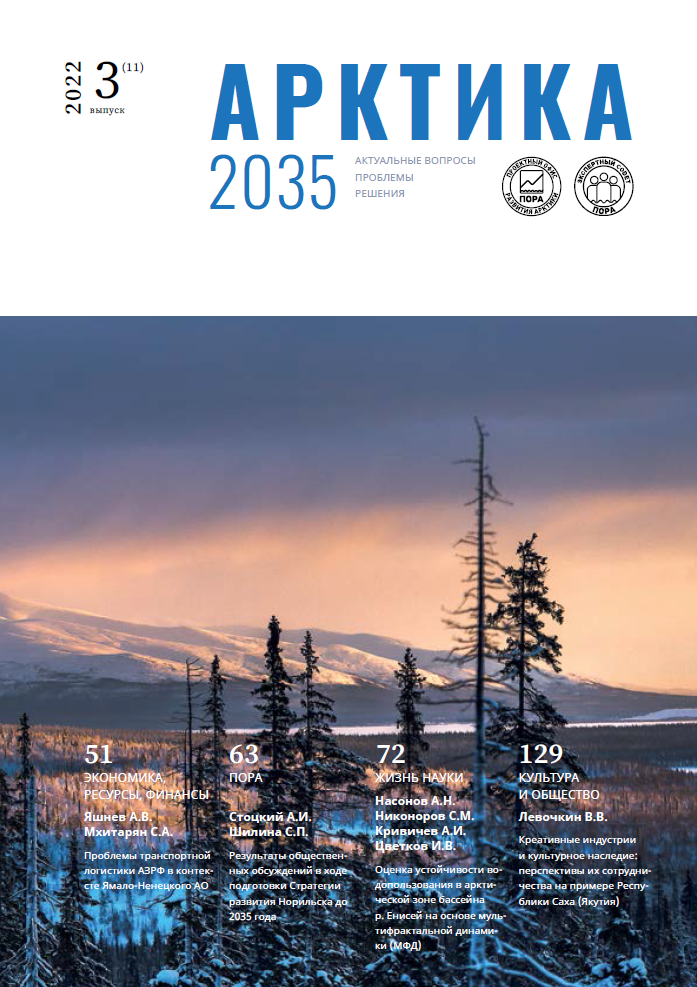
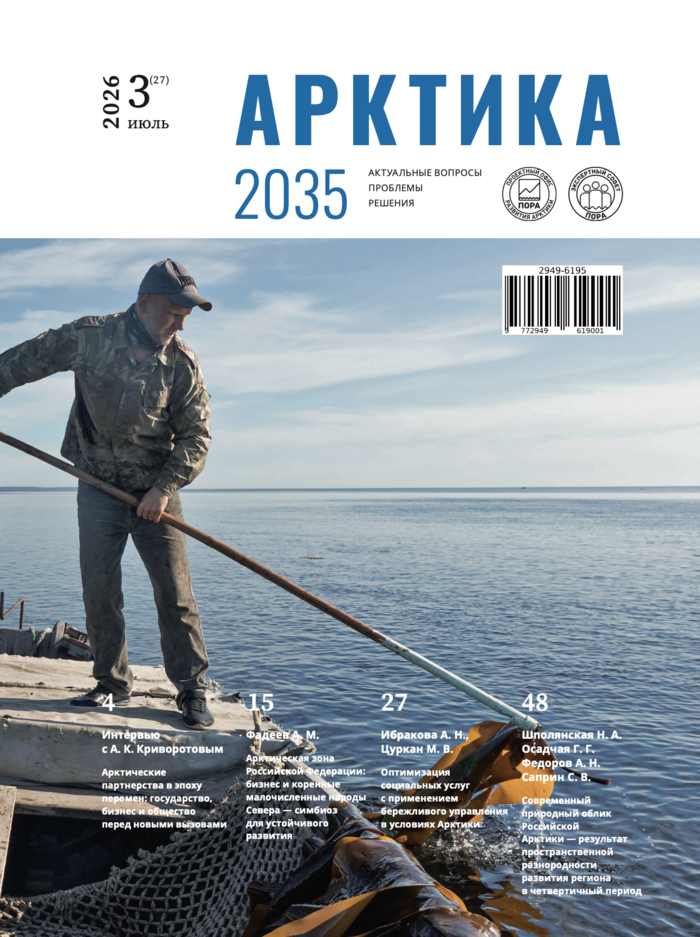
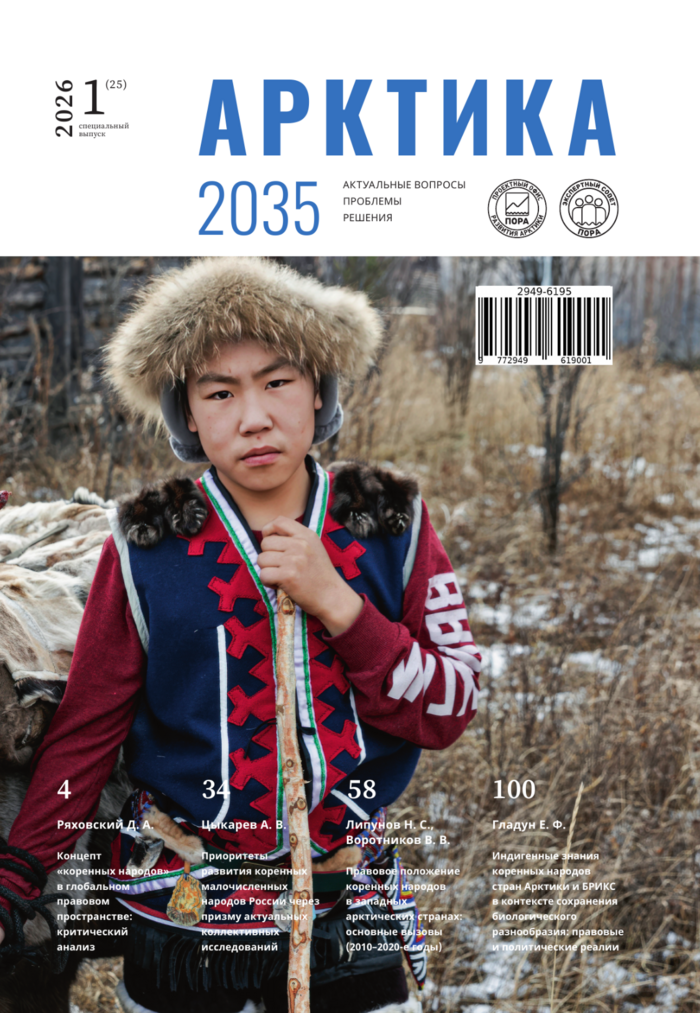
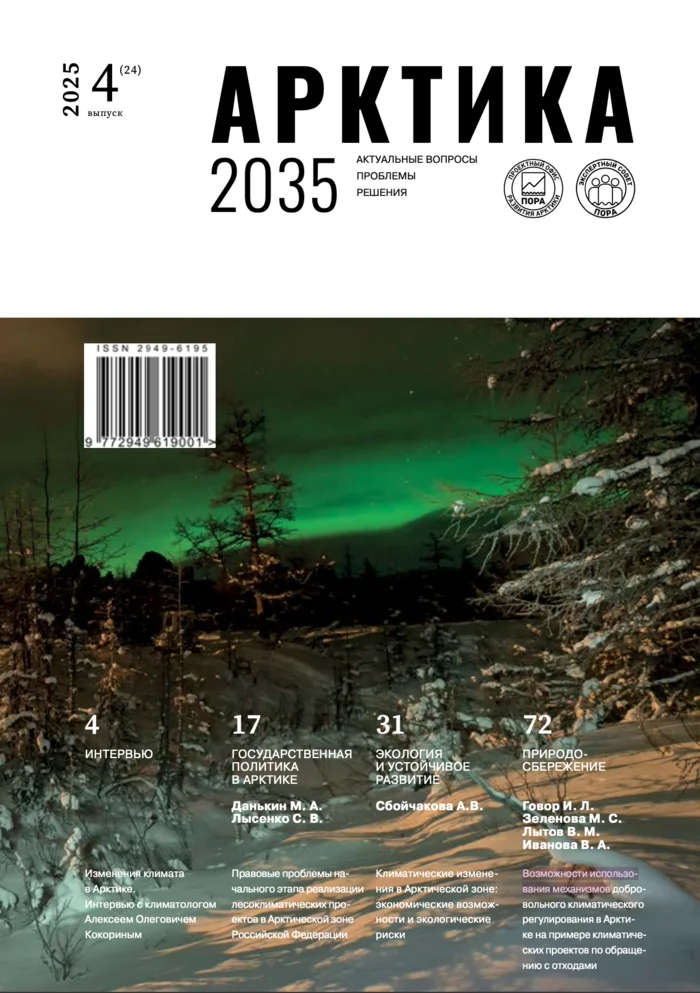
The issue addresses many problems related to the Arctic region. These include issues of transport logistics and water use, challenges facing the fuel complex, biosecurity, and the sustainable development methods being implemented.
The article proposes a strategic approach to education on the subject of the ESG agenda and environmental education in the Russian Arctic. The educational potential of the Arctic region is outlined in general terms. It then lists (1) the goals and objectives of education and environmental education; (2) different groups of students (business owners, top managers, employees, university and college students, schoolchildren); (3) industry specifics (oil and gas sector, IT, etc.).infrastructure projects, which will involve many small and medium-sized enterprises. All this will ensure active trade turnover through the Republic.
An important part of the study was the analysis of foreign experience of working with multipurpose territories in Germany.
Modern economic, environmental and social problems in the Arctic zone of the Russian Federation require rational management of infrastructure and development of territories, and for this, up-to-date and high-quality spatial monitoring data are absolutely necessary. The authors of the article analyze the existing experience of remote sensing of the Earth, which makes it possible to monitor the state of the environment and infrastructure in the Arctic in order to assess the sustainable development of territories, and also propose modern tools for effective monitoring.
The article examines in detail the impact of ESG factors on the activities of PJSC MMC Norilsk Nickel. The authors described modern methods of company transformation and how the company implements ESG: preparation, implementation, results, analysis of the work done. Based on an internal analysis of the non-financial statements of PJSC MMC Norilsk Nickel for 2020, the authors disclosed the aspects that were affected by the ESG transformation in this company. The authors outlined the development trends for the further development of the Company in the field of sustainable development and an increase in the ESG rating.
Numerous sanctions imposed by Western countries against Russia have led to the freezing of almost all mutual contacts in the Arctic, including the activities of the Arctic Council. The author of the article highlights three problems - a profound change in Russia’s place in the world energy markets (produced mainly in the Russian Arctic), ensuring the connectivity of the Russian space, including hard-to-reach northern regions, and changing the general economic environment of the Russian Arctic. Solving these problems will require large-scale efforts by the state and the business community, and for this it will be necessary to clarify the general philosophy of the development of the Arctic.
Renewable energy sources are considered to be the most suitable energy sources, the use of which minimizes the environmental impact, produces the least secondary waste and is sustainable to the current and future economic and social needs of society. The sun is the source of all kinds of energy. The main forms of solar energy are heat and light. Solar energy has the most important technical potential. Solar energy leads to renewable energy sources such as biomass and wind power. Renewable energy technologies reduce greenhouse gas emissions and reduce the effects of global warming by replacing traditional energy sources with alternative ones. The article presents an analysis of various types of renewable energy sources on the example of the Murmansk region for their possible introduction into the Arctic zone.
The authors of the article consider the results of a study of the current state of transport logistics in the Arctic zone of the Russian Federation and the Yamalo-Nenets autonomous okrug in particular.
With the help of a random sample for analysis, publications devoted to the problem of the development of the transport infrastructure of the Arctic zone of the Russian Federation and Yamalo-Nenets Autonomous Okrug were selected. Modern challenges affecting the development of the Arctic maritime transport system and the economic situation of the Arctic zone of the Russian Federation (AZRF) are considered. Based on the analysis of the material, a comparison was made of the logistics system of the Russian Federation and foreign partners, an attempt was made to answer the question of what are the key problem points in the development of the Russian Arctic and what are the likely ways to solve them.
A database of state statistical sources has been collected and summarized, reflecting the dynamics of the development of logistics in the Arctic regions of Russia and its problem areas. An analysis of the state of the transport infrastructure of the Russian Arctic confirmed the presence of serious disproportions in its development. Despite favorable trends in the operation of all modes of transport, the Arctic logistics system is characterized by an underdeveloped and poor technical condition of the transport network, high wear and tear of the road surface, a lack of infrastructure on key economic routes, insufficient mobile coverage, and other problems.
The authors conclude that the solution of the problem posed requires an integrated approach and measures in various areas: from the education system to the construction industry. The current unsatisfactory state of many parts of the logistics system speaks to the need to create a single Arctic highway, comparable in scale to the Trans-Siberian Railway.
In 2018, the «Strategy for the socio-economic development of the municipality of the city of Norilsk until 2030» was developed. After four years of working with this quite successful document, it became clear that it needed some reconstruction and fine-tuning. A toolkit was created to structure the insights proposed during public discussions within six blocks, and a website was created for posting citizens’ proposals. The most promising ideas and proposals of residents were published. The authors of the article analyze and summarize the results of the public discussion by the citizens of Norilsk of the premises of the new «Development Strategy».
A fractal approach to the description of non-equilibrium aquatic ecosystems under the conditions of urbanization of their host territories is considered. It is shown that under these conditions, the features of the economic use of territories and the management of the development of water bodies should be of a preventive nature and be reduced to the management of potential anthropogenic risks, when the ecosystem cannot independently compensate for the negative impact of individual components of the anthropogenic load, as a result of which the techno-natural balance is disturbed, and the probability of destruction ecosystem is growing rapidly. Environmental risks of economic water use arise if the development of an ecosystem is not supported by the conservation of its biological resource, i.e. the limiting cycle of ecosystem adaptation to external anthropogenic load is violated. The fractal approach opens up new possibilities for predicting the stability of water bodies based on the results of standard environmental monitoring of surface water pollution. It is important that such a forecast is based on the calculation of the fractal index of the stability of a water body, which is directly related to the maximum permissible environmental load (MPEL), as a marker of the maximum technological capacity of urban ecosystems.
The article considers the problems of biological safety in the permafrost zone of the Russian Federation from two positions. First, the impact of climate change on the possible emergence of pathogens of especially dangerous infections in the human environment due to: 1) expanding the range of carriers of infectious pathogens, 2) returning pathogens of especially dangerous infections of the 18th-19th centuries to modern Arctic ecosystems during thawing of cattle burial grounds or people those who died during these epidemics and 3) the removal to the surface of pathogens of especially dangerous infections of past millennia due to the thawing of the remains of the mammoth fauna in the permafrost layer. Secondly, the possibility of the emergence of new modified viral genomes in the permafrost zone, which arose as a result of natural or artificial mutagenesis, due to the likelihood of the transfer of viral pathogens of infectious diseases during seasonal migrations of birds, primarily from Southeast Asia, followed by mutagenic adaptation of viruses to new extreme climatic conditions of the Arctic and further back transfer of new variants of viruses to various geographical regions of the planet. Organizational proposals have been formulated to ensure biological safety in the Arctic in the interests of not only the Russian Federation, but also of all mankind.
The focus of the study is nationally oriented (27) and socially oriented (140) NGOs in 18 Arctic single-industry towns. The volume of funds won by Arctic non-profit organizations over the past 5 years was estimated. The leader single-industry towns in the formation of civil society in the Arctic (Norilsk and Severodvinsk) were identified. In the course of the study, it was concluded that Norilsk is a serious actor of civil society in the Arctic - in terms of the number of registered socially oriented NGOs (32), the number of grant funds raised (over 60 million rubles), the number of grants received over the past 5 years (31 grants). Also, Norilsk is a truly interethnic Arctic city - the leader in the number of registered nationally oriented NGOs (12), the city also ranks 1st among the studied single-industry towns in terms of attracting foreign labor migrants.
DEVELOPMENT OF INTERNATIONAL TOURISM WITH ASIAN COUNTRIES AS A FACTOR IN IMPROVING THE QUALITY OF LIFE OF FAMILIES IN THE TERRITORY OF THE RUSSIAN ARCTIC
The development of partnerships in international tourism with Asian countries on the territory of the Russian Arctic using public-private partnerships (PPP) in the near future will reduce the rate of internal migration outflow of the population, will promote the development of entrepreneurship, including women’s entrepreneurship. An increase in the level of employment of the population will positively affect the quality of life of families living in this territory. Moreover, the development of tourism in the Russian Arctic will increase the socio-cultural attractiveness of Russia, and this, in turn, will strengthen international ties and increase the number of international projects.
The article is devoted to the importance of preserving the cultural code as one of the main keys to understanding the essence of both the individual and the nation as a whole through the prism of the cultural heritage of our ancestors. The cultural code has a great influence on the formation of a person and creates guidelines for activity in any community. The author also shows the importance of folk traditions in the formation of the ecological culture of the peoples of the northern and Arctic regions. An assessment is given and the significance of these traditions for modern upbringing and education is determined on the example of the implementation of the environmental education project “St. Petersburg — Arkhangelsk: from sea to sea”.
The article discusses the features of the formation of creative industries in the Republic of Sakha, a region with a stable cultural layer of traditions and living heritage. Examples of mutually beneficial and fruitful cooperation between masters of folk art and crafts and producers of the creative sector are given. The use of modern technologies, along with the careful preservation of the knowledge and skills of previous generations, serves to mutual enrichment and becomes the key to the successful development of modern society.