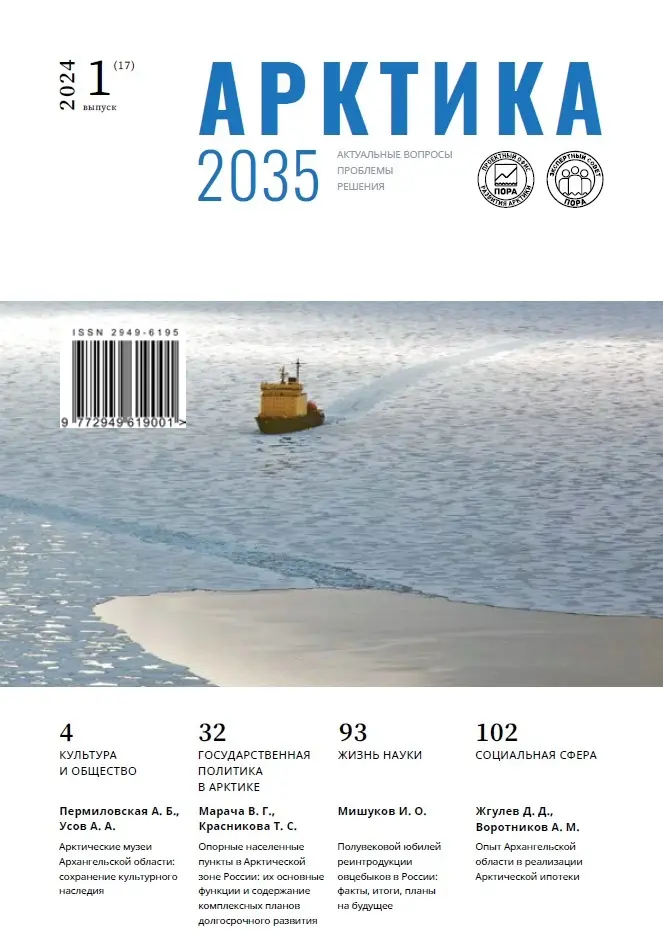
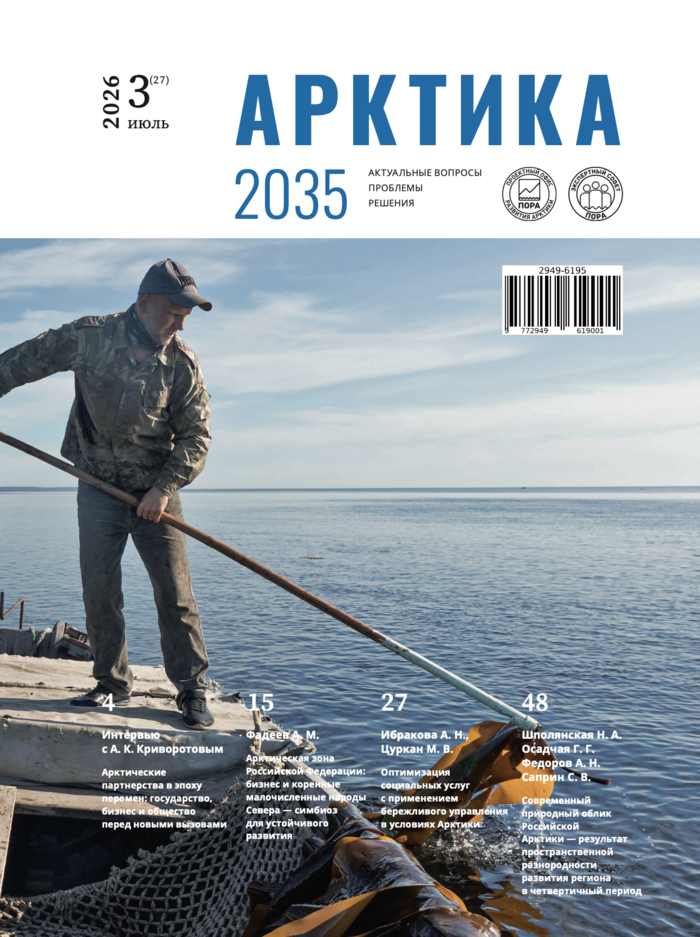
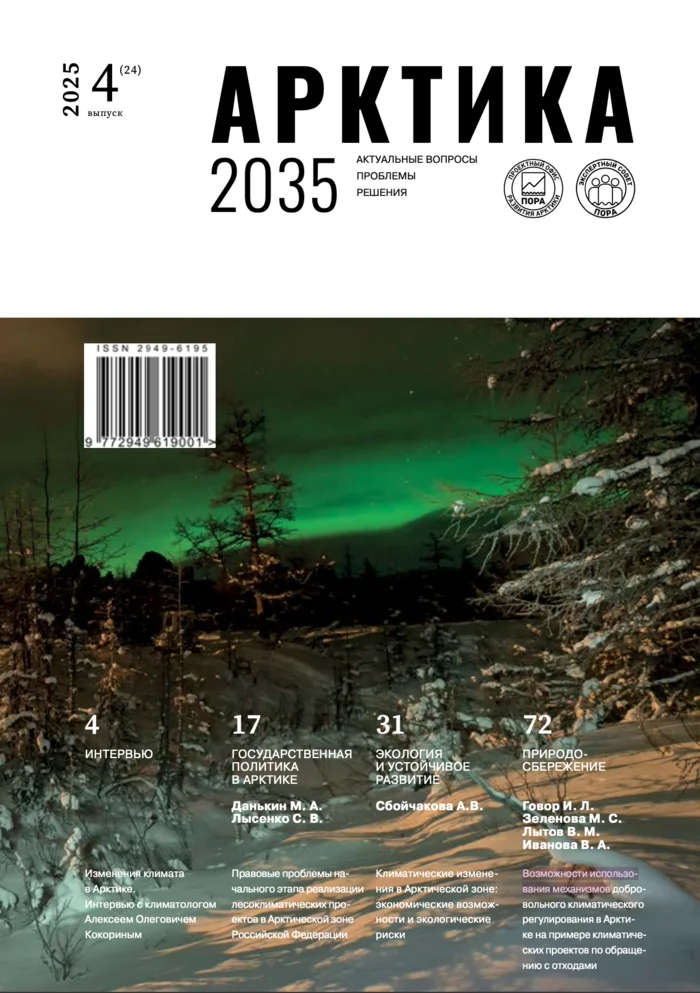
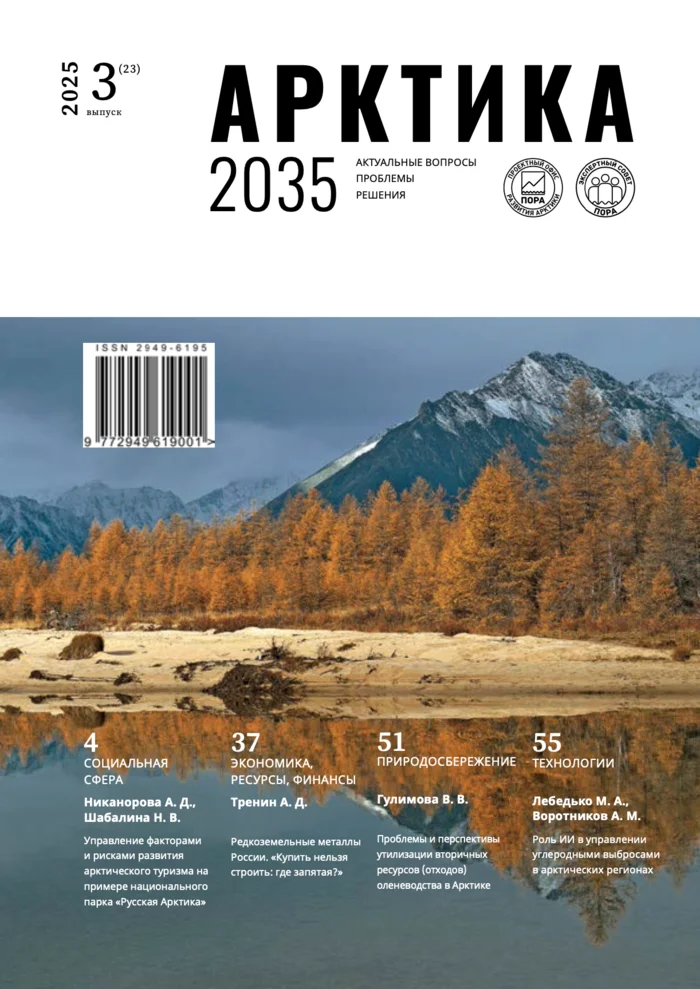
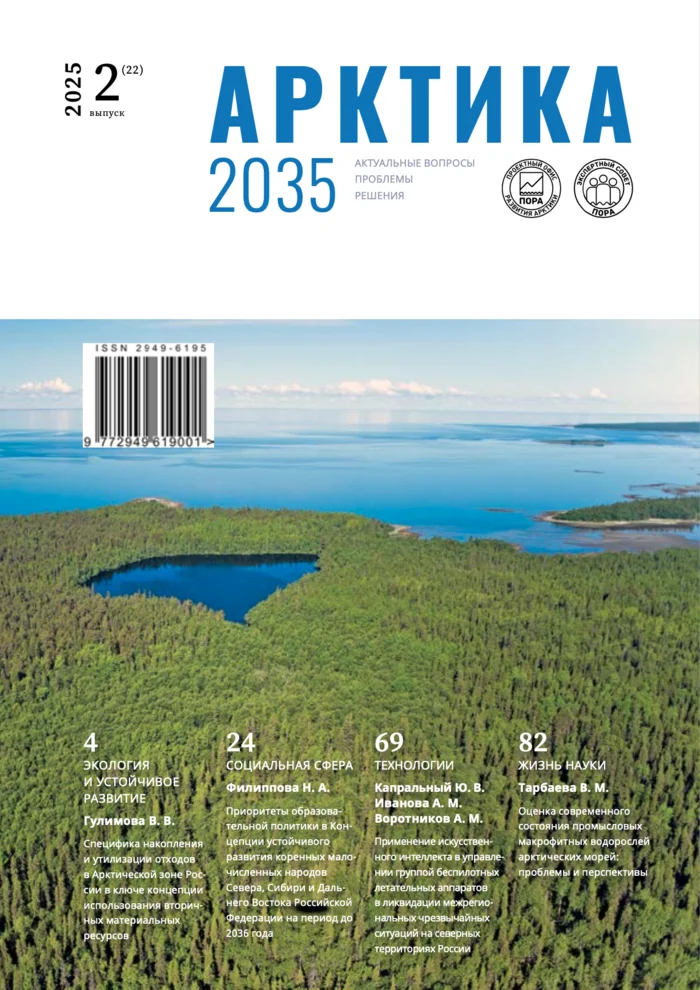
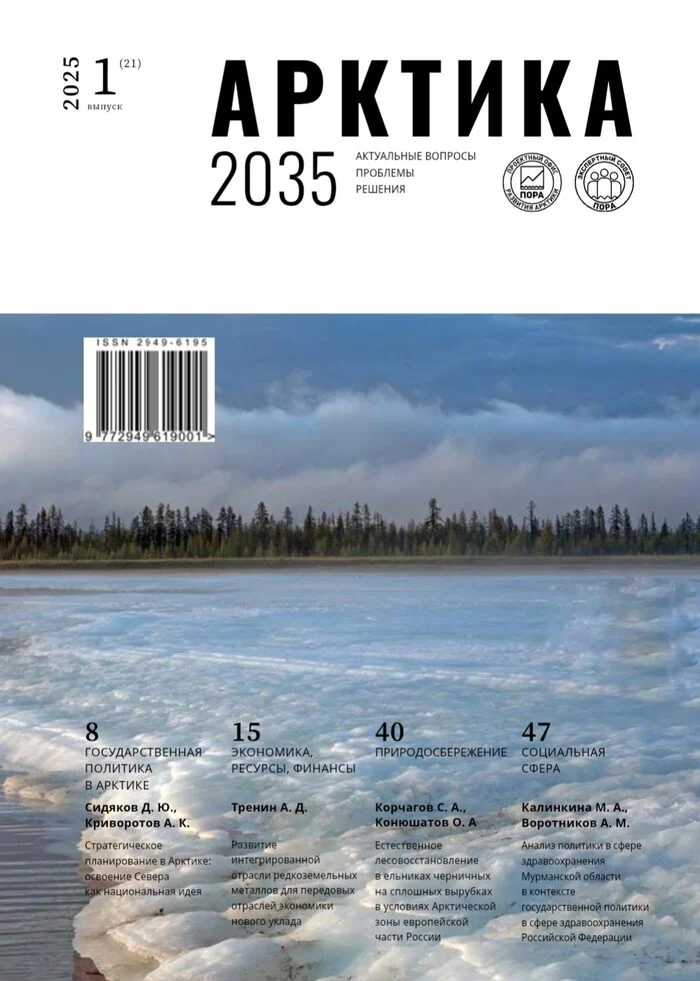
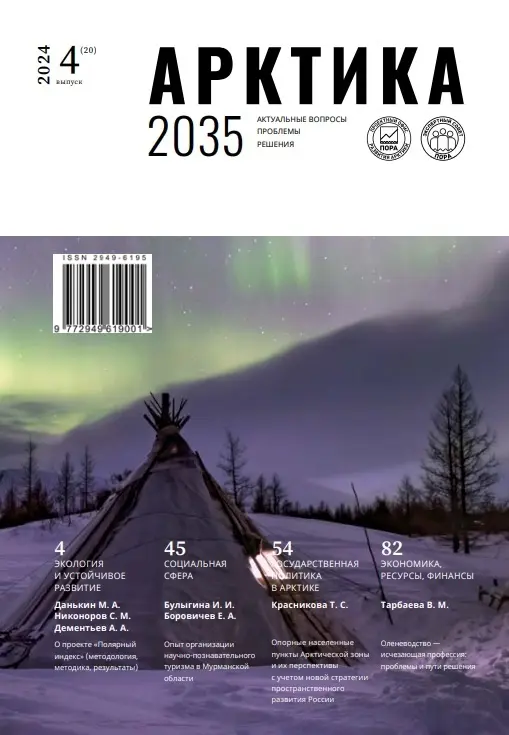
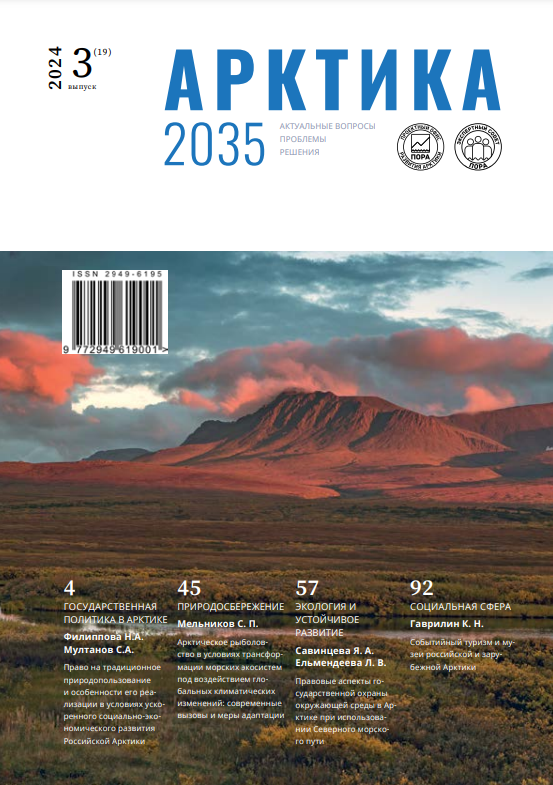
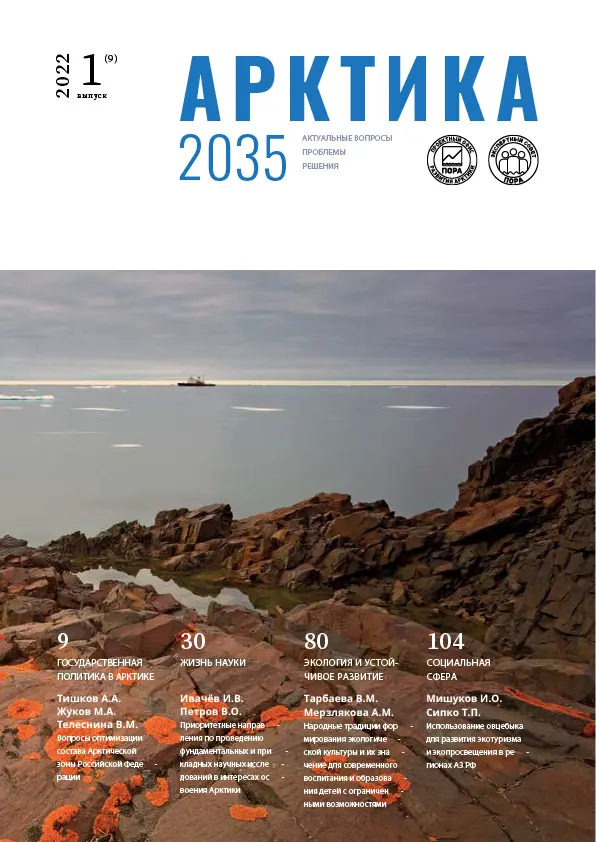
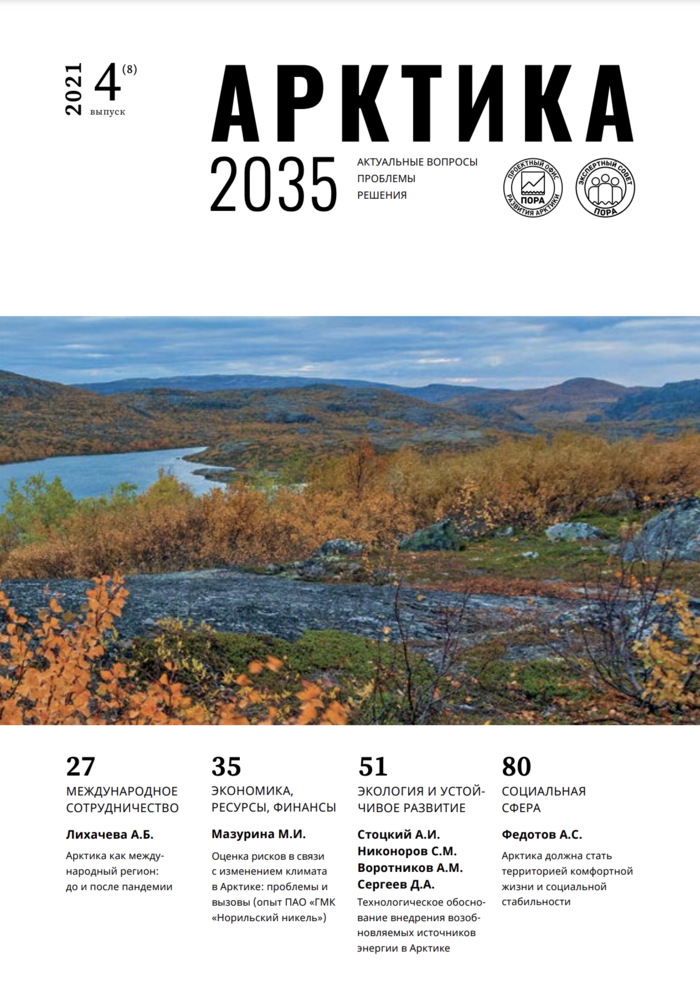
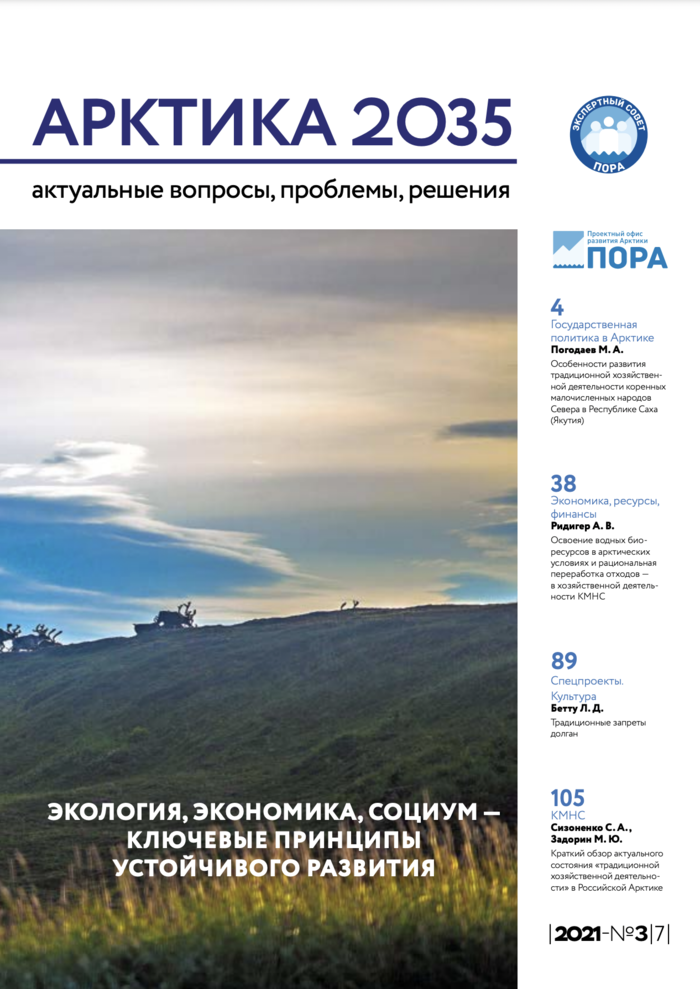
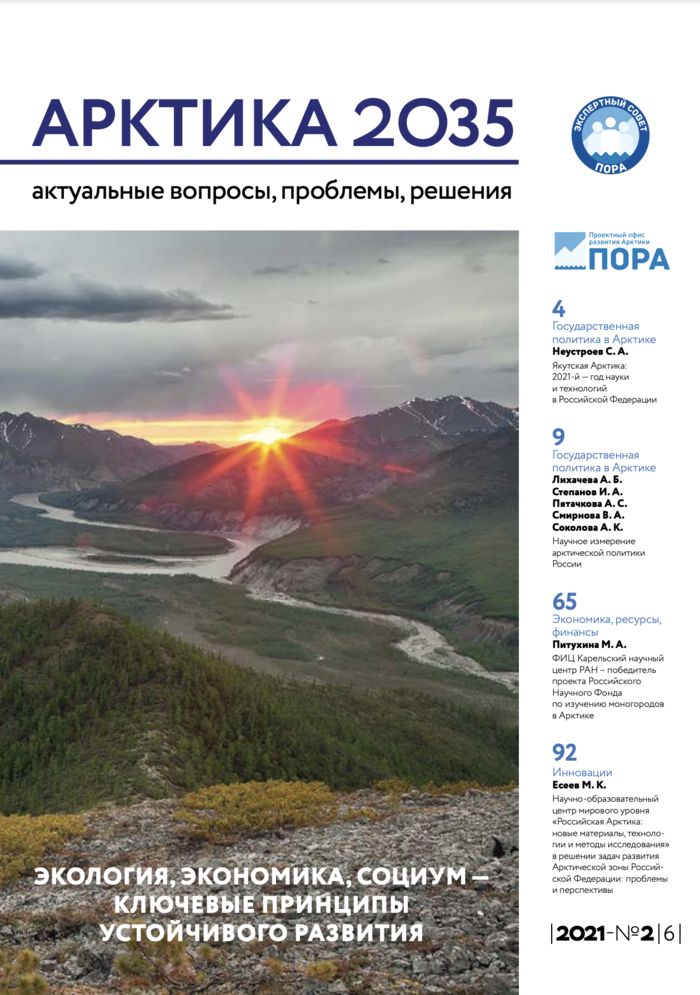
This issue has a «museum» theme — three articles are dedicated to the work of museums in the Russian Arctic. In this issue, you will also find articles on the specifics of using such an intriguing tool as city master plans, the latest materials on the implementation of Arctic mortgages, and a critical analysis of the European Union’s policy in the Arctic.
The Research Subject is the experience of Arctic museums in the Arkhangelsk region as sites for the preservation and popularization of the Russian North and the Arctic cultural heritage. The purpose is to analyze some existing approaches through which museums in Arkhangelsk and the region carry out their activities. Particular attention is paid to the open-air museum he Museum of Wooden Architecture and Folk Art «Malye Korely», where the content of not only the Northern Russian, but also the Arctic part of the exhibition is illustrated using the example of the Mezen sector. The authors conclude that the Arctic museums of the Arkhangelsk region and the city of Arkhangelsk illustrate various ways of creating and maintaining such institutions in a modern socio-cultural environment, are both an example of institutions that actively use modern multimedia technologies, and rely on traditional methods of preserving and updating traditional culture in the North and in the Arctic.
The article discusses current problems of the Arctic museums of Yakutia, proposed ways and techniques for solving them. The republic’s museums continue to make a worthy contribution to the preservation of the historical and cultural heritage of the Arctic, acting as one of the most important tools in promoting tourism — a significant aspect of the socio-economic development of the Republic of Sakha (Yakutia).
Every day the Arctic topic is becoming in- creasingly important for the economy and national security of the Russian Federation. The development and development of deposits of hydrocarbons and rare earth metals, the extraction of biological resources, the development of an icebreaker fleet and the transit of goods along the Northern Sea Route are inevitably related to issues of personnel support. At the same time, only the state can solve the complex problems of Arctic development. The collections of the Arctic museums of Murmansk, Arkhan- gelsk, Naryan-Mar, Dudinka and Norilsk, Dixie, Tiksi, Pevek contain unique artifacts. More than 100 museums in the Arctic zone form a unique cultural potential. The authors believe that without taking into account the centuries-old experience of economic activity in the Arctic Circle, it will be extremely difficult to fulfill all the ambitious goals for the development of the Arctic. The cultural heritage of the Arctic preserves the knowledge, codes and meanings of previous generations; it should serve the education and enlightenment of the younger generation, the education of future scientists, polar explorers, sailors of the icebreaker fleet and Arctic navigation, engineers and builders, a new type of managers, and specialists of a wide professional profile. Modern global challenges make it necessary to assess the structure, functions and significance of the historical and cultural heritage of the Arctic as a complex object of public administration at the regional and federal levels.
The Arctic territories are important for the Russian Federation not only from an economic but also from a geopolitical point of view. At the same time, historically, a key role in the Russian development of the Arctic was played by burgs (forts), and then by cities and towns that performed «supporting» stronghold functions. They still perform their «supporting» functions even now, despite the widespread use of shift work. Therefore, a new institution of «supporting settlements» is being introduced in the Arctic zone of the Russia, and the Government of Russia, on behalf of the President, will determine a list of them. For each of them, master plans of their development will subsequently be created until 2035. And by October 1, 2024, it is necessary to approve comprehensive long-term development plans for the supporting settlements — also until 2035 and with clear sources of financing. Similar documents are already being developed for 25 cities and towns of the Far East (including Anadyr, which is part of the Arctic zone of Russia). The article discusses the main functions of supporting settlements, the criteria for classifying Arctic cities and towns as supporting settlements. It is proposed to determine the list of supporting settlements in such a way that they all together form a coherent network that makes their main functions available throughout the populated territory of the Arctic zone of Russia, as well as in the territories of development, even if it occurs by shift method (on a rotational basis). And given the synergy between the development movements to the east and to the north, ideally the network of supporting settlements should «cover» the entire territory of Russia beyond the Urals. The question of what should form the basis for long-term development comprehensive plans of supporting settlements is considered. The author substantiates the important role of socio-economic development strategies in determining the content of comprehensive plans and proposes that the development of such strategies should be mandatory for all settlements acquiring the status of «supporting».
STATE SUPPORT AS A MECHANISM FOR THE INTEGRATED DEVELOPMENT OF THE TERRITORIES OF THE FAR EAST AND THE ARCTIC AND THE INTRODUCTION OF INNOVATIVE APPROACHES TO URBAN DESIGN
The integrated development of the territories of the Far East and the Arctic is one of the priority areas of policy of the President and the Government of the Russian Federation. One of the key objectives of this policy is to improve the quality of life of the population. The development of spatial development concepts and the implementation of master plans will create a modern and comfortable urban environment for local residents, increase the investment attractiveness of the regions, create new jobs and ensure strong economic and social growth. This article discusses the experience of developing a strategic master plan for the capital of the Chukotka Autonomous Okrug, taking into account an integrated approach, and proposes methods for solving the problems of designing public spaces in the Arctic territories to ensure comfortable living conditions that are not inferior in terms of infrastructure development to the cities of central Russia.
The growing interest in the Arctic on the part of more and more political players requires a comprehensive study of the correlation between their interests and Russian foreign policy planning. The European Union has assigned itself a special role in the region, which could not but lead to the emergence of new risks on the way of development of the Russian North. The systematic implementation of the Arctic policy by Brussels allows us to talk about the negative impact on stability and the established system of international interaction in the Arctic. The process of transformation of the provisions of the fundamental documents of the European vision of the development of the Arctic territories has caused both significant changes in the region and the need for even more rapid conceptual transformations, including by increasing the role of supranational institutions in the implementation of Arctic policy and strengthening the position of the European Union as a geopolitical force.
Arctic tourism is one of the main directions of tourism development in Russia. This article examines the contribution of public-private partnerships (PPP) to the development of tourism in the Arctic and the steps taken by the country’s government to stimulate the PPP market.
The article provides an overview of materials on the sources of outdoor artificial lighting and its impact on the state of humans and ecosystems in northern and arctic regions. An assessment of the impact of artificial lighting on the health and vision of humans and animals is given. Proposals and recommendations for safe use of lamps have been formulated.
The article is devoted to understanding the phenomenon of the first city in the Siberian Arctic — Mangazeya, which is considered as a confident step of the Russian state at the beginning of the XVII century to the Arctic and a springboard for active movement along the northern borders to the east, as a manifestation of the «Russia of the North». In the history of Mangazeya, there are some analogies with modernity — this settlement can be represented as a single-industry town, whose life depended on the availability of only one resource. The most important driver of the development of Mangazeya were steamers (furs, in fact, was a kind of oil and gas of the XVII century). The life of the city itself is a kind of fusion of a permanent settlement (where a garrison of about 50-60 people and a certain number of towns people lived) and a shift settlement (where hundreds of people came to temporary crafts on kochs – «people of six and seven hundred and more»). At the same time, the rapid extraction of resources led to an environmental crisis — the extermination of fur-bearing animals and, as a result, the disappearance of the city itself.
One day, the population of musk oxen that lived in the tundra expanses of Eurasia disappeared. It was only many centuries later that the people who may have been responsible for this disappearance decided to return the musk oxen. The bold plan of scientists, supported by the will of politicians, made it possible to realize the dream. In 1974, 10 Canadian musk oxen were released into the aviary of the Bikada hospital on the Taimyr Peninsula (USSR). The fifty years that have passed since this event allow us not only to summarize the results, but also to outline the direction of continuing the experiment. The next step to be taken is the domestication of the musk ox, the creation of a new livestock industry. And the first step in this direction may be the opening of the first Experimental Sheep Breeding Farm (ESBF).
The expansion of the Far Eastern Mortgage program to the Russian Arctic zone increased the number of mortgage loans taken in the Arctic zone. Mortgage is one of the government mechanisms for developing the social infrastructure of cities and other settlements, as well as for attracting personnel, including young people, for permanent residence in the region. The experience of the Arkhangelsk region shows the relevance of mortgage lending for the population of the North.