This issue is timed to coincide with the International Day of Indigenous Peoples. On August 9, 1982, the first meeting of the UN Working Group on Indigenous Peoples took place. In 1993, the first International Year was observed, and in 1994, the General Assembly proclaimed the first International Decade of Indigenous Peoples. The issues of preserving Indigenous Peoples, their way of life, and their culture are becoming increasingly pressing. The UN has declared the second International Decade of Indigenous Languages. Its action plan spans the years 2022–2032.
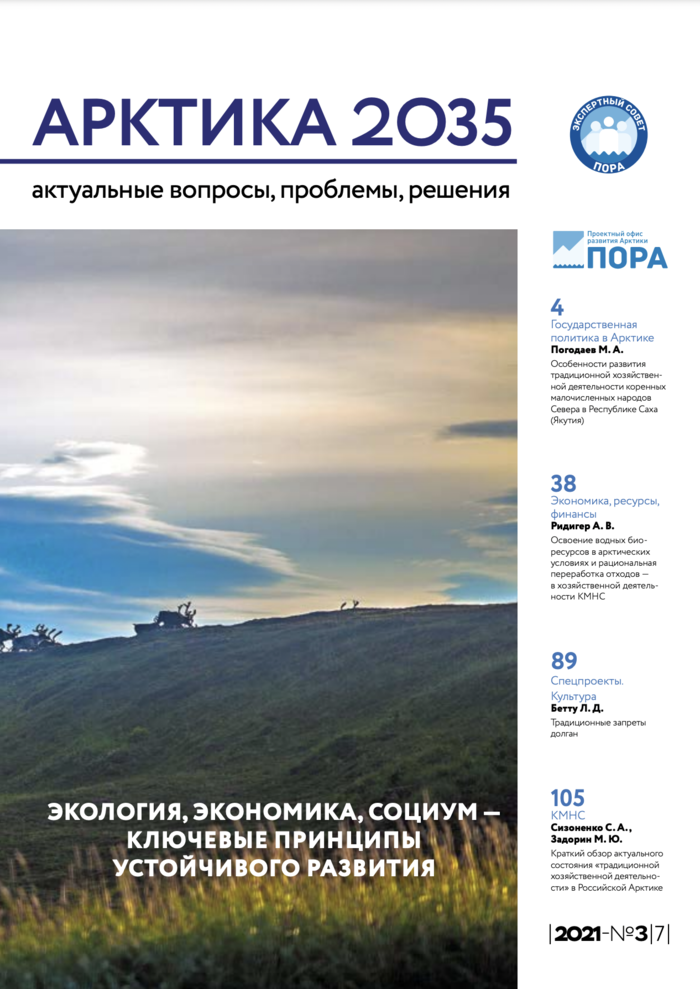
Traditional economic activities are the foundation for original culture, native languages, traditions, beliefs and ethnic identity of indigenous peoples of the North. It plays an important role in the socio-economic development of the Arctic zone of the Russian Federation and the main challenge for many states is to find a balance between economic development and the preservation of the unique and fragile socio-biological landscape of the territory. The article examines the main features of the development of traditional economic activities of the indigenous peoples of the North on the example of the Republic of Sakha (Yakutia) as an important factor in resource and nature conservation of fragile ecosystems in the Arctic.
In 2020, a few laws were adopted in Russia, such as Federal Law No. 193-FZ of 13.07.2020 "On state Support for Entrepreneurial Activity in the Arctic Zone of the Russian Federation" A number of provisions of the law address issues of support for indigenous peoples. Thus, the Government of Russia approved the program of state support for the traditional economic activities of indigenous peoples of the Order of the Government of the Russian Federation carried out in the Arctic zone of the Russian Federation (Order of the Government of the Russian Federation of 15.04.2021 N 978-r). This article discusses the issues of the development of traditional economic activity, which plays the role of preserving their culture and identity.
The article presents an overview of the current state of nomadic families in the Sakha Republic (Yakutia), as well as the results of the analysis of the laws of the Sakha Republic (Yakutia) and other regulatory acts that regulate relations in the field of protection and assistance of nomadic families in the Sakha Republic (Yakutia), as well as methodological recommendations for their improvement in order to increase the effectiveness of the implementation of socio-economic policy in the development of traditional economic activities of indigenous small-numbered peoples of the Russian Federation.
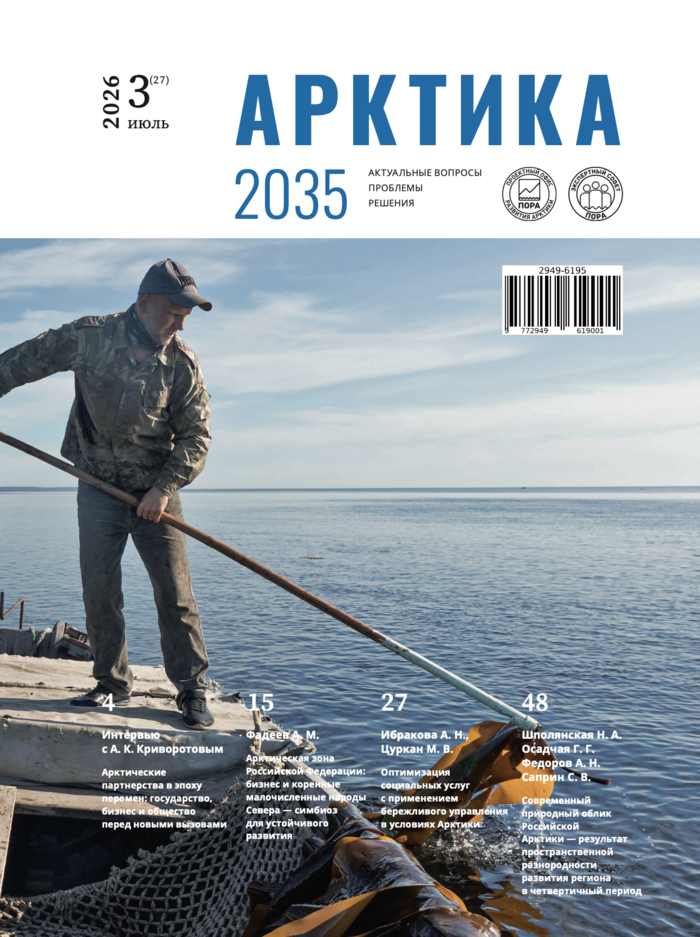
Strategic management of the oil and gas complex should be based on a system for determining not only economic, but also social and environmental benefits that the state intends to provide to the main stakeholders in projects for the development of the oil and gas potential of the Arctic shelf. At the same time, the strategic management system is formed, first of all, as a complex of actions of the state aimed at the development of integration processes and interaction of all interested parties.
The indigenous small-numbered peoples of the North are the most important stakeholder in the implementation of energy projects in the Arctic, taking into account their interests is the most important condition for the presence of oil and gas corporations. Today, the corporate social responsibility of oil and gas corporations has a pronounced regional focus, serving as one of the most important criteria for the company's successful operation in the territory of its presence.
Along with this, the multi-vector orientation of the interests of the participants requires balancing the activities of the participants, ensuring the priority of the interests of the Indigenous peoples living in the Arctic territories.
THE DEVELOPMENT OF WATER BIORESOURCES IN ARCTIC CONDITIONS AND RATIONAL WASTE PROCESSING — IN THE HOUSEHOLD ACTIVITIES OF THE INDIGENOUS PEOPLE'S COMMISSARS
The fishing industry is one of the traditional sectors of the economy of the North, especially important for the indigenous peoples of the North. In modern conditions, the population's need for aquatic biological resources (ABR) as the most valuable food products is increasing. However, economic demands and environmental challenges complicate the extraction of ABR. Aquaculture comes to the rescue of the fishery. Waste from processing fish products are proposed to be used rationally, to produce secondary products, helping the economy of the Arctic region and the indigenous inhabitants of the Arctic.
SUPPORTING THE TRADITIONAL ACTIVITIES OF THE INHABITANTS OF THE ARCTIC IS THE MOST IMPORTANT PRIORITY OF THE ARCTIC STRATEGY OF THE REPUBLIC OF SAKHA (YAKUTIA)
The Arctic territory of the Republic of Sakha (Yakutia) occupies more than half of the territory of the republic. And only 7 % of the population of the RS(Ya) lives in this territory. In the Arctic zone of the republic, almost a third of the population is representatives of indigenous small- numbered peoples of the North (hereinafter referred to as indigenous peoples), which is 50.86 % of all indigenous peoples of the Republic of Sakha (Yakutia). At the same time, in the Arctic zone of the RS (Ya) is located large and unique deposits of diamonds, gold, non-ferrous and rare earth metals, coal, fossil mammoth bone, the territory has a high hydrocarbon potential. The most important task in the sustainable development of the RS(Ya) is, on the one hand, the further industrial growth of the RS (Ya), and on the other, the sustainable development of the indigenous peoples. The Strategy of Socio-economic Development of the Arctic Zone of the Republic of Sakha (Yakutia) for the period up to 2035 (hereinafter referred to as the Strategy) is an instrument for solving this difficult but urgent task. The article considers the current directions of support for the traditional economic activities of the indigenous peoples within the framework of the Strategy implementation.
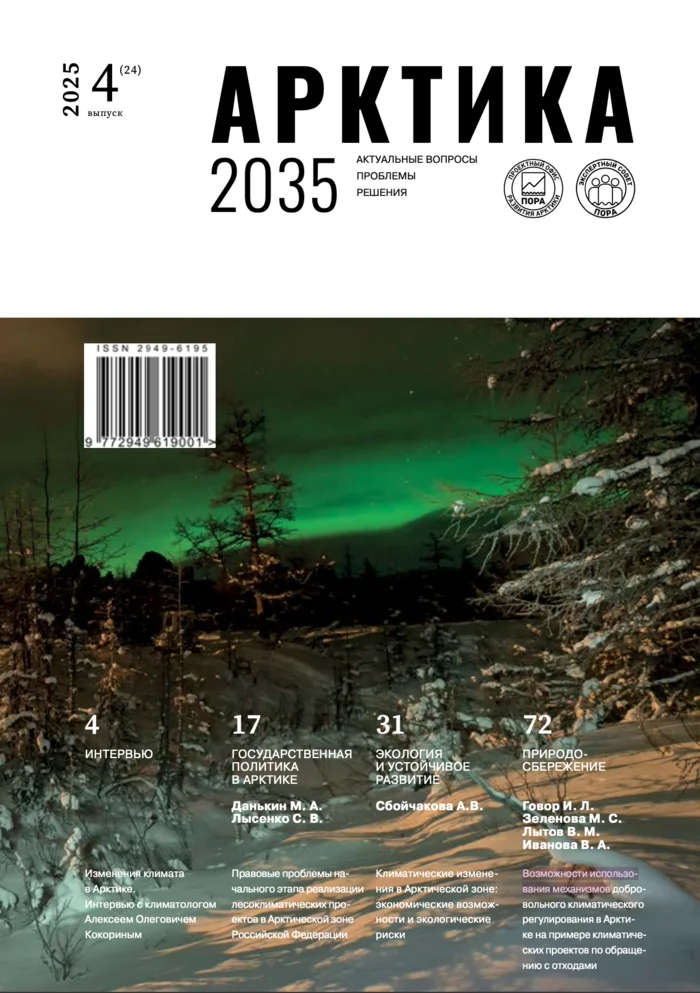
The ecological direction of economic activity in Russia is carried out mainly by technical and technological solutions. Territorial forms of environmental regulation of economic activity mainly use the instruments of prohibitions and exceptions. The tools for combining economic and environmental tasks through the establishment of special modes of management are not fully used.
THE CURRENT POTENTIAL OF THE REPRODUCTION OF AQUATIC BIOLOGICAL RESOURCES IN THE FORMATION OF A NEW ETHNO-ECONOMIC STRUCTURE OF THE INDIGENOUS PEOPLES OF THE RUSSIAN ARCTIC
The preservation of the traditional nature management of the indigenous peoples of the North is relevant as the basis of their life and a necessary condition for their existence. Fishing resources are most vulnerable in comparison with other traditional fisheries. The ever increasing anthropogenic impact on the natural complex puts the populations of commercial fish on the brink of physical destruction. Fish-breeding facilities located on the territory of residence of the indigenous peoples of the Russian Arctic under the patronage of local communities and structures of the Federal Agency for Fishery will be able to ensure the mass release of juvenile fish, both within the framework of the State Assignment and within the framework of compensation projects for the reproduction of aquatic biological resources. Mass production, rearing and release of juveniles of valuable fish species into the rivers and lakes of the Arctic zone of Russia will allow in a short time to restore commercial populations and in the future will make it possible to organize fishing and processing by the communities themselves.
The traditional nature management of the indigenous small-numbered peoples of the Russian Federation North, Siberia and the Far East, which is of ethno-preserving importance, objectively needs innovative development in order to survive as a real source of life benefits that ensures the required level of quality of life. Renewable natural biological resources of the North and Arctic have increased biological activity [1], and their deep processing using modern physicochemical biotechnologies will make it possible to obtain bioactive products for medical, food, cosmetic and technical purposes with high consumer qualities and added value [2-6]. The studies of Yakut scientists have created a number of innovative technologies and developed a number of innovative products that can ensure the withdrawal of traditional nature management from the subsidized regime and transfer to the regime of economic independence and sustainable development.
Representatives of nineteen indigenous small-numbered peoples live in the Arctic zone of the Russian Federation and there are objects of their heritage that are of historical and cultural value of global significance. Since the problems of the development of education of the indigenous peoples of the Arctic today acquire a special meaning, an important aspect is the training of local residents. This article will consider such a way to reduce the unemployment rate and personnel shortage in the Arctic as the creation of a competent and effective education system in the Russian Arctic with fully modernized technical equipment.
The article presents an overview of the situation in the field of education in the Arctic regions of the Sakha Republic (Yakutia) on the example of the activities of nomadic schools, general education organizations, extended education, vocational educational institutions, employer-sponsored education, identifies the main problems for the development of economic activity of the local population on the basis of an educational resource and suggests mechanisms for their solution.
Results of an expedition to the Taymyr peninsula are presented in this article. The aim of the expedition was collection of traditional proscriptions of the Dolgan. The emphasis is put to the specificity of the contemporary usage of such a folklore tradition among the Dolgan of the Khatanga and Dudinka regions. There is a selection of proscription texts, classified into topical groups.
Ethnological expertise is an approved instrument for the state national policy implementation. At the same time, its procedure is not clearly described in the Russian legislation, which causes wide discussions in the professional community. When a diesel spill happened at the central heating and power plant (CHPP-3) in Norilsk, the ethnological expertise turned out to be the procedure that could objectively assess the negative impact of the spill on traditional activities of indigenous people and set just compensations. This opinion was also shared by general public and indigenous communities themselves.
The topic of this article becomes especially relevant in connection with the growing pressure of industrial development in the Arctic. Unique nomadic cultures built on the closest relationship of people, their land and nature are still maintained in the Russian Arctic. The key element of ethnological expertise is certainly not a calculation of losses, but a dialogue-building and decision-making mechanism based on a balance of interests.
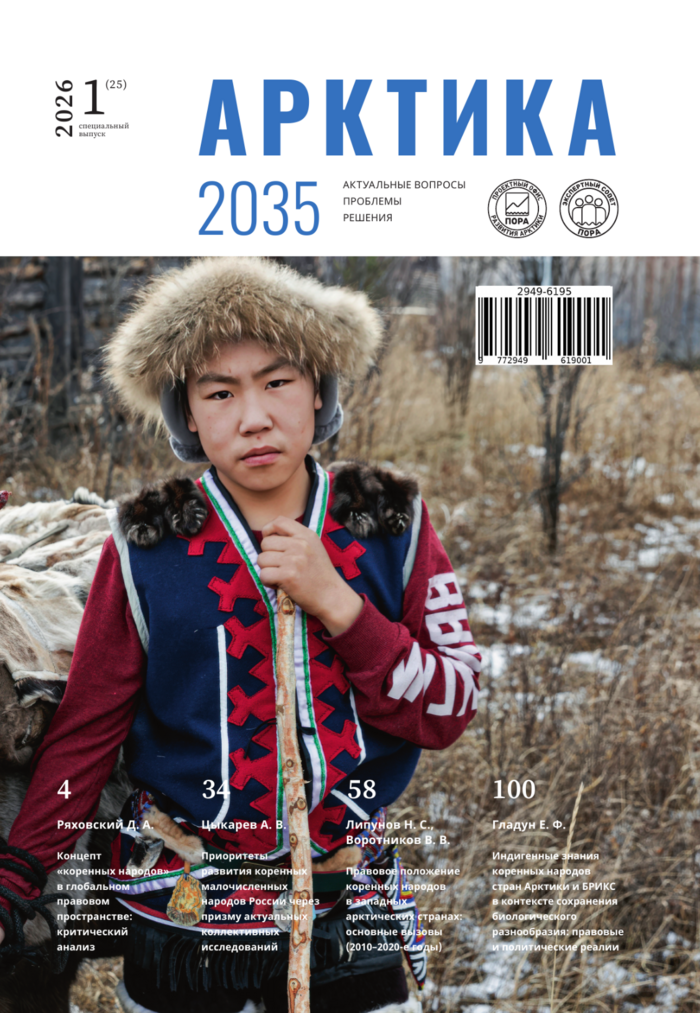
The article is devoted to a brief overview of the current state of “traditional economic activity” of the indigenous small-numbered peoples of the North and the Arctic, existing legal gaps in this area, and it touches upon such specific areas as “commercial” and “traditional” hunting, “traditional fishery”, and reindeer husbandry. The authors concisely formulate key trends in this area of law, politics and economics.